Hasidic Clothing by Sect: A Visual Guide
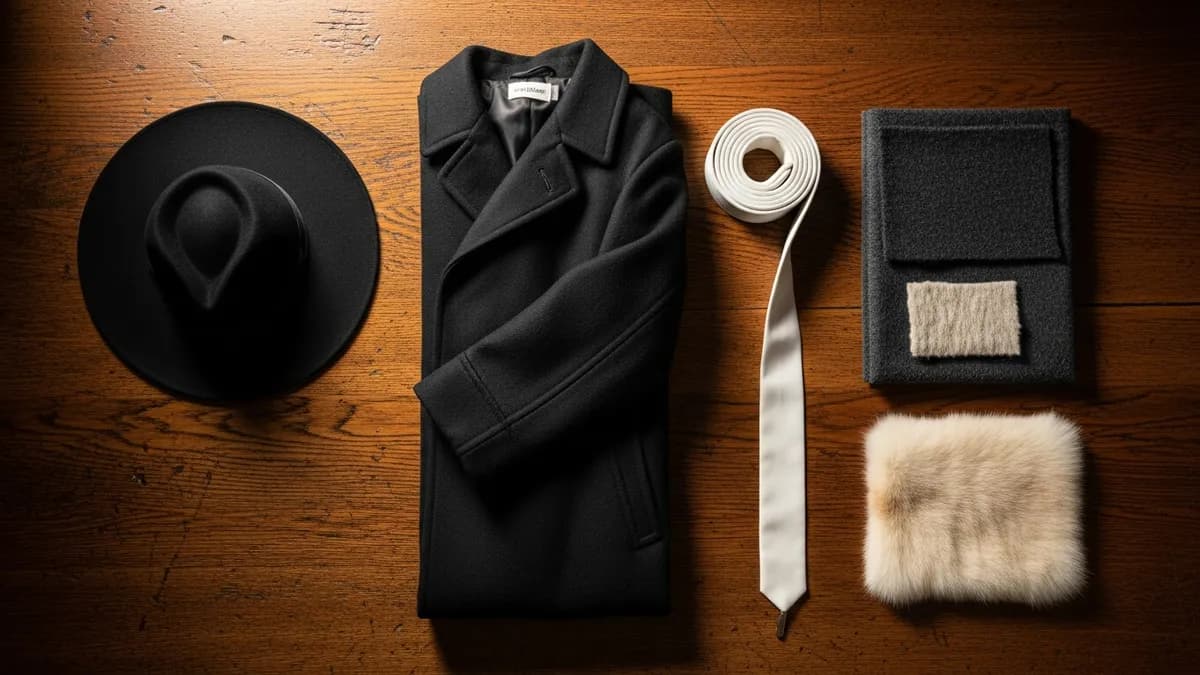
Hasidic clothing varies by sect. Learn to identify Belz, Satmar, Gur, and Chabad by their shtreimel, bekeshe, hat styles, and gartel customs.
Quick Answer
Each Hasidic sect has distinctive clothing that identifies its members. Hat styles, coat lengths, pant lengths, and accessories like the gartel all vary by group. Belz, Satmar, Gur, Skver, and Chabad each have unique dress codes for weekdays and Shabbat, including different styles of shtreimels and spodiks.
If you want to know who Orthodox Jews actually are before diving into the details, that context helps here. One of the first things people notice about Hasidic Jews is the clothing. And most people assume it all looks the same: black coats, black hats, white shirts. But once you know what to look for, the differences are as distinct as different sports team uniforms. Every detail, from the shape of the hat to the length of the pants to the style of the coat, tells you which community someone belongs to.
I grew up in this world, and I can usually identify which Hasidic group a man belongs to from across the street. Let me teach you how.
Weekday Clothing: The Basics
All Hasidic men share some common elements in their weekday dress. They wear a white button-down shirt, dark pants, and a jacket or coat that is longer than a standard suit jacket. Most wear a black hat, and all wear tzitzit (ritual fringes on a four-cornered garment). But within these basics, the variations are significant. The black itself, though, is nearly universal across all these groups — and why black became the default in the first place is a story of its own, going back to Eastern Europe.
The Yeshivish Look
Before diving into Hasidic specifics, it helps to understand the Yeshivish (Litvish) style, since it serves as a contrast — this Yeshivish/Hasidic split is the clearest street-visible version of what people mean by "Orthodox vs Hasidic". Yeshivish men wear modern-looking dark pants, a white button-down shirt, a short suit jacket, and a black hat. On Shabbat, they add a tie and wear a more elegant suit and hat. Only rabbis and roshei yeshiva (heads of yeshivas) in this community wear long coats.
The roots of this style are often traced to the Slabodka yeshiva in nineteenth-century Lithuania, led by Rabbi Nosson Tzvi Finkel, known as the "Alter (Elder) of Slabodka." Slabodka was famous for its emphasis on gadlus ha'adam, the greatness and dignity of the human being, and the Alter is widely credited with encouraging his students to dress neatly and respectably so their appearance would reflect the Torah's view of human worth. Over the twentieth century, especially in America, this evolved into the dark-suit-and-black-hat look Yeshivish men wear today.
Chabad-Lubavitch
Chabad Hasidim are interesting because on weekdays, they dress almost identically to Yeshivish Jews: dark pants, white shirt, black jacket, and a black fedora-style hat. The difference comes on Shabbat, when Lubavitchers wear a distinctive three-quarter length jacket called a sirtuk. Chabad followers are known for rarely removing their hat, even in casual settings. On a hot summer day, you might see a Lubavitcher walking around without his suit jacket, but still wearing his hat.
The Hasidic Coat Length
Most Hasidic sects (other than Chabad) are immediately recognizable by their longer coats. The standard Hasidic weekday coat extends to about three-quarters of the body length. This is distinctly longer than the short suits worn by Yeshivish Jews.
Old Jerusalemite (Yerushalmi) Jews wear an even more distinctive garment: a striped golden coat called a chalat, topped with a broad-brimmed hat.
Pant Length: A Telltale Detail
Here is a detail that most outsiders miss but that is immediately obvious to someone from the community: pant length.
In the old days, long pants were considered a sign of modernity, so many Hasidic groups wore pants that stopped below the knee. Today, this tradition persists in some groups:
- Belz, Toldos Aharon, and Toldos Avraham Yitzchak wear pants that come to about half the shin, bound at the knee
- Gur (Ger) Hasidim wear pants that come to about three-quarters of the shin. A distinctive Gur practice is stuffing their pants into their socks, known in Yiddish as "hoizen zakken" (pants-socks). If you see a Hasidic man with his pants tucked into long socks, he is almost certainly from Gur.
Most other Hasidic groups have adopted full-length pants.
The Gartel: More Than a Belt
The gartel is a special woven belt worn by Hasidic men over their coat at the waistline. Its original purpose is to create a physical separation between the upper and lower body during prayer and Torah study.
But who wears it and when varies significantly by sect:
- Most Hasidim wear the gartel only during prayer or while performing a mitzvah
- Gur Hasidim wear the gartel in yeshiva during Torah study as well
- Belz and Skver Hasidim wear the gartel all day long, even in the street
So if you see a Hasidic man walking down the street with a gartel on, he is likely from Belz or Skver.
Hats: The Most Distinctive Identifier
The hat is perhaps the single most identifiable feature of Hasidic weekday dress. Different groups wear distinctly different styles:
- Belz, Bobov, Skver, and Vizhnitz wear a tall hat with short, fine fur trim
- Satmar and Yerushalmi Jews wear a similar hat, but not as tall
- Gur and many Polish-origin Hasidim wear a tall hat with a slight dent or pinch on top
The differences may seem subtle to an outsider, but to someone from the community, they are unmistakable. I can spot the difference between a Belzer hat and a Satmar hat from twenty feet away.
Glasses: Yes, Really
This one always surprises people. In some Hasidic sects, even the style of eyeglasses is part of the dress code. Certain groups wear only specific styles of plastic-framed glasses as part of their traditional look, viewing metal-framed glasses as too modern.
This custom is followed particularly by Gur, Skver, Vizhnitz, and Satmar Hasidim. It is not a halachic requirement, but it is a strong community custom rooted in the desire to maintain a traditional appearance.
Shabbat and Holiday Clothing: The Bekeshe and Shtreimel
This is where Hasidic clothing becomes truly magnificent.
The Bekeshe (Kaften)
On Shabbat and holidays, Hasidic men change into a bekeshe (also spelled bekishe or called a kaften). This is a long, elegant overcoat made of shiny silk or satin fabric, usually black. It is worn over the white shirt and is typically belted with the gartel.
Toldos Aharon and Toldos Avraham Yitzchak Hasidim are distinctive even here: they wear a golden-colored jacket with black stripes, belted with a wide sash about 18 centimeters across with black stripes. When you see this golden bekeshe in Meah Shearim on a Friday night, it is stunning.
The Shtreimel
The shtreimel is the iconic fur hat worn by Hasidic men on Shabbat, holidays, and at special celebrations like weddings. It consists of a velvet cap surrounded by a ring of fur, traditionally made from the tail-tips of sable, marten, fox, or mink. Shtreimels are handmade, expensive, and often passed down or given as wedding gifts.
The shtreimel is worn by most Hasidic groups including Belz, Satmar, Bobov, Vizhnitz, Skver, Breslov, and many others.
The Spodik
The spodik is worn by Hasidic groups of Polish origin, particularly Gur. It looks similar to a shtreimel but is taller and more cylindrical, traditionally made of long, dark fur (often fitch or a similar animal). The height of the spodik gives it a very distinctive silhouette. (Cheaper synthetic versions exist, as they do for shtreimels.)
If you see a tall, cylindrical fur hat, it is a spodik. If you see a wider, flatter fur hat, it is a shtreimel.
Women's Clothing: Modesty as Identity
While men's Hasidic clothing gets the most attention, women's dress is equally distinctive, though in a different way. All Orthodox women dress according to the laws of tzniut (modesty):
- Skirts or dresses, not pants — based mainly on tzniut (modesty) standards, and reinforced by the verse forbidding a woman to wear men's garments (Devarim 22:5)
- Sleeves past the elbow
- Neckline to the collarbone
- Married women cover their hair with a sheitel (wig), tichel (headscarf), snood, or hat
In Hasidic communities, the standards tend to be stricter. Socks or tights are required. Colors are more muted. Skirts are longer. And in some communities, married women shave their heads before covering them, ensuring that no hair can accidentally be seen.
In Modern Orthodox communities, women follow the same basic modesty laws but with more contemporary styles and somewhat less stringency in certain details.
The Deeper Meaning
Outsiders sometimes wonder why clothing matters so much. Is it not superficial? But in the Orthodox world, clothing is not superficial at all. It is a statement of identity, belonging, and commitment.
The Talmud teaches that one of the reasons the Jewish people merited redemption from Egypt was that they maintained their distinctive clothing throughout their slavery. Dressing differently from the surrounding culture was not a quirk. It was an act of spiritual resistance.
Every Hasidic man who puts on his distinctive hat and coat in the morning is making a statement: I belong to this community. I carry this tradition. I am not trying to blend in with the world around me. I am proud of who I am.
And that, I think, is something anyone can understand.
Common Questions
Can you really tell which Hasidic group someone belongs to by their clothing? Yes — for someone familiar with the communities, clothing details are immediately recognizable. The hat style, coat length, sock type, and peyot style all indicate the specific Hasidic court.
What is a shtreimel? A large fur hat worn by married Hasidic men on Shabbat, holidays, and special occasions. Made from sable, mink, or fox fur, a shtreimel can cost $1,000-$5,000 or more. Different groups wear different styles.
Why do Hasidic men wear long coats? The long black coat (bekeshe or kapote) is worn on Shabbat and holidays as formal attire. It recalls the dress of Eastern European Jewish nobility and has been preserved as a symbol of dignity and community identity.
How does Hasidic dress differ from other Orthodox dress? (Hasidic Jews are Orthodox — the side-by-side version of that comparison lives in Orthodox Jewish clothing.) The biggest visible differences are coat length and headwear. Most Hasidic men wear long coats and, on Shabbat, fur hats like the shtreimel or spodik — Chabad, who dress closer to the Yeshivish style and wear no fur hat, are the main exception — while Yeshivish men wear a regular short suit jacket with a black fedora, and Modern Orthodox men often wear just a knitted kippah with everyday clothing. For women the modesty laws are the same across communities, but Hasidic standards run stricter — more muted colors, longer skirts, and stockings required.
I'm an Orthodox Jewish woman from Brooklyn. I can't speak for every Orthodox Jew — when I write outside my experience, I say so.
Orthodox Jewish Clothing — Why They Dress That Way
What Is a Hasidic Jew? An Insider's Guide to Hasidic Judaism
Why Do Orthodox Jews Wear Black?
Why Do Orthodox Jewish Men Have Strings Hanging Out?
There's more where this came from.
Orthodox Jewish dress touches on modesty, community identity, and religious law. The full tour covers it all.
The Orthodox Insider
A new letter every Thursday, before Shabbos — plus an instant download of “10 Things Everyone Gets Wrong About Orthodox Jews” when you subscribe.
No spam, unsubscribe anytime.