Jewish Holidays: The Complete Jewish Calendar Guide
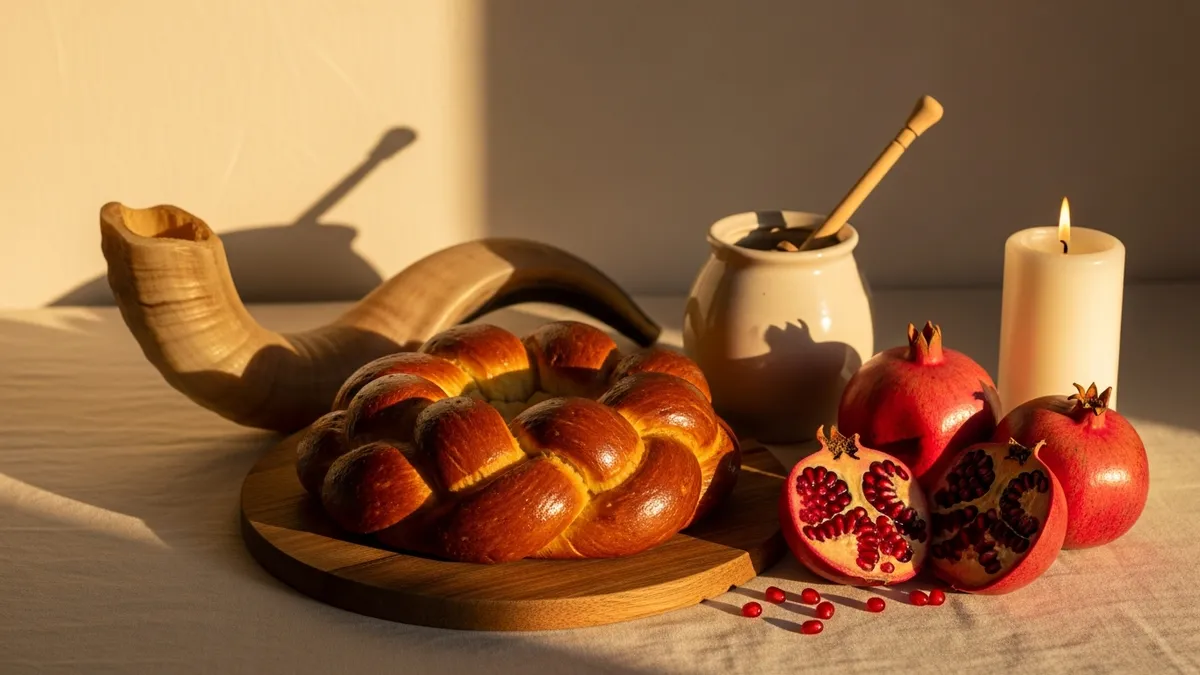
Every major Jewish holiday explained — what it celebrates, how Orthodox Jews observe it, key rituals, foods, and customs throughout the year.
Quick Answer
The Jewish calendar includes major holidays throughout the year: Rosh Hashanah (New Year), Yom Kippur (Day of Atonement), Sukkot (Tabernacles), Chanukah (Festival of Lights), Purim, Pesach (Passover), and Shavuot. Each holiday carries specific observances, prayers, foods, and customs rooted in Torah commandments.
The Jewish calendar is filled with holidays, each carrying deep spiritual meaning and rich traditions. For Orthodox Jews, these are not optional celebrations — they are commandments from the Torah, observed with the same seriousness and joy as they have been for thousands of years.
The calendar sits at the heart of Orthodox Judaism — it is lunar-solar, meaning months follow the moon cycle but are adjusted to align with the solar year. This is why Jewish holidays fall on different dates each year on the secular calendar.
The High Holidays
Rosh Hashanah (Jewish New Year)
When: 1-2 Tishrei (September/October)
Rosh Hashanah marks the beginning of the Jewish year and the start of the Ten Days of Repentance. It is the day when, according to tradition, G-d judges every person and determines what the coming year will hold.
Key observances:
- Blowing of the shofar (ram's horn) — 100 blasts over the two days
- Festive meals with symbolic foods: apple dipped in honey (for a sweet new year), pomegranate (for merits as plentiful as its seeds), round challah (symbolizing the cycle of the year), and fish head (to be at the "head" and not the "tail")
- Extended prayers, including the powerful Unesaneh Tokef prayer
- Tashlich — a ceremony at a body of water where sins are symbolically cast away
Yom Kippur (Day of Atonement)
When: 10 Tishrei
The holiest day of the Jewish year. A 25-hour fast during which Orthodox Jews abstain from eating, drinking, wearing leather shoes, bathing, and marital relations. The day is spent almost entirely in synagogue, in intense prayer and repentance.
Key observances:
- Complete fast from before sunset to after nightfall the next day
- Wearing white clothing (symbolizing purity; many men wear a white kittel)
- Five prayer services throughout the day, climaxing in Ne'ilah — the "closing of the gates"
- The shofar is blown one final blast at the end of Ne'ilah, marking the conclusion
The Three Pilgrimage Festivals
Sukkot (Festival of Tabernacles)
When: 15-21 Tishrei
A joyful week-long holiday commemorating the Israelites' journey through the wilderness after the Exodus from Egypt. Orthodox Jews build a sukkah — a temporary hut with a roof of natural materials — and eat (and sometimes sleep) in it for the entire week.
Key observances:
- Building and dwelling in the sukkah
- Waving the lulav (palm branch) and etrog (citron) together with myrtle and willow branches
- Welcoming ushpizin (spiritual guests — Abraham, Isaac, Jacob, etc.)
Shemini Atzeret / Simchat Torah
When: 22-23 Tishrei (combined into a single day, 22 Tishrei, in Israel)
The final days of the Sukkot season. Simchat Torah celebrates the completion of the annual Torah reading cycle. The celebration is exuberant — dancing with Torah scrolls for hours, singing, and beginning the Torah again from the very first verse. In the Diaspora these fall on two days (Shemini Atzeret on 22 Tishrei, Simchat Torah on 23 Tishrei); in Israel both are observed together on 22 Tishrei.
Pesach (Passover)
When: 15-21 Nisan, with an eighth day (22 Nisan) observed outside Israel (March/April)
Passover commemorates the Exodus from Egypt. For eight days in the Diaspora (seven in Israel), Orthodox Jews eat no chametz (leavened bread or products) — the house is thoroughly cleaned beforehand, and special Passover dishes and utensils are used.
Key observances:
- The Seder — a structured evening of storytelling, ritual foods, songs, and discussion, following the Haggadah
- Eating matzah (unleavened bread) — commemorating the bread that didn't have time to rise when the Israelites left Egypt in haste
- The Seder plate with symbolic foods: bitter herbs (maror), charoset, shank bone, egg, and karpas (vegetable)
- Selling chametz — any remaining leavened products are legally sold to a non-Jew for the duration of the holiday
Shavuot (Festival of Weeks)
When: 6 Sivan, with a second day (7 Sivan) added in the Diaspora (May/June)
Celebrates the giving of the Torah at Mount Sinai. Many communities stay up the entire first night studying Torah (tikkun leil Shavuot).
Key observances:
- All-night Torah study
- Reading the Ten Commandments in synagogue
- Eating dairy foods (cheesecake, blintzes) — various reasons are given for this custom
- Decorating the synagogue with flowers and greenery
Other Major Holidays
Chanukah
When: 25 Kislev - 2/3 Tevet (November/December)
Celebrates the Maccabees' victory over the Syrian-Greeks and the miracle of the oil that burned for eight days in the rededicated Holy Temple.
Key observances:
- Lighting the menorah (chanukiyah) — one candle the first night, adding one each night
- Eating foods fried in oil: sufganiyot (jelly donuts) and latkes (potato pancakes)
- Playing dreidel
- Chanukah is not a "Jewish Christmas" — it is a minor holiday that has taken on greater visibility because of its proximity to Christmas on the calendar
Purim
When: 14 Adar (February/March)
Celebrates the salvation of the Jewish people from Haman's plot to destroy them, as told in the Book of Esther (Megillat Esther).
Key observances:
- Reading the Megillah (Book of Esther) twice — evening and morning
- Sending mishloach manot (food packages) to friends
- Giving gifts to the poor (matanot la'evyonim)
- A festive meal with drinking
- Wearing costumes (a beloved custom, especially for children)
Tisha B'Av (9th of Av)
When: 9 Av (July/August)
The saddest day on the Jewish calendar, commemorating the destruction of both Holy Temples in Jerusalem and other tragedies in Jewish history. A full-day fast with restrictions similar to Yom Kippur.
Key observances:
- 25-hour fast
- Reading the Book of Lamentations (Eicha)
- Sitting on low chairs (as mourners do)
- No leather shoes, bathing, or anointing
The Jewish Calendar Rhythm
What makes the Jewish holiday calendar remarkable is its rhythm. There is always something coming — a holiday, a fast day, a special Shabbat. The year is never flat or monotonous. Each season carries its own spiritual theme:
- Tishrei (fall): Judgment, repentance, joy
- Kislev/Tevet (winter): Light in darkness (Chanukah)
- Adar (late winter): Joy and salvation (Purim)
- Nisan (spring): Freedom and redemption (Passover)
- Sivan (early summer): Torah and revelation (Shavuot)
- Av (summer): Mourning and hope (Tisha B'Av)
For Orthodox Jews, the calendar is not just a schedule — it is a curriculum for the soul.
Jewish Holiday Dates for 2026 and 2027
Every Jewish holiday begins at sundown on the evening before the first day listed — that's not a quirk, it's how the Jewish day works. Here are the major dates (Diaspora observance):
| Holiday | 2026 | 2027 |
|---|---|---|
| Purim | March 3 | March 23 |
| Passover | April 2–9 | April 22–29 |
| Shavuot | May 22–23 | June 11–12 |
| Rosh Hashanah | September 12–13 | October 2–3 |
| Yom Kippur | September 21 | October 11 |
| Sukkot | September 26 – October 2 | October 16–22 |
| Shemini Atzeret & Simchat Torah | October 3–4 | October 23–24 |
| Chanukah | December 5–12 (first candle Dec 4) | December 25 – January 1 (first candle Dec 24) |
Minor but beloved: Tu BiShvat falls on February 2, 2026 and January 23, 2027; Lag BaOmer on May 5, 2026 and May 25, 2027. If you're coordinating with an Orthodox colleague, the days that affect work schedules most are Rosh Hashanah, Yom Kippur, the first and last days of Sukkot and Passover, and Shavuot — the high holidays guide explains which days carry Shabbat-level work restrictions.
What Jewish Holiday Is Today — and What Does It Mean?
If you're asking because a Jewish coworker suddenly has an out-of-office reply, here's the fastest way to orient yourself: find today's date in the table above, and remember that every holiday begins at sundown the evening before the printed date. So if a holiday is listed for Thursday, it actually started Wednesday night — which also answers "what Jewish holiday is tomorrow" and "what Jewish holiday is this week." The printed date is the daytime portion; the celebration is already underway the night before.
As for what it means — every season of the Jewish year carries its own theme, so you can read the calendar's mood even without memorizing each holiday. Fall is judgment and joy (Rosh Hashanah, Yom Kippur, and Sukkot in quick succession), winter is light in darkness (Chanukah), late winter is rescue and celebration (Purim), spring is freedom (Passover), and early summer is revelation (Shavuot). Midsummer — right now, as I update this in late July 2026 — has just turned a corner: the fast of Tisha B'Av passed on July 23, 2026, and we've entered the seven weeks of consolation — the Shiva D'Nechemta, seven Shabbats with haftarahs of comfort — that carry the calendar gently from mourning all the way up to Rosh Hashanah. It's the season outsiders hear about least, because it's quiet — consolation rather than festivity.
One more distinction worth knowing: some days are full holidays (Yom Tov) with Shabbat-level work restrictions, while others are minor observances when life continues as usual. If your real question is "will my Jewish colleague be reachable today," that's the thing to check — the table above and the notes beneath it flag exactly which days those are.
Common Questions
What are the 8 major Jewish holidays? Counting the Torah-level observances: Rosh Hashanah, Yom Kippur, Sukkot, Shemini Atzeret/Simchat Torah, Chanukah, Purim, Passover, and Shavuot. (Chanukah and Purim are rabbinic rather than biblical, but no list of major holidays leaves them out — ask any eight-year-old.) Each one explained here.
What are the 7 Jewish holidays? The "seven holidays" framing comes from Leviticus 23, where the Torah lists its appointed times: Passover, the week of Unleavened Bread, the Omer of firstfruits, Shavuot, Rosh Hashanah (called Zichron Teruah there — a day of remembrance with shofar blasts; Numbers 29:1 calls it Yom Teruah), Yom Kippur, and Sukkot. In Jewish practice we don't usually count to seven — we group these as the High Holidays plus the three pilgrimage festivals. All of them are still kept today, with one adjustment: since the Temple's destruction, the Omer offering itself can't be brought, so it lives on as Sefirat HaOmer — the nightly counting of the 49 days between Passover and Shavuot.
What are the 13 Jewish holidays? There's no official list of thirteen — that number comes from popular calendars that count the most widely observed days: Rosh Hashanah, Yom Kippur, Sukkot, Shemini Atzeret, Simchat Torah, Chanukah, Tu BiShvat, Purim, Passover, Lag BaOmer, Shavuot, and Tisha B'Av, with Shabbat itself rounding out the count. Merge Shemini Atzeret and Simchat Torah into one day (as Israel does) and you get twelve; add the minor fast days and you pass thirteen. The number depends on where you draw the line, not on any holiday you're missing.
How many Jewish holidays are there? There are about a dozen major Jewish holidays throughout the year, plus several minor observances. The most significant are Rosh Hashanah, Yom Kippur, Sukkot, Passover, and Shavuot. Each has specific laws and customs.
Do Orthodox Jews work on Jewish holidays? On major holidays (Yom Tov), Orthodox Jews follow the same restrictions as Shabbat — no work, no electronics, no driving. Some holidays have intermediate days (Chol HaMoed) when work is permitted with certain restrictions.
Why do Jewish holidays start at sunset? The Jewish day begins at sunset, based on the Torah's description of creation: 'And there was evening and there was morning.' So every holiday begins the evening before the calendar date.
Are Jewish holidays the same every year? The dates shift annually because the Jewish calendar is lunar-solar. Holidays fall on the same Hebrew date each year but move around on the secular calendar. Passover is always in spring, Rosh Hashanah in fall.
What Jewish holidays are now? As of this update — late July 2026 — the fast of Tisha B'Av (July 23, 2026) has just passed, and the calendar is in the seven weeks of comfort that lead through the month of Elul to Rosh Hashanah, which begins at sundown on September 11, 2026. For any other "right now," check the dates table above — and remember that each holiday starts the evening before its listed date.
Are Jewish holidays observed in the USA? Jewish holidays are not federal holidays in the United States — banks, most schools, and government offices stay open. But in areas with large Jewish communities the calendar is very much felt: New York City public schools close for Rosh Hashanah and Yom Kippur, and the city suspends alternate-side parking on many Jewish holidays. One key difference: outside Israel, Orthodox communities add an extra day to most major festivals (Yom Tov Sheni), which is why American observance of Passover, Sukkot, and Shavuot runs a day longer than Israel's.
Can Jews eat shrimp? No — shrimp is not kosher. The Torah permits only water creatures with both fins and scales (Leviticus 11:9), which rules out all shellfish: shrimp, lobster, crab, clams, and oysters. This applies year-round, not just on holidays — festival meals follow the same kosher rules as every other meal of the year.
I'm an Orthodox Jewish woman from Brooklyn. I can't speak for every Orthodox Jew — when I write outside my experience, I say so.
Want to experience a Jewish holiday yourself?
Virtual Seders, Rosh Hashanah dinners, and Chanukah candle-lightings are open to non-Jewish guests.
The Orthodox Insider
A new letter every Thursday, before Shabbos — plus an instant download of “10 Things Everyone Gets Wrong About Orthodox Jews” when you subscribe.
No spam, unsubscribe anytime.