Why Do Orthodox Jews Wear Black?
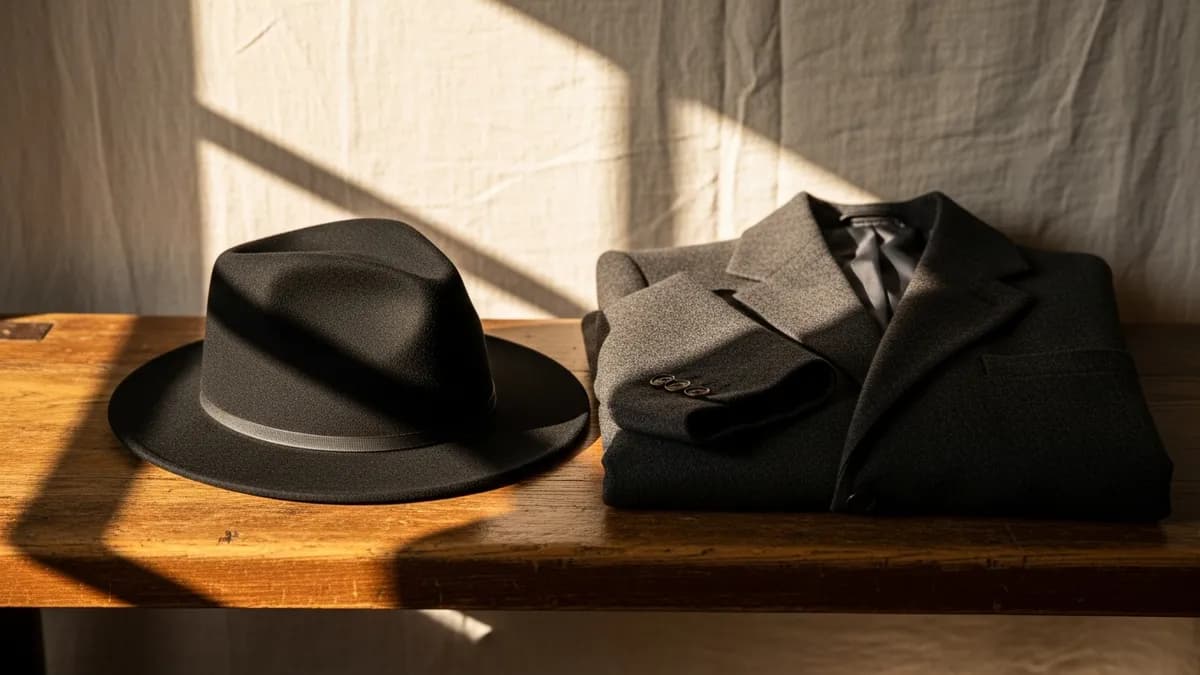
The real reasons many Orthodox Jewish men wear black suits and hats — from historical origins to spiritual values behind the iconic look.
Quick Answer
Many Orthodox Jewish men wear black suits and hats as a sign of dignity, modesty, and community belonging. The style originated from formal Eastern European dress and became a uniform that reduces fashion competition, shows respect for Torah study and prayer, and signals commitment to religious life.
Walk through Boro Park on a weekday morning and you will see a sea of black. Black suits, black hats, white shirts — hundreds of men streaming toward shul or the subway, and they all look remarkably similar. I remember the first time I brought a non-Jewish friend to my neighborhood, and she said, "How do you tell everyone apart?" I laughed because to me, every single person looked completely different — the hat brim, the coat length, the way they wore their tzitzit. But I understood why she asked.
So why would an entire community choose to dress in the same dark, formal clothing every single day? The answer touches on history, values, and a very different way of thinking about what clothing is for.
It Started in Eastern Europe
The black suit and hat are not actually ancient biblical garments. They trace back to 18th and 19th century Eastern Europe, where Jews adopted the formal dress style of the surrounding culture. At that time, dark suits and hats were simply what respectable men wore — think of old photographs of European businessmen and professionals.
As fashion evolved in the broader world, Orthodox Jewish communities held onto this style. What was once ordinary dress became distinctive precisely because the rest of the world moved on. The Orthodox community made a deliberate choice: rather than chasing changing trends, they would maintain a stable, dignified mode of dress.
This is a pattern you see throughout Orthodox Jewish life — holding onto traditions that the surrounding culture has abandoned, not out of stubbornness, but because the community sees value in continuity and stability. My husband sometimes jokes that his wardrobe has not changed since our wedding day. He is not wrong.
Modesty and Uniformity
In Orthodox thought, the way you dress should not draw attention to yourself. Clothing should be dignified but not flashy. The black suit accomplishes this beautifully — it is formal enough to show respect, simple enough to avoid vanity.
There is also a deeply practical element that I have come to really appreciate. When everyone dresses more or less the same way, the entire dynamic of fashion competition disappears. No one is showing off designer labels. No one feels inadequate because they cannot afford the latest styles. A young yeshiva student and a successful businessman sit side by side in the study hall wearing nearly identical clothing, and the focus stays where it belongs — on their learning, their character, their relationship with G-d.
My husband puts it simply: "I have basically the same outfit every day, and it makes mornings easier." He is out the door in ten minutes. No decisions, no stress about what matches. And honestly? I appreciate the uniformity too. It keeps us focused on what matters — who a person is inside, not what brand they are wearing.
Dignified Dress for Dignified Activities
There is a concept in Jewish thought that the way you dress should match the importance of what you are doing. If you were meeting a king, you would dress your best. Orthodox Jewish men spend significant portions of their day in prayer and Torah study — activities they consider the most important things a person can do. Wearing formal, dignified clothing is a way of honoring those activities.
This is why you will see men wearing their suits even in summer heat, even on a regular Tuesday, even when running errands. I have watched my husband head out in August in full suit and hat, and yes, I have asked him if he is hot. He always says the same thing: "You get used to it." The suit is not about the occasion — it is about maintaining a constant state of readiness and respect.
Community Identity
Clothing is one of the most powerful markers of belonging. The Midrash (ancient rabbinical commentary) teaches that one of the merits that sustained the Jewish people during their slavery in Egypt was that they maintained their distinctive dress. The idea that clothing preserves identity runs deep in Jewish consciousness.
When an Orthodox man puts on his black hat in the morning, he is making a visible statement: I belong to this community, I share these values, I am committed to this way of life. It is a daily act of identification that reinforces connection to something larger than oneself.
I see this with my own husband every morning. He puts on his hat, adjusts it in the mirror, and he carries himself a little differently. It is not vanity — it is purpose.
Not Everyone Wears Black
It is important to note that "Orthodox" is a broad umbrella, and by no means do all Orthodox men dress this way. My husband comes from a Yeshivish, black-hat background, while I grew up in a more Hasidic home. Even between the two of us, we see these differences every day.
Modern Orthodox men typically dress in contemporary professional clothing. They wear a kippah (skullcap) but otherwise dress like anyone in their workplace or neighborhood. You would not necessarily identify them on the street as Orthodox.
Yeshivish/Litvish men are the ones most associated with the classic black suit and black hat look. This community, which traces its traditions to the great Lithuanian yeshivas, places a strong emphasis on Torah study and sees the formal dress as part of that commitment. This is my husband's world.
Hasidic men also wear black during the week, but their Shabbat and holiday clothing is distinctive — and this is where things get really special. On Friday afternoon in Boro Park or Williamsburg, you can actually watch the transformation happen. The streets empty for a little while, and then the men re-emerge in their Shabbat finest. Many Hasidic men wear a bekeshe — a long, elegant silk coat, usually in black or dark navy, that reaches past the knees. Married Hasidic men in many communities also wear a shtreimel — a large, round fur hat that can cost thousands of dollars. I grew up watching my father put on his shtreimel every Friday night, and there was something almost regal about it. The shtreimel is reserved for Shabbat, holidays, and special occasions, and it is treated with great care and reverence.
Different Hasidic groups have their own specific clothing customs. Some wear knee-length socks, specific styles of shoes, or distinctive hat shapes. To an outsider it all looks like "black clothes," but within the community, the subtle variations immediately signal which group someone belongs to. I can usually tell within a few seconds.
This is one of my favorite "insider" skills. To you, it's a hundred men in black hats. To me, I see a specific hat brim that says 'Satmar Hasid,' a particular coat length that says 'Litvish Yeshiva student,' and a certain style of shoe that says 'Gerrer.' We are constantly signaling our specific heritage and sub-community through these tiny details!
What About Women?
Orthodox women's clothing follows the principles of tznius (modesty) but does not have the same uniformity as men's dress. Women cover their elbows, knees, and collarbone, and married women cover their hair — but within those guidelines, there is enormous variety in style, color, and fashion. The "all black" phenomenon is largely a men's tradition.
And honestly, I am grateful for that. I love being able to express personal style within the framework of modesty. My closet has a lot more color than my husband's.
A Different Relationship with Clothing
At its core, the Orthodox approach to dress reflects a fundamentally different relationship with clothing. In mainstream culture, clothing is primarily about self-expression and personal style. In Orthodox life, clothing is about something bigger — it is about humility, community, dignity, and focus on what truly matters.
That does not mean Orthodox Jews are indifferent to appearance. People take care to look neat and presentable. Suits are pressed, shoes are polished, hats are well-maintained. The goal is not to look sloppy — it is to look dignified without being showy.
The black suit may look plain from the outside. But for the men who wear it — men like my husband, like my father, like the thousands of men I see in my neighborhood every day — it carries deep meaning. A daily reminder of who they are, what they value, and the community they are proud to belong to.
Common Questions
Do all Orthodox Jewish men wear black? No. Modern Orthodox men typically wear regular clothing with a kippah. The black suit and hat is primarily a Yeshivish and Hasidic practice. Even within these communities, there are variations — Shabbat clothing differs from weekday clothing, and different Hasidic groups have distinct styles.
Do they wear black in summer too? Yes. The suit fabric may be lighter weight, but the color stays black. Is it comfortable in July? Not particularly. But the commitment to the dress code does not take summers off.
Why black specifically, and not another dark color? Black has associations with formality, dignity, and seriousness across many cultures. In Orthodox communities, it also became a way of standing apart from the constantly changing fashions of the secular world. Navy, charcoal, and dark gray are sometimes worn, but black is the standard.
Do Orthodox women wear black too? Orthodox women dress modestly but are not limited to black. In fact, women's clothing in Orthodox communities — especially Hasidic communities — is often colorful and fashionable within modesty guidelines.
I'm an Orthodox Jewish woman from Brooklyn. I can't speak for every Orthodox Jew — when I write outside my experience, I say so.
Orthodox Jewish Clothing — Why They Dress That Way
What Is a Hasidic Jew? An Insider's Guide to Hasidic Judaism
Jew Curls (Peyot): Meaning and Why Orthodox Jews Wear Them
Why Do Orthodox Jewish Men Have Strings Hanging Out?
There's more where this came from.
Orthodox Jewish dress touches on modesty, community identity, and religious law. The full tour covers it all.
The Orthodox Insider
A new letter every Thursday, before Shabbos — plus an instant download of “10 Things Everyone Gets Wrong About Orthodox Jews” when you subscribe.
No spam, unsubscribe anytime.