Bar & Bat Mitzvah: Meaning, Customs & What to Expect
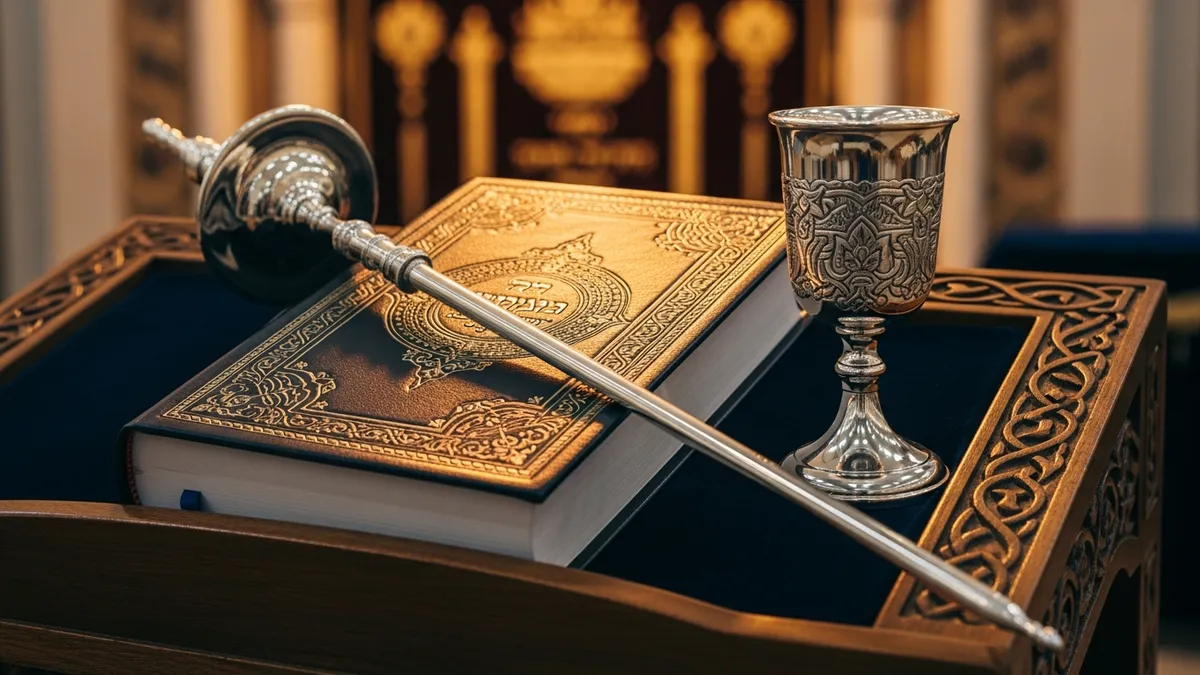
Learn the real meaning of Bar Mitzvah and Bat Mitzvah — the rituals, the celebration, the etiquette, and what this milestone means in Orthodox Jewish life.
Quick Answer
A Bar Mitzvah (for boys at age 13) or Bat Mitzvah (for girls at age 12) marks the moment a Jewish child becomes personally responsible for keeping G-d's commandments. The boy begins wearing tefillin, reads from the Torah, and is counted as an adult for prayer. A festive celebration follows.
Every Orthodox Jewish parent waits for this day. The day your child stands up in front of the community, puts on tefillin for the first time, reads from the Torah, and officially becomes responsible for his own relationship with Hashem. That is the Bar Mitzvah — and if you have never experienced one, let me tell you what it is really about.
What Does Bar Mitzvah Actually Mean?
The phrase "Bar Mitzvah" translates literally as "son of the commandment" — if you want to go deeper, I have a whole piece on what bar mitzvah actually means. Bar means "son" in Aramaic, and mitzvah means "commandment" in Hebrew. A Bat Mitzvah (for girls) means "daughter of the commandment" — bat meaning "daughter."
A boy becomes a Bar Mitzvah at age thirteen. A girl becomes a Bat Mitzvah at age twelve. This is the age when a Jewish child becomes personally obligated to follow all of the Torah's commandments — which is the Orthodox approach to Jewish law in a nutshell. Until that point, it is the parents' responsibility to train their child in the mitzvot. After the Bar or Bat Mitzvah, the young person carries that responsibility on their own shoulders.
This is not just a party. This is the day a child becomes an adult in the eyes of Jewish law.
What Happens at a Bar Mitzvah
The Bar Mitzvah boy celebrates this milestone with several important rituals:
Putting on Tefillin
The most significant moment — often the one that brings the tears — is when the boy puts on his own pair of tefillin for the very first time. In many families, the boy begins practicing with tefillin a few weeks before his thirteenth birthday. The morning of his Bar Mitzvah, he wraps the tefillin around his arm and places the head-tefillin (shel rosh) on the crown of his head, above his hairline, and something shifts. He is no longer a child watching his father pray. He is a man standing before Hashem on his own.
I remember my oldest son's first time putting on tefillin. My husband stood beside him, guiding his hands, and both of them had tears streaming down their faces. I was watching from the women's section, crying right along with them.
The Torah Aliyah
The Bar Mitzvah boy is called up to the Torah for an aliyah — the honor of reciting the blessings before and after a Torah reading. In many communities, the boy also reads a portion of the Torah or the Haftarah (a selection from the Prophets) himself. He has been preparing for this moment for months, studying the Hebrew text with its complex cantillation notes (trop), practicing until he can chant it perfectly.
When the Bar Mitzvah boy finishes his reading, the congregation erupts with cries of "Mazel Tov!" and showers him with candy. Yes, candy. It is one of those wonderful Jewish customs — we literally shower the boy with sweets to symbolize a sweet new beginning.
The Bar Mitzvah Speech
The Bar Mitzvah boy delivers a speech, usually a d'var Torah (a teaching on a Torah topic). This is the first time the community hears him speak as an adult Torah scholar, however young. The speech typically connects to that week's Torah portion and includes thanks to parents, teachers, and family. It is a proud moment for everyone, especially the parents who have spent thirteen years preparing for this day.
Counted for a Minyan
From this day forward, the Bar Mitzvah boy can be counted as part of a minyan — the quorum of ten Jewish adult males required for communal prayer services. He can serve as a witness for legal matters in Jewish law. He bears his own spiritual responsibilities. He is, in the fullest sense, a member of the community.
What About a Bat Mitzvah?
In Orthodox communities, the Bat Mitzvah is celebrated differently than the Bar Mitzvah. Since women are not obligated in the same public prayer rituals (tefillin, Torah reading, minyan), a Bat Mitzvah celebration typically does not involve a synagogue service in the same way.
Instead, many Orthodox families celebrate with a festive meal, where the Bat Mitzvah girl delivers a speech or d'var Torah. Some communities hold special women's celebrations with singing, dancing, and inspirational talks. The emphasis is on the girl's new spiritual responsibilities — she is now personally obligated in all the mitzvot that apply to women, including Shabbat observance, keeping kosher, davening (praying), and the laws of tzniut (modesty).
In my community, a Bat Mitzvah celebration is a beautiful evening event where the girl speaks about a Torah topic she has been studying, her friends perform songs and skits, and the whole family celebrates together. It may look different from a Bar Mitzvah, but the meaning is the same — a child has become an adult in the eyes of Hashem.
Preparing for the Bar Mitzvah
Orthodox families take preparation seriously. Most families hire a rabbi or mentor to work with the Bar Mitzvah boy in the months leading up to the big day. The mentor teaches him how to put on tefillin, prepares him for his Torah reading, and helps him write his speech. In some communities, there are group classes where several boys preparing for their Bar Mitzvahs study together.
The Bar Mitzvah boy also reviews the laws and responsibilities he is about to take on. This is not just a celebration — it is a transition, and the boy needs to understand what it means.
The Celebration
After the synagogue service, there is a festive meal — the seudas mitzvah. This can range from a simple Kiddush lunch after Shabbat services to an elaborate evening party with a band, dancing, and a catered dinner. The style of the celebration varies enormously based on the community and the family.
In Hasidic and Yeshivish communities, the Bar Mitzvah meal is typically segregated, with separate seating for men and women. The emphasis is on Torah, family, and gratitude to Hashem. In Modern Orthodox communities, celebrations may look more like what the general public imagines — a full party with music and dancing, though still with a strong religious component.
Regardless of the style, the core is the same: a family and community coming together to celebrate a child who has taken on the yoke of mitzvot.
Bar Mitzvah Etiquette — What to Know If You Are Invited
If you are attending an Orthodox Bar Mitzvah for the first time:
- Wear a kippah. Men should wear a yarmulke throughout the event. They are usually provided at the entrance.
- Dress modestly. Men should wear a suit or dress clothes. Women should wear modest attire — sleeves past the elbows, skirt past the knees.
- Follow the crowd during the synagogue service. Stand when others stand, sit when they sit. You do not need to know the prayers.
- Say "Mazel Tov" after the Torah reading and after the Bar Mitzvah boy's speech.
- Bring a gift. Traditional Bar Mitzvah gifts include Hebrew books, Judaica items, or other religious articles. If you are not sure what to buy, cash or a gift card is always appropriate and always appreciated. The gift is a way of honoring the boy on this special day — do not leave it out.
Why It Matters
The Bar and Bat Mitzvah is not a graduation or a birthday party. It is the moment a Jewish child steps into a covenant that is over three thousand years old. When a thirteen-year-old boy wraps tefillin around his arm for the first time, he is doing exactly what his father did, and his grandfather, and his great-grandfather, all the way back to Sinai.
I have watched many Bar Mitzvahs in my life, and the moment that always gets me is the father's blessing. After the Bar Mitzvah boy's aliyah, the father recites a special bracha (blessing): "Baruch shepetarani me'onsho shel zeh" — literally, "Blessed is the One who has exempted me from the punishment of this child" (many recite it without Hashem's name and kingship). It sounds almost funny, but it is profound. The father is saying: until now, I bore responsibility for your mitzvah observance. From this moment on, you carry it yourself.
That handoff — from parent to child, from generation to generation — is what the Bar Mitzvah is really about. And it is one of the most beautiful things in Jewish life.
Common Questions
At what age is a bar or bat mitzvah? Boys become bar mitzvah at age 13. Girls become bat mitzvah at age 12. These ages represent the point at which the child becomes personally responsible for observing the commandments.
What happens at the ceremony? For boys, the bar mitzvah boy is called to the Torah to read a portion during the Shabbat morning synagogue service. He may also chant the Haftarah (prophetic reading) and give a speech. Bat mitzvah celebrations vary by community.
Is there always a big party? Not always. The religious milestone is the Torah reading, not the party. Some families celebrate with a simple kiddush lunch; others host an evening celebration. The scale varies widely by family and community.
What gift should I bring? Cash or check in a card is standard. The amount depends on your relationship to the family. Books, Judaica items, or savings bonds are also common. If attending, dress modestly.
I'm an Orthodox Jewish woman from Brooklyn. I can't speak for every Orthodox Jew — when I write outside my experience, I say so.
Jewish Wedding Traditions: A Guide to the Orthodox Ceremony
What is Orthodox Judaism? A Complete Guide
Jewish Funeral & Mourning Customs: What to Expect
My Arranged Marriage: A Hasidic Jew's Experience
Attending one of these in real life?
Weddings, bar mitzvahs, and other Jewish life events often include non-Jewish guests. If you want practical guest etiquette, ask.
The Orthodox Insider
A new letter every Thursday, before Shabbos — plus an instant download of “10 Things Everyone Gets Wrong About Orthodox Jews” when you subscribe.
No spam, unsubscribe anytime.