Why Do Orthodox Jews Cover Mirrors When Mourning?
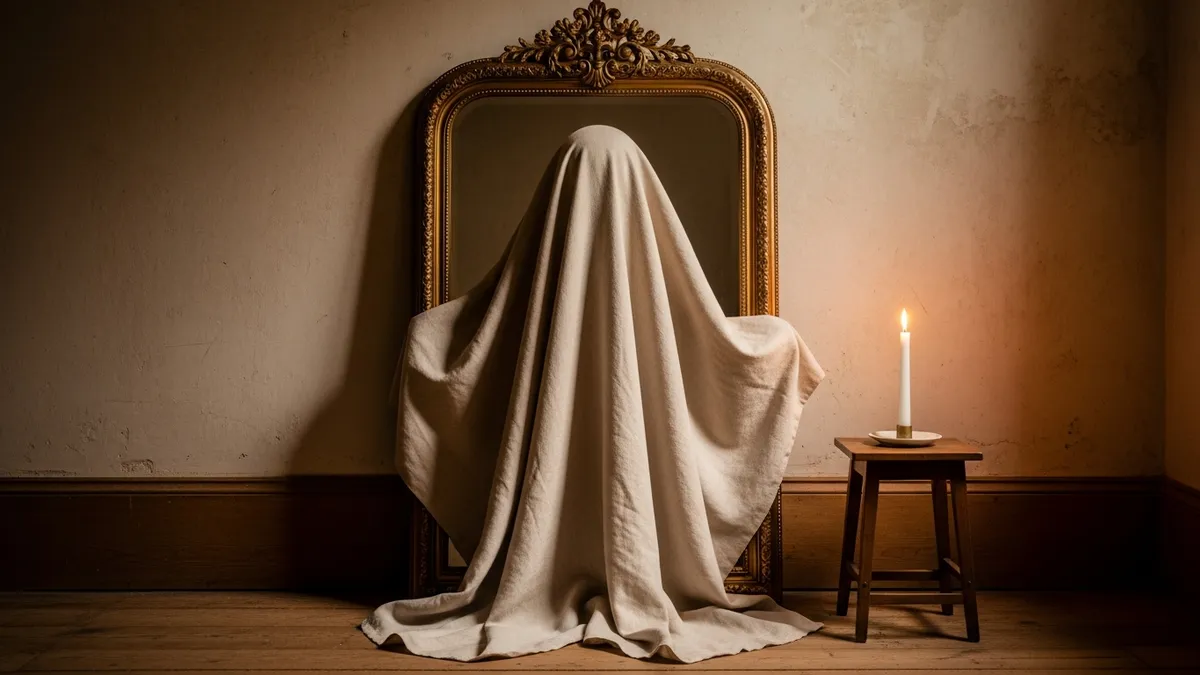
Learn why Jewish families cover mirrors during shiva, the mourning period, including the spiritual, practical, and psychological reasons behind this tradition.
Quick Answer
Jewish families cover mirrors during shiva (the seven-day mourning period) for several complementary reasons: to remove the focus on personal appearance and vanity, because one does not pray facing a mirror and the home becomes a place of prayer, and as a symbolic acknowledgment of loss. Covered mirrors help mourners turn inward on their grief rather than on how they look.
Why Do Orthodox Jews Cover Mirrors When Mourning?
When you walk into a Jewish home during the shiva period — the seven days of mourning after a loved one's burial — one of the first things you'll notice is that every mirror in the house is covered. Draped with cloth, turned to the wall, or taped over with paper.
The direct answer: covering mirrors during shiva removes the focus on physical appearance during a time when mourners should be concentrating entirely on their loss, their memories, and their spiritual processing of grief. It's about turning inward rather than looking outward.
The Reasons Behind It
Several explanations have been offered over the centuries, and they complement rather than contradict each other:
Removing Vanity
The most straightforward reason. During shiva, mourners don't shower for pleasure, don't wear leather shoes, don't apply cosmetics, and sit on low chairs. Covering mirrors is consistent with this theme — everything about personal appearance takes a back seat to the experience of grief.
Looking in a mirror is, by definition, an act of self-focus. During mourning, the focus should be on the person who passed and on comforting the bereaved, not on how anyone looks.
Prayer Considerations
During shiva, prayer services are held in the mourner's home. Jewish law prohibits praying in front of a mirror because seeing your own reflection during prayer can interfere with concentration — you might start focusing on yourself rather than on your conversation with G-d.
Since the home temporarily becomes a house of prayer during shiva, covering the mirrors serves this practical halachic purpose as well.
The Image of G-d
A deeper mystical explanation: humans are created b'tzelem Elokim — in the image of G-d. When a person dies, one reflection of that divine image has been diminished in the world. Covering mirrors symbolically acknowledges this loss — we cover the reflective surfaces as if to say that something essential about how G-d's image is reflected in our world has been dimmed.
Practical Kindness
There's also a compassionate, practical angle. Mourners during shiva often look disheveled — they haven't showered, they may have torn their garments (a practice called kriah), they've been crying. Covering mirrors spares them from confronting their own grief-stricken appearance when they're already in pain.
How Long Do the Mirrors Stay Covered?
Mirrors remain covered for the full seven-day shiva period. When shiva ends — typically after the morning service on the seventh day — the coverings come down, and this small act becomes part of the mourner's gradual return to normal life.
If shiva is cut short by a Jewish holiday (which happens according to specific halachic rules), the mirrors are uncovered when the holiday begins.
Is This Required by Jewish Law?
Interestingly, covering mirrors isn't explicitly mentioned in the Talmud as a binding law. It's a widely accepted custom (minhag) that has become virtually universal in Jewish mourning practice. Even families that are otherwise less observant almost always cover their mirrors during shiva — it's one of those traditions that transcends denominational lines.
What Else Changes During Shiva?
Covered mirrors are just one element of a comprehensive mourning framework:
- Sitting low: Mourners sit on low chairs or cushions on the floor, symbolizing being brought low by grief.
- No leather shoes: Mourners wear non-leather footwear, removing a symbol of comfort and luxury.
- Torn garments: Close relatives tear their clothing (kriah) as an expression of grief.
- Community visits: Friends and community members visit the mourners, bringing food and comfort. The visitors follow the mourner's lead — you don't initiate conversation but wait for the mourner to speak first.
- Candle burning: A memorial candle burns for the full seven days.
A Personal Reflection
When my grandfather passed away, I remember walking into my parents' home and seeing the mirrors draped with white sheets. It transformed the house. The space felt different — heavier, more inward, more focused. Without mirrors, you stop thinking about how you look and start thinking about how you feel.
That's the genius of Jewish mourning practices. Every physical change to the environment supports an emotional and spiritual shift. Covered mirrors tell you: this isn't a time for the surface. Go deeper.
The seven days of shiva, with all their restrictions and rituals, create a container for grief that modern psychology increasingly recognizes as healthy. There's no rushing back to normal. There's no pressure to look okay. The mirrors are covered, and you're allowed to simply be broken for a while.
Want to learn more? Read our full guide to Jewish funerals and mourning or explore Orthodox Judaism.
Common Questions
Why cover mirrors during shiva? Several complementary explanations: mourning should not involve vanity or self-focus; prayer (which takes place in the shiva house) should not be done facing a mirror; and, on a mystical level, the death of a person created b'tzelem Elokim — in the image of G-d — diminishes one reflection of that divine image, which covering the mirrors symbolically marks. The custom helps create an inward, less self-focused atmosphere of grief.
How long are mirrors covered? For the seven days of shiva — from the return from the cemetery until the morning of the seventh day.
Is this only for mirrors? Any reflective surface — mirrors, large glass picture frames, shiny surfaces. In practice, mirrors and large reflective items are covered; small incidental reflections are not an issue.
I'm an Orthodox Jewish woman from Brooklyn. I can't speak for every Orthodox Jew — when I write outside my experience, I say so.
Jewish Funeral & Mourning Customs: What to Expect
What is Orthodox Judaism? A Complete Guide
Jewish Wedding Traditions: A Guide to the Orthodox Ceremony
My Arranged Marriage: A Hasidic Jew's Experience
Attending one of these in real life?
Weddings, bar mitzvahs, and other Jewish life events often include non-Jewish guests. If you want practical guest etiquette, ask.
The Orthodox Insider
A new letter every Thursday, before Shabbos — plus an instant download of “10 Things Everyone Gets Wrong About Orthodox Jews” when you subscribe.
No spam, unsubscribe anytime.