Why Do Orthodox Jews Break a Glass at Weddings?
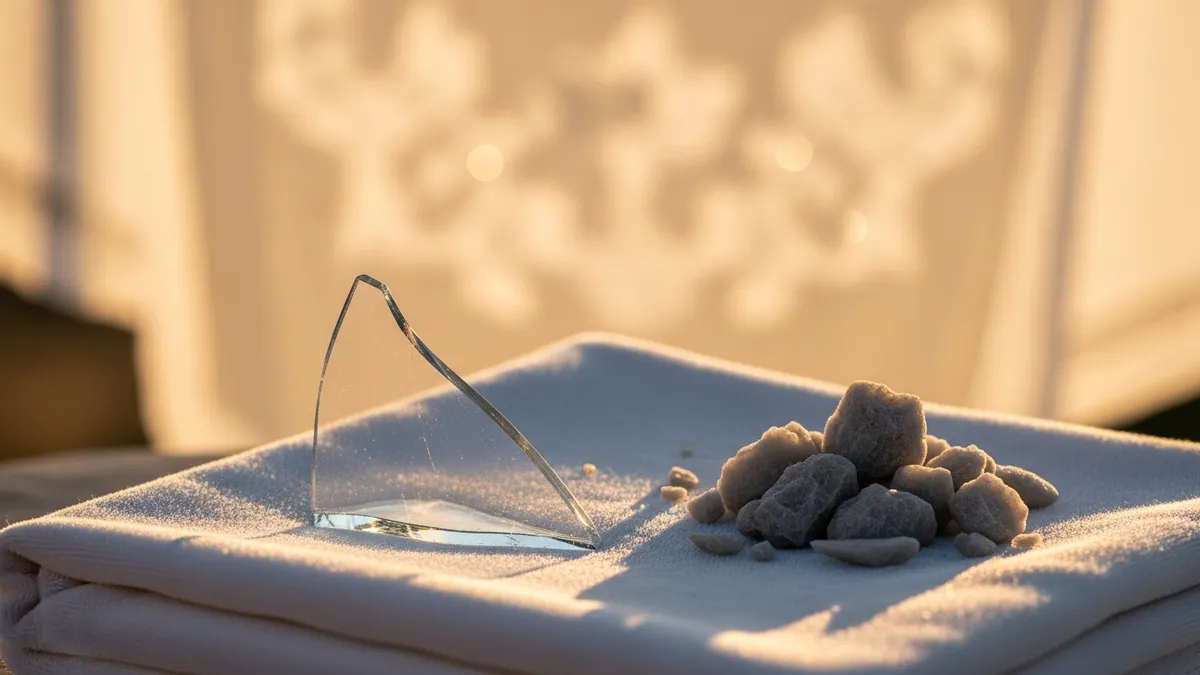
Orthodox Jews break a glass at the end of the wedding ceremony to remember the destruction of the Temple, even at the height of their joy.
Quick Answer
The groom breaks a glass at the end of the wedding ceremony to remember the destruction of the Holy Temple in Jerusalem. Even at the height of joy, Jews recall this national tragedy. As King David wrote in Tehillim (Psalms): 'If I forget you, Jerusalem, let my right hand forget its skill.'
Why Do Orthodox Jews Break a Glass at Weddings?
It's probably the most recognized Jewish wedding moment — the groom stomps on a glass, it shatters, and everyone shouts "Mazel tov!" But most people, including many Jews, don't fully understand why this dramatic act happens at the peak of a joyous celebration.
The direct answer: breaking the glass commemorates the destruction of the Beis HaMikdash (Holy Temple) in Jerusalem. The Talmud (Berachos 31a) records that at a celebration, a sage broke a valuable glass to temper the excessive joy, reminding everyone that until the Temple is rebuilt, our happiness is incomplete.
The Source
The Talmud tells of Mar bar Ravina, who noticed the rabbis at his son's wedding becoming excessively merry. He took an expensive glass and smashed it, sobering the mood. (The Gemara there records a similar story about Rav Ashi, who broke a costly glass of white crystal at a feast for the same reason.) This wasn't about being a killjoy — it was about maintaining perspective even in moments of great happiness.
The Psalm quoted at this moment captures it perfectly: "If I forget you, O Jerusalem, let my right hand forget its skill. Let my tongue cling to the roof of my mouth if I do not remember you, if I do not set Jerusalem above my highest joy" (Psalm 137:5-6).
By breaking a glass at the moment of greatest personal joy — the completion of the marriage ceremony — the couple declares that even their love and happiness exist within a broader context of Jewish history and longing.
When Exactly Does It Happen?
The glass breaking comes at the very end of the ceremony, after the seven blessings (sheva brachos) have been recited under the chuppah (wedding canopy). The glass is typically wrapped in a cloth napkin or placed in a special bag, and the groom stomps on it with his foot (often the right foot, by custom in many communities).
The moment the glass breaks, the solemnity instantly transforms into celebration. "Mazel tov!" erupts from every direction, music starts playing, and the couple is swept into dancing and celebration. It's one of the most emotionally powerful transitions you'll ever witness — from deep remembrance to explosive joy in a single second.
Other Interpretations
While the Temple destruction is the primary and most widely taught reason, other explanations have accumulated over the centuries:
- Fragility of life: A marriage, like glass, must be handled with care. The breaking glass reminds the couple that relationships require gentleness and attention.
- Irreversibility: Just as broken glass can't be reassembled, marriage fundamentally changes both people. There's no going back to who you were before.
- Warding off evil spirits: A folk tradition holds that the loud noise scares away evil spirits who might be attracted to the couple's happiness. This isn't the halachic reason, but it appears in various customs.
- The permanence of commitment: Some interpret the glass breaking as a symbol that this marriage will last — as permanently as broken glass cannot be unbroken.
What Kind of Glass Is Used?
Traditionally, a simple glass cup is used — nothing fancy. Some families use a lightbulb wrapped in a napkin because it breaks more easily and makes a satisfying crunch. Others use an actual glass goblet for authenticity.
There's a custom in some families to save the broken pieces and incorporate them into a piece of art — a mezuzah case, a picture frame, or a decorative piece — that the couple keeps in their home as a memento of their wedding day.
The Emotional Power
I've been to dozens of Jewish weddings, and the glass breaking gets me every time. There's this moment of complete silence under the chuppah. The couple has just been married, they're looking at each other with tears in their eyes, and then — CRACK. And suddenly everyone is screaming with joy.
It condenses so much Jewish experience into one second: memory and hope, sadness and joy, the weight of history and the lightness of new beginnings. It says: we carry our past with us, but we move forward with celebration.
Beyond Orthodox Weddings
The glass breaking is one of those traditions observed across virtually all Jewish denominations. Reform, Conservative, and Orthodox weddings all include it. Even Jews who aren't particularly observant almost always break a glass at their wedding — it's that deeply embedded in Jewish culture.
The universality speaks to its power. Whatever your level of observance, the idea that joy and historical consciousness can coexist — that you can celebrate wildly while still remembering what was lost — resonates with something fundamental in the Jewish soul.
Curious about more? Explore our full guide to Jewish wedding traditions or learn about Orthodox Jewish dating.
Common Questions
What does breaking the glass symbolize? The destruction of the Holy Temple in Jerusalem. Even at the height of joy, we remember the greatest loss in Jewish history. It is a powerful moment — the room goes silent, the glass shatters, and then everyone erupts in 'Mazel Tov!'
Is it a real glass? Usually a thin glass wrapped in a napkin or cloth bag to contain the shards. Some families use a lightbulb (easier to break). The groom stamps on it with his foot — in many communities the custom is to use the right foot.
Does the bride break anything? The groom breaks the glass. Separately, at the engagement (tena'im) — not at the wedding itself — it's a custom in some communities for the mothers of the bride and groom to break a plate together, symbolizing that, just as a broken plate cannot be fully repaired, this commitment is irreversible.
I'm an Orthodox Jewish woman from Brooklyn. I can't speak for every Orthodox Jew — when I write outside my experience, I say so.
Jewish Wedding Traditions: A Guide to the Orthodox Ceremony
Orthodox Jewish Dating & Marriage: How It Really Works
Jewish Funeral & Mourning Customs: What to Expect
My Arranged Marriage: A Hasidic Jew's Experience
Attending one of these in real life?
Weddings, bar mitzvahs, and other Jewish life events often include non-Jewish guests. If you want practical guest etiquette, ask.
The Orthodox Insider
A new letter every Thursday, before Shabbos — plus an instant download of “10 Things Everyone Gets Wrong About Orthodox Jews” when you subscribe.
No spam, unsubscribe anytime.