Why Don't Orthodox Jews Use Electricity on Shabbat?
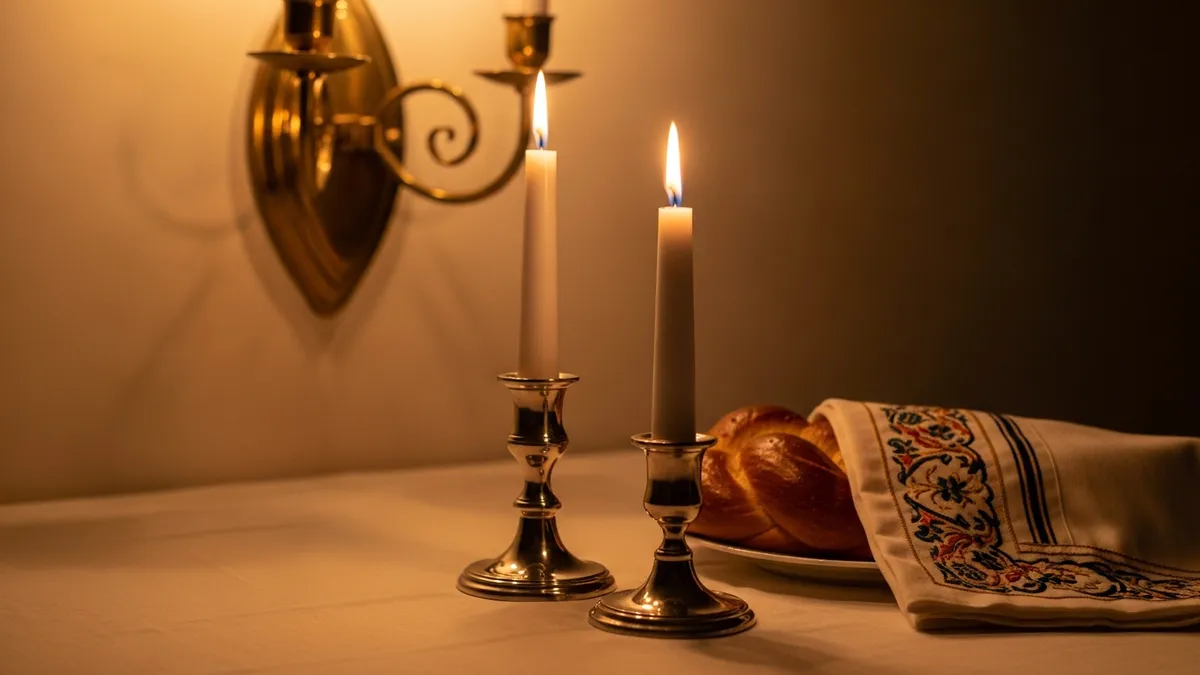
Find out why Orthodox Jews avoid using electricity on Shabbat, the halachic reasoning behind it, and how families manage a full day without electronics.
Quick Answer
Orthodox Jews avoid electricity on Shabbat because most halachic authorities consider completing an electrical circuit similar to prohibited Shabbat labors like building or kindling fire. The restriction creates a peaceful, technology-free day focused on family, prayer, and rest.
Why Don't Orthodox Jews Use Electricity on Shabbat?
Every Friday evening, something remarkable happens in Orthodox Jewish homes around the world — the phones go off, the computers shut down, and for 25 hours, families live without electronic devices. No texting, no scrolling, no Netflix. And honestly? Most of us love it.
The direct answer: most halachic (Jewish legal) authorities prohibit using electricity on Shabbat because completing or breaking an electrical circuit falls under one or more of the 39 categories of work (melachot) forbidden on Shabbat. The exact reasoning varies, but the practical result is a full day unplugged.
The Halachic Reasoning
The Torah prohibits 39 categories of creative labor on Shabbat, derived from the types of work done to build the Tabernacle (Mishkan). When electricity became available in the late 1800s, rabbis had to determine whether using it constituted forbidden labor.
Several approaches emerged:
- Boneh (building): The Chazon Ish famously argued that completing a circuit is a form of building (and breaking it, soter — demolishing), falling under the prohibition of construction.
- Molid (creating something new): Earlier authorities like the Beis Yitzchak (Rav Yitzchak Schmelkes) held that introducing a current generates a new, halachically significant state — a form of prohibited creative work.
- Mav'ir (kindling fire): For incandescent bulbs, the glowing filament is considered a form of fire. This reasoning is more straightforward but doesn't cover LEDs or other non-heat-producing electronics.
- Established custom: Regardless of the exact technical reasoning, the universal Orthodox practice of avoiding electricity on Shabbat has itself become binding through communal acceptance.
The bottom line is that all mainstream Orthodox authorities agree electricity shouldn't be used on Shabbat, even if they disagree about exactly which prohibition it falls under.
What Does This Look Like Practically?
We prepare before Shabbat starts:
- Lights are set on timers. Some rooms will turn on and off automatically throughout Shabbat so we have light where we need it without flipping switches.
- Food is prepared in advance and kept warm on a plata (hot plate) or blech (metal sheet over the stove) that stays on from before Shabbat.
- The fridge stays plugged in, but we deal with the interior light — usually by taping the switch or using a Shabbat-mode refrigerator that disables the light and other electronic features.
- Air conditioning and heat are set before Shabbat or put on timers. Shabbat in July without AC would be a different kind of spiritual experience.
The Shabbat Elevator
In buildings with large Orthodox populations, you'll often find a "Shabbat elevator" — an elevator programmed to stop at every floor automatically, so no one needs to press a button. It's slower, yes. But it makes high-rise living compatible with Shabbat observance, especially for elderly residents. If you've ever wondered why a single button press is such a big deal, it's the circuit question above — applied to one very tall building.
What About Emergencies?
Pikuach nefesh — saving a life — overrides virtually every Shabbat restriction. If someone is in medical danger, you call an ambulance, drive to the hospital, and do whatever is necessary. There's no question, no hesitation. Jewish law is unambiguous about this: human life comes first.
Hatzolah, the Jewish volunteer ambulance service, operates on Shabbat specifically for this reason. Volunteers carry radios and respond to emergencies without halachic concern because the preservation of life is paramount.
But Why? What's the Point?
Here's where it gets beautiful. The technology restrictions aren't arbitrary — they create the conditions for genuine rest and connection. When you can't check your phone, you talk to your family. When you can't watch TV, you read, play board games, take walks, or just sit together.
I remember the first Shabbat after I got married. My husband and I sat at the table for three hours after lunch, just talking. No distractions, no notifications, nothing pulling our attention away. That's what Shabbat without electronics gives you every single week.
In a world where most of us check our phones more times a day than we'd care to count, having one day completely unplugged isn't deprivation — it's freedom.
Isn't It Hard?
The first time? Maybe. But like any habit, it becomes natural quickly. My kids don't experience Shabbat as a day of restrictions — they experience it as the day when the whole family is together, when Abba doesn't check his email, when we have long meals and nobody rushes.
The irony isn't lost on us — "digital detox" is now a wellness trend that people pay hundreds of dollars for at retreats. Orthodox Jews have been doing it every week for generations.
Curious about Shabbat? Learn more about how Shabbat is observed or explore the 39 categories of forbidden work.
Common Questions
Can Orthodox Jews use a Shabbat elevator? Yes — these elevators are programmed to stop on every floor automatically, so nobody needs to press a button. They are common in hospitals, hotels, and apartment buildings in heavily Orthodox areas.
What about life-saving situations? If someone's life is in danger, all Shabbat restrictions are suspended. You call 911, you drive to the hospital, you do whatever is necessary. This principle — pikuach nefesh — is one of the most fundamental in Jewish law.
Can Orthodox Jews leave lights on before Shabbat starts? Yes, and this is standard practice. Lights are set before Shabbat — some on, some off — and left that way for 25 hours. Many families use timers (set before Shabbat) to turn lights on and off automatically. The prohibition is on the act of switching, not on benefiting from electricity that is already running.
Do Orthodox Jews use any technology on Shabbat at all? Most technology that requires active operation is avoided. However, a refrigerator running on its own, heating systems on timers, and similar passive systems are generally fine. The key distinction is between actively creating a circuit (prohibited) and benefiting from one already running (permitted).
Is this the same for all Orthodox Jews? The basic prohibition is universal across Orthodox communities. Some details vary — for example, whether electronic key cards in hotels are permitted. Modern Orthodox and Hasidic communities follow the same fundamental rules, though edge cases may be handled differently.
I'm an Orthodox Jewish woman from Brooklyn. I can't speak for every Orthodox Jew — when I write outside my experience, I say so.
Shabbat — The Jewish Day of Rest Explained
The 39 Melachot: What Can't You Do on Shabbat?
Jewish Holidays: The Complete Jewish Calendar Guide
Why Can't You Press the Elevator Button on Saturday?
Want to experience a Jewish holiday yourself?
Virtual Seders, Rosh Hashanah dinners, and Chanukah candle-lightings are open to non-Jewish guests.
The Orthodox Insider
A new letter every Thursday, before Shabbos — plus an instant download of “10 Things Everyone Gets Wrong About Orthodox Jews” when you subscribe.
No spam, unsubscribe anytime.