Shavuot: The Day the Torah Was Given
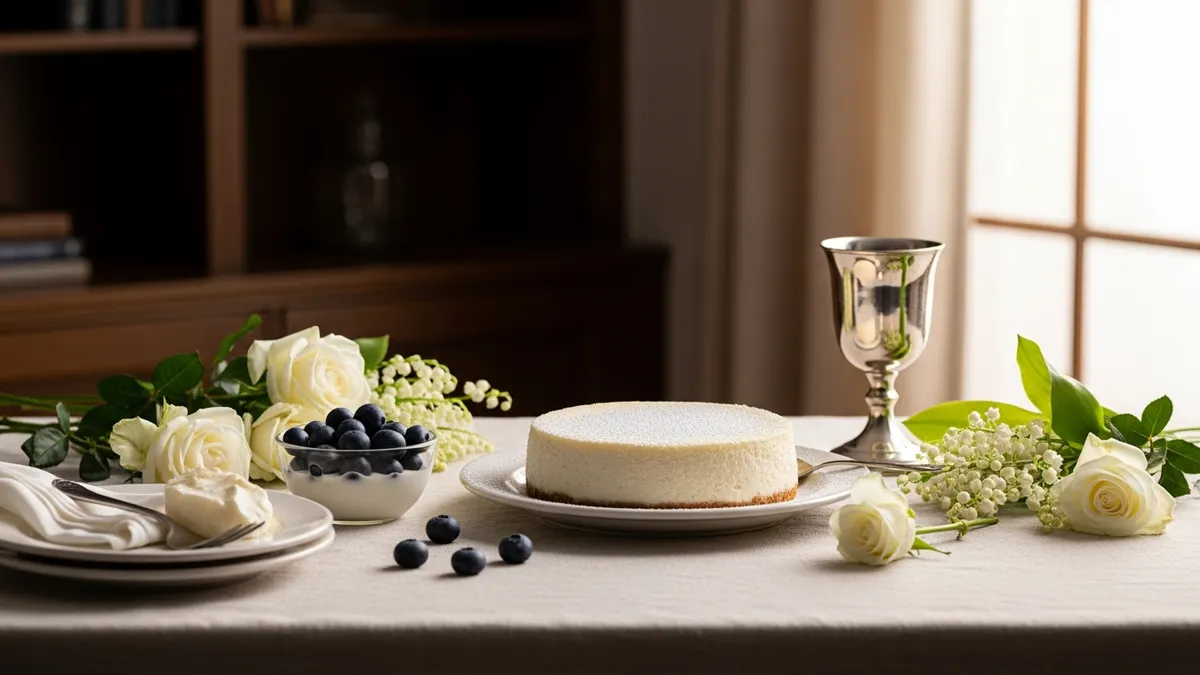
What is Shavuot? The holiday celebrating the giving of the Torah at Mount Sinai — customs, all-night learning, dairy foods, and why it matters.
Quick Answer
Shavuot commemorates the giving of the Torah at Mount Sinai, the day after the 49-day Omer count — the 50th day from the first day of Passover. Orthodox Jews celebrate by staying up all night learning Torah, eating dairy foods (cheesecake is the star), hearing the Ten Commandments read in synagogue, and reading the Book of Ruth. It falls on 6 Sivan in Israel and 6-7 Sivan in the Diaspora (May/June).
Shavuot might be the most underrated Jewish holiday. Everyone knows about Passover and Chanukah. Even Yom Kippur gets recognition. But Shavuot — the day the entire Jewish people stood at Mount Sinai and received the Torah directly from G-d? Somehow it flies under the radar.
Which is a shame, because the event it commemorates is arguably the most important moment in Jewish history.
The Connection to Passover
Shavuot does not just appear on the calendar independently. It is directly connected to Passover through the counting of the Omer — a 49-day count beginning on the second night of Pesach and ending on the eve of Shavuot.
The logic is beautiful: on Passover, the Jewish people were freed from physical slavery. But physical freedom without purpose is incomplete. Forty-nine days later, at Sinai, they received the Torah — the purpose. Shavuot is the culmination of the Exodus. Freedom is not the destination; it is the starting point.
The Giving of the Torah
According to the Torah, the Israelites camped at Mount Sinai and, after three days of preparation, witnessed a revelation unlike anything before or since. Thunder, lightning, the sound of a shofar growing stronger, the mountain covered in smoke and fire. G-d spoke, and the people heard the Ten Commandments directly from the Creator.
The midrash says that the souls of every Jew who would ever live — past, present, and future — were present at Sinai. That includes yours. That is the traditional teaching, and it gives Shavuot a deeply personal dimension: this is not someone else's story. You were there.
Customs and Traditions
All-Night Learning (Tikkun Leil Shavuot)
The signature Shavuot custom is staying up the entire first night learning Torah. Synagogues and study halls hold all-night learning programs with rotating lectures, classes, and chavruta (paired) study sessions.
The origin of this custom is a midrash that says the Israelites overslept on the morning of the giving of the Torah, and G-d had to wake them up. To rectify this, we stay awake all night — showing that we are eager and ready to receive the Torah.
I will tell you, the atmosphere at 3 AM in a packed beis midrash on Shavuot night is something special. Everyone is tired, everyone is pushing through, and there is a feeling of shared purpose that is hard to replicate.
Dairy Foods
Shavuot is the cheesecake holiday. And blintzes. And lasagna. The custom is to eat dairy foods, and there are many explanations for why:
- After receiving the Torah with its kosher laws, the Israelites realized their meat dishes were not kosher, so they ate dairy instead
- The Torah is compared to "milk and honey"
- The gematria (numerical value) of the Hebrew word for milk (chalav) is 40, corresponding to the 40 days Moses spent on Sinai
Whatever the reason, the result is magnificent. My cheesecake recipe — which I will never share publicly, sorry — has been refined over 15 years. It is the one day a year I pull out all the stops on dairy desserts.
Reading the Ten Commandments
During the morning Torah reading on the first day, the congregation stands as the Ten Commandments are read aloud — recreating the experience of standing at Sinai.
The Book of Ruth
The Book of Ruth is read on Shavuot. Ruth was a Moabite woman who chose to join the Jewish people, famously telling her mother-in-law Naomi: "Where you go, I will go. Your people will be my people, and your G-d will be my G-d." Ruth's acceptance of the Torah mirrors what the Jewish people did at Sinai. She is also the great-grandmother of King David, who was born and died on Shavuot.
Decorating with Greenery
Many synagogues are decorated with flowers and greenery, recalling the tradition that Mount Sinai bloomed with vegetation when the Torah was given.
Why Shavuot Matters
Every holiday in the Jewish calendar teaches something about our relationship with G-d. Pesach teaches us about freedom. Sukkot teaches us about trust. Shavuot teaches us about commitment.
Receiving the Torah was not a one-time event. It is a daily choice — to open the book, to study, to live by its values, to pass it to the next generation. On Shavuot, we renew that commitment. We say, as our ancestors said at Sinai: "Na'aseh v'nishma" — we will do and we will listen.
And then we eat cheesecake. Because apparently, that is also part of the commitment. I am okay with that.
Common Questions
What do Jews celebrate on Shavuot? The giving of the Torah at Mount Sinai — considered the most important event in Jewish history. It falls 50 days after Passover, marking the completion of the Omer counting period.
Why do Jews eat dairy on Shavuot? Several explanations exist: the Torah is compared to milk and honey; the Jews at Sinai had not yet learned the kosher slaughter laws so they ate dairy; the land of Israel is described as flowing with milk. Cheesecake and blintzes are Shavuot staples.
Do people stay up all night on Shavuot? Yes — there is a widespread custom called Tikkun Leil Shavuot where men (and increasingly women) stay up the entire first night studying Torah. The tradition compensates for the Israelites who overslept on the morning of Sinai.
I'm an Orthodox Jewish woman from Brooklyn. I can't speak for every Orthodox Jew — when I write outside my experience, I say so.
Want to experience a Jewish holiday yourself?
Virtual Seders, Rosh Hashanah dinners, and Chanukah candle-lightings are open to non-Jewish guests.
The Orthodox Insider
A new letter every Thursday, before Shabbos — plus an instant download of “10 Things Everyone Gets Wrong About Orthodox Jews” when you subscribe.
No spam, unsubscribe anytime.