What Is the Torah?
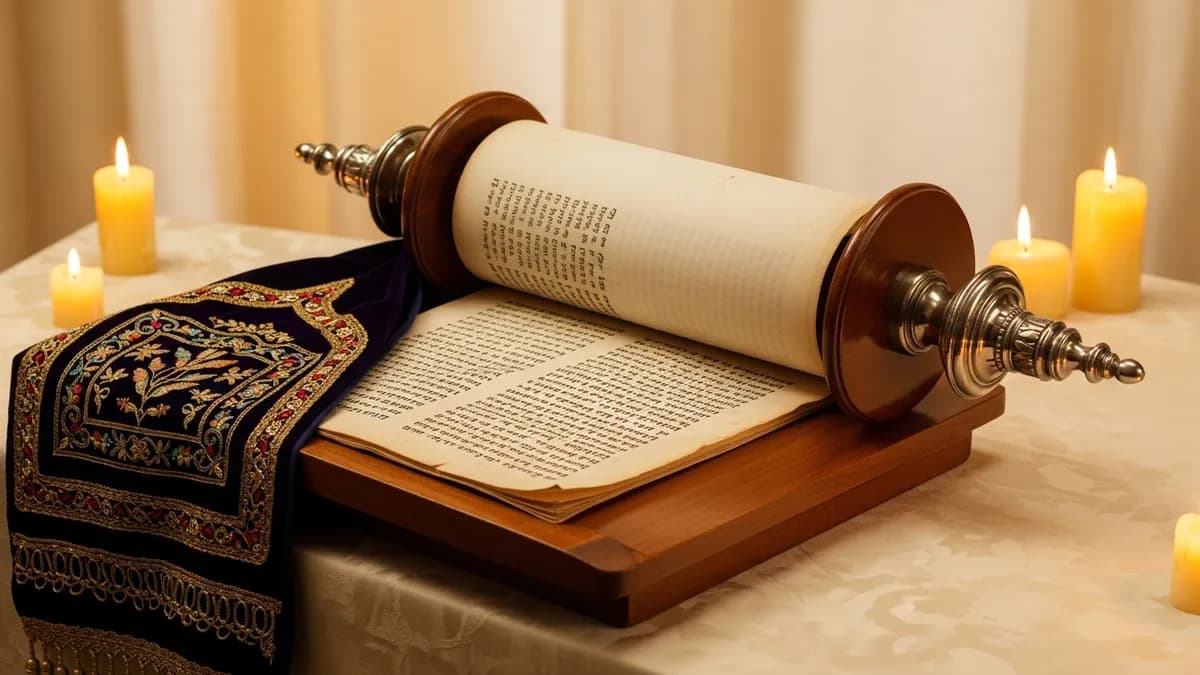
Learn what the Torah is, what it contains, how it's used in Jewish life, and why it's the most sacred text in Judaism.
Quick Answer
The Torah is the foundational sacred text of Judaism — the Five Books of Moses (Genesis, Exodus, Leviticus, Numbers, Deuteronomy) given by G-d to Moses at Mount Sinai. It contains the 613 commandments that govern Jewish life. In a broader sense, 'Torah' encompasses all of Jewish learning and tradition.
What Is the Torah?
The Torah is the most sacred text in Judaism — the foundation upon which everything else in Jewish life is built. Every law, custom, prayer, and practice in Orthodox Judaism traces back to the Torah in some way. It's not just a book to be read. It's the divine blueprint for how to live.
The direct answer: the Torah refers to the Five Books of Moses (Chamisha Chumshei Torah) — Genesis, Exodus, Leviticus, Numbers, and Deuteronomy. Given by G-d to Moses at Mount Sinai approximately 3,300 years ago — the founding moment in the origin of Judaism — it contains narrative, law, poetry, and prophecy. It is the source of the 613 commandments (mitzvos) that structure Jewish life.
The Five Books
Bereishis (Genesis)
Creation of the world, Adam and Eve, Noah, and the stories of the patriarchs and matriarchs — Abraham, Isaac, Jacob, Sarah, Rebecca, Rachel, and Leah. Ends with the Jewish people descending to Egypt.
Shemos (Exodus)
Slavery in Egypt, Moses's mission, the Ten Plagues, the Exodus, the giving of the Torah at Sinai, and the construction of the Tabernacle (Mishkan).
Vayikra (Leviticus)
Laws of sacrificial service, ritual purity, the priesthood, holy days, and ethical conduct. Contains the famous verse "Love your neighbor as yourself" (19:18).
Bamidbar (Numbers)
The 40 years of wandering in the desert, censuses, rebellions, laws, and the journey toward the Promised Land.
Devarim (Deuteronomy)
Moses's farewell speeches to the Jewish people, reviewing laws and history before they enter the Land of Israel. Ends with Moses's death.
The Torah Scroll
The physical Torah scroll (Sefer Torah) is a handwritten parchment scroll containing the full text of the Five Books. Creating one is an enormous undertaking:
- A trained scribe (sofer) writes every letter by hand with a quill and special ink
- The parchment comes from a kosher animal's hide
- The writing takes approximately one year of full-time work
- A single error can invalidate the scroll if not properly corrected
- A Sefer Torah costs $30,000 to $60,000 or more
Torah scrolls are housed in the ark (aron kodesh) of the synagogue and are read publicly on Mondays, Thursdays, Shabbat, holidays, and fast days. The entire Torah is read through in a one-year cycle, completing and restarting on the holiday of Simchat Torah.
Torah in the Broader Sense
In everyday Jewish usage, "Torah" means much more than the Five Books. The term expands to include:
- The Written Torah (Torah Shebichtav): The Five Books plus the Prophets (Nevi'im) and Writings (Kesuvim) — together called the Tanach (Hebrew Bible)
- The Oral Torah (Torah Sheb'al Peh): The explanations, interpretations, and applications of the written text, transmitted orally from Sinai and eventually recorded in the Mishnah, Talmud, and later works
- All of Jewish learning: Any Torah study — whether Talmud, halacha, Midrash, or Jewish philosophy — is referred to as "learning Torah"
When someone says "I'm going to learn Torah," they might mean they're studying Talmud, reviewing a commentary on the weekly Torah portion, or attending a class on Jewish law. The term is broad and inclusive.
How the Torah Is Studied
Torah study (limud Torah) is a central obligation and value in Judaism. It's not casual reading — it's rigorous intellectual engagement with the text and its commentaries.
Every verse of the Torah has been analyzed, debated, and interpreted by centuries of scholars. The major commentaries include:
- Rashi (11th century): The foundational commentary, studied by every beginning student
- Ramban (Nachmanides) (13th century): Deeper philosophical and mystical analysis
- Ibn Ezra (12th century): Grammatical and linguistic approach
- Sforno (16th century): Philosophical insights
- Or HaChaim (18th century): Mystical and moral readings
A single verse might have dozens of interpretations across these and other commentaries, each revealing different dimensions of meaning.
The Weekly Portion
The Torah is divided into 54 parshiyos (portions), one read each Shabbat. The weekly parsha becomes the topic of the week — sermons address it, families discuss it at the Shabbat table, and children learn about it in school. It creates a shared national conversation that unifies Jews worldwide.
When someone asks "what's the parsha this week?" they're asking about the Torah portion — and nearly every Orthodox Jew can tell you.
Why It Matters
The Torah isn't a historical document that Jews respect from a distance. It's a living, breathing guide that shapes daily decisions — what to eat, how to do business, how to treat others, when to work and when to rest. Orthodox Jews believe it's literally the word of G-d, as relevant today as the day it was given.
That belief — in the divine origin and eternal applicability of the Torah — is the defining characteristic of Orthodox Judaism.
Want to learn more? Read about Jewish religious texts or explore core Jewish beliefs.
What Does "Torah" Mean?
The word Torah (תורה) means "instruction" or "teaching" — from the same Hebrew root as moreh, teacher. It does not mean "law," which is the most consequential mistranslation in religious history; Torah is closer to "the teaching about how to live" than to a legal code. The word is used in three widening senses: narrowly, the Five Books of Moses; more broadly, the entire Hebrew Bible; and at its widest, the whole body of Jewish teaching — a rabbi's lecture today is still called "words of Torah."
Common Questions
What is the difference between the Torah and the Bible? The Torah refers specifically to the Five Books of Moses (Genesis, Exodus, Leviticus, Numbers, Deuteronomy). The broader Hebrew Bible (Tanach) also includes Prophets (Nevi'im) and Writings (Ketuvim). Jews do not use the term 'Old Testament.'
Is the Torah the same as the Old Testament? The content overlaps but the structure and interpretation differ. The Jewish Tanach has the same books but arranged differently. More importantly, Orthodox Jews interpret the Torah through the lens of the Oral Torah (Talmud), which is not part of Christian tradition.
How is the Torah read in synagogue? A Torah scroll (handwritten on parchment by a scribe) is read publicly in synagogue on Mondays, Thursdays, Shabbat, and holidays. The entire Torah is completed in a yearly cycle, ending and beginning again on Simchat Torah.
I'm an Orthodox Jewish woman from Brooklyn. I can't speak for every Orthodox Jew — when I write outside my experience, I say so.
Jewish Religious Texts: Torah, Talmud, and Beyond
What Do Orthodox Jews Believe? Core Principles of Faith
What is Orthodox Judaism? A Complete Guide
The Origin of Judaism: From Abraham to Today
Keep going.
What Orthodox Jews believe is one piece of the picture. The guided tour covers beliefs, practices, and daily life in order.
The Orthodox Insider
A new letter every Thursday, before Shabbos — plus an instant download of “10 Things Everyone Gets Wrong About Orthodox Jews” when you subscribe.
No spam, unsubscribe anytime.