Is Orthodox Judaism Growing or Shrinking?
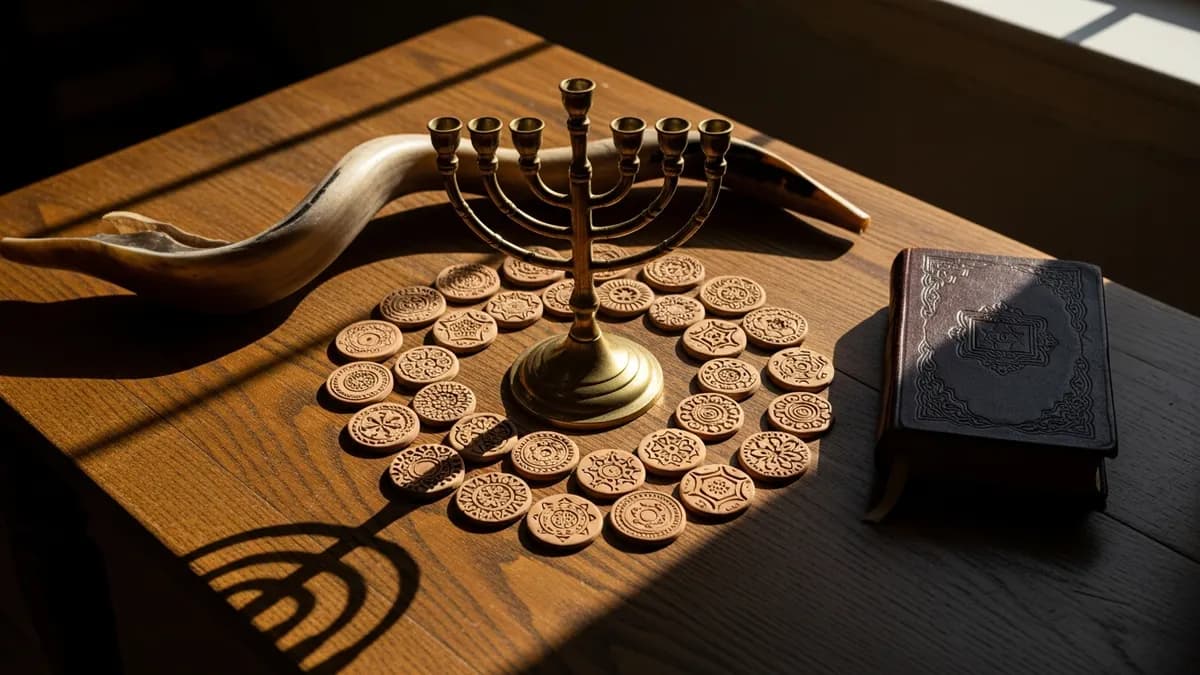
Orthodox Judaism is the fastest-growing segment of American Jewry. The numbers, the demographics, and why the trend is accelerating.
Quick Answer
Growing — fast. Orthodox Jews are about 10% of American Jewry but account for the majority of Jewish children under 18. Orthodox families average around 4 children (Hasidic families considerably more, often 6-7), versus well under 2 for non-Orthodox Jews. Demographers project that Orthodox Jews could become the majority of affiliated American Jews by mid-to-late century.
When people hear "American Judaism," they usually picture decline — shrinking congregations, intermarriage, young people drifting away. And for a lot of American Jewish life, that picture is real. But it doesn't describe the world I live in. On my block in Brooklyn, the story runs the other way. The shuls aren't closing; new ones keep opening. My daughter's first-grade class is bigger than my entire grade was when I was her age. Different paths through Jewish life produce very different demographic outcomes, and ours is one of growth. If you are not already familiar with what Orthodox Judaism is, that context helps make sense of why.
The Numbers
The Pew Research Center's surveys of American Jews give the broad shape of it:
- Orthodox Jews are roughly 10% of the total American Jewish population
- But we account for the majority of Jewish children under 18 — that gap is the whole story, and it's driven by family size
- The Hasidic population roughly doubles every generation, propelled by family sizes that often run 6-7 children
- Retention has risen sharply. Pew found that among the youngest Orthodox-raised cohort, somewhere around two-thirds to three-quarters stay Orthodox as adults — a dramatic jump from earlier generations, and higher than any other Jewish denomination.
That last point deserves a beat. The headline "only 10% of adults" makes Orthodoxy sound like a small corner of the Jewish world. But adults are a snapshot of the past. Children are a snapshot of the future — and there, Orthodox kids are already the majority. Reform and Conservative retention runs far lower: a large share of those raised in those movements no longer identify with them as adults. So even though we're a tenth of grown-ups today, we're a steadily rising share of the Jews being raised tomorrow.
Why It Is Growing
Birth Rate
This is the primary driver. Pew's data put Orthodox families at around 4 children on average (Hasidic families considerably more, often 6-7). Non-Orthodox Jewish families average well under two — below the replacement rate. I don't experience that as a statistic. I experience it as the carpool: four kids in my own, plus the neighbors' kids when their mother is at an appointment, plus the cousins who live two doors down.
The arithmetic does the rest. When most families have four children and the great majority of those children stay, each generation is larger than the one before. When families have fewer than two children and a large share drift away, each generation is dramatically smaller. You don't need a model to see where that leads — you can see it in the size of a kindergarten.
Retention
That high retention rate is driven by:
- Dense community that provides social infrastructure from cradle to grave
- Education system that transmits values, knowledge, and identity
- Marriage within the community (endogamy rates above 95%)
- High cost of exit (leaving means losing community, social network, sometimes family)
- Genuine belief and commitment
Conversion and Return
A smaller but meaningful inflow comes from:
- Ba'alei teshuvah — Jews from non-observant backgrounds who take on Orthodox life. It's a real, steady stream, though by its nature almost impossible to count precisely.
- Converts — non-Jews who convert to Orthodox Judaism (smaller numbers, and a deliberately rigorous process)
The Projection
The demographers who study American Jewry — the teams behind the Pew analyses and the regional Jewish community studies of the New York area — broadly agree on the direction, even where they differ on the exact pace. The common thread: somewhere around mid-to-late century, Orthodox Jews look set to become the majority of engaged American Jews. The more aggressive readings of the same data go further:
- Orthodox children making up a steadily rising share — by some estimates, close to half — of all Jewish children in the New York metro area
- The Orthodox share of American Jewry climbing well into the double digits over the coming decades
- Hasidic communities in particular growing fast enough to become the largest single bloc within Orthodoxy — ultra-Orthodox Jews are the engine of the whole trend
Take these as informed projections rather than settled facts — demography is full of surprises — but the underlying trend has been remarkably consistent across surveys.
What This Means
For Jewish Institutions
The center of gravity in American Jewish life is shifting toward Orthodoxy. Philanthropic organizations, federations, and communal institutions designed for a majority Reform/Conservative constituency are recalibrating.
For Non-Jewish Neighbors and Colleagues
The Orthodox Jewish population in your city is growing. Understanding the community — its practices, its needs, its values — is not niche knowledge. It is increasingly mainstream.
For Policymakers
School funding, zoning (for synagogues and eruvin), religious accommodation law, and housing policy in areas with growing Orthodox populations require cultural literacy that most officials do not have.
For the Orthodox Community
Growth creates its own challenges: housing affordability in established neighborhoods, school capacity, financial pressure on families with many children, and the tension between insularity and engagement with broader society.
The Bigger Picture
Orthodox Judaism's growth is one of the more significant demographic stories in American religion, and one of the least covered. As much of American Jewish life contracts, the most traditional corner of it keeps expanding — quietly, mostly out of the headlines.
For me it's never really felt like a "story" at all. It's the apartment we couldn't afford because three other young families wanted the same one. It's the second-grade class that had to split into two because there were too many children for one room. It's the bittersweet thing of watching my own neighborhood get more crowded every year because so many people want to raise their children in it. Growth isn't an abstraction I read about; it's the texture of an ordinary week. If you're wondering where all those children come from, I get into why we have such large families — and if you've ever wondered why so much of this is happening in one city, I write about why there are so many of us in New York too.
I'm an Orthodox Jewish woman from Brooklyn. I can't speak for every Orthodox Jew — when I write outside my experience, I say so.
What is Orthodox Judaism? A Complete Guide
Why Do Orthodox Jews Have Large Families?
Orthodox Jewish Neighborhoods: Brooklyn, Lakewood & Beyond
Why Are There So Many Orthodox Jews in New York?
Partway in, or just curious?
If you're in an interfaith relationship, have Jewish ancestry, or are quietly exploring deeper engagement, there's a separate page for you.
The Orthodox Insider
A new letter every Thursday, before Shabbos — plus an instant download of “10 Things Everyone Gets Wrong About Orthodox Jews” when you subscribe.
No spam, unsubscribe anytime.