Classic Orthodox Jewish Recipes: Challah, Cholent & More
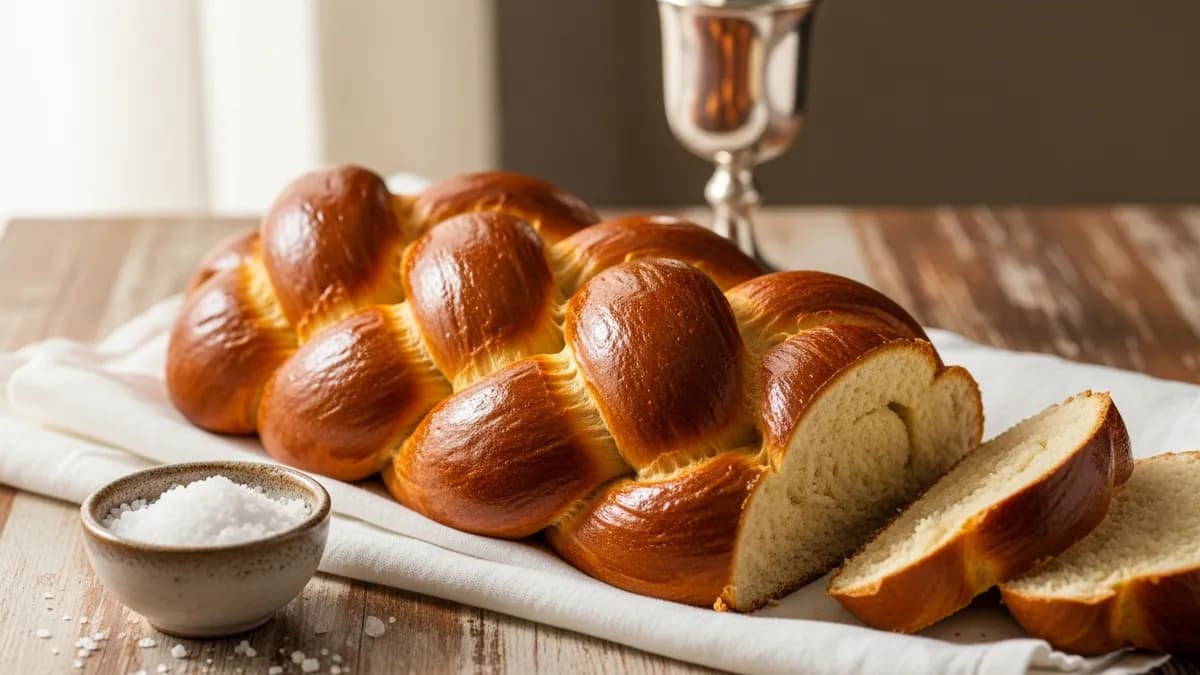
Traditional Jewish recipes made in Orthodox homes — challah, cholent, chicken soup, kugel, and more. The foods that define Shabbat and holidays.
Quick Answer
Classic Orthodox Jewish recipes center around Shabbat and holidays: challah (braided egg bread), cholent (slow-cooked Shabbat stew), chicken soup with matzo balls, potato kugel, gefilte fish, and brisket. These dishes are deeply tied to tradition — the same recipes often passed down through generations with only minor variations.
In an Orthodox Jewish home, food is not just food. Every Shabbat meal, every holiday feast, every weeknight dinner carries the weight of tradition, the memory of grandmothers, and the practical demands of feeding a family that keeps kosher. My kitchen is where halacha meets love, and the results — if I do say so myself — are pretty delicious.
These are the Ashkenazi (Eastern European) classics I grew up with — the foods of my own Brooklyn kitchen. Sephardi and Mizrahi families have their own beautiful traditions, like Moroccan dafina instead of cholent or fried fish instead of gefilte fish. But here are the classics that define Ashkenazi Orthodox cooking. (For the full sweep — Ashkenazi, Sephardi, and Mizrahi side by side — see the guide to Jewish cuisine.)
Challah
Challah is the braided bread we eat on Shabbat and holidays. Making challah from scratch is a Friday tradition in many Orthodox homes, and there is a special mitzvah of separating a small piece of dough (called "taking challah") — a portion that was once given to the kohanim (priests), a mitzvah straight from the Torah. Today we separate and burn that small piece instead.
Basic Challah Recipe:
- 4 cups warm water
- 2 tablespoons active dry yeast
- 1 cup sugar
- 1 cup oil
- 3 eggs (plus 1 for egg wash)
- 1 tablespoon salt
- 12-13 cups flour
Dissolve yeast in warm water with a pinch of sugar. Let it bloom for 10 minutes. Add sugar, oil, eggs, and salt. Gradually add flour, kneading until smooth and elastic. Let rise for 1.5 hours. Divide into portions, braid (three-strand, four-strand, or six-strand — everyone has their preference), egg wash, and bake at 350F for 30-35 minutes until golden.
The smell of fresh challah baking on a Friday afternoon is the smell of Shabbat itself. My kids come running into the kitchen every time.
Chicken Soup
If challah is the smell of Shabbat, chicken soup is the taste. The "Jewish penicillin" — served at virtually every Friday night dinner and every time someone is sick.
Classic Chicken Soup:
- 1 whole chicken, cut into parts
- 3 carrots, peeled and chunked
- 3 stalks celery
- 2 onions, quartered
- 1 parsnip
- 1 sweet potato (optional but recommended)
- Fresh dill and parsley
- Salt and pepper
Place chicken in a large pot, cover with cold water, and bring to a boil. Skim the foam. Add vegetables, herbs, salt, and pepper. Reduce heat and simmer for 2-3 hours. Strain or serve with the vegetables.
The secret to great chicken soup? Time. Low and slow. No shortcuts. And some people add a secret ingredient (mine is a whole parsnip and a generous hand of fresh dill, but I have heard everything from sugar to turmeric).
Cholent
Cholent is the Shabbat lunch stew — prepared Friday afternoon and left on a hot plate or blech (metal sheet over the stove) overnight. Since we cannot cook on Shabbat, cholent solves the problem beautifully: it's started before Shabbat begins and left to keep cooking on a covered flame or hot plate. The food is already cooking when Shabbat comes in, so we never light or adjust the fire — by lunch it's hot, tender, and ready.
Classic Cholent:
- 2 lbs beef stew meat or flanken
- 1 cup dried kidney or lima beans (soaked overnight)
- 4-5 potatoes, peeled and halved
- 2 onions, diced
- 1/2 cup barley
- Garlic, paprika, salt, pepper, and a touch of honey or ketchup
- Optional: kishke (stuffed derma), eggs in shell
Layer ingredients in a pot or slow cooker. Cover with water. Season generously. Set on low heat and leave it overnight — at least 12-16 hours.
Every family's cholent is different, and every family's cholent is the best. This is not negotiable. My mother-in-law's cholent is legendary. Mine is different but equally legendary (in my own home, at least).
Potato Kugel
Kugel is a baked pudding — potato kugel is the crispy, golden Shabbat side dish that people fight over.
Potato Kugel:
- 6 large potatoes, peeled and grated
- 2 onions, grated
- 4 eggs
- 1/3 cup oil
- Salt and pepper
Preheat oven to 425F. Pour oil into a 9x13 pan and heat in the oven. Mix grated potatoes, onions, eggs, salt, and pepper. Pour into the hot oiled pan (the sizzle is important — it creates the crispy bottom). Bake for 1 hour until golden and crispy on top.
The crispy edges are the best part. Everyone knows this. There is no debate.
Gefilte Fish
Love it or hate it — and opinions are strong — gefilte fish is a Shabbat tradition. These are poached fish dumplings, traditionally made from a mixture of ground whitefish, pike, and carp.
Most people today buy gefilte fish from a jar or frozen loaf, and there is absolutely no shame in that. But if you want to make it from scratch, it involves grinding fresh fish with onions, eggs, matzo meal, sugar, and salt, forming into balls, and simmering in fish stock for over an hour.
Served cold with horseradish (the pink kind, mixed with beets). The first course of countless Shabbat dinners.
Brisket
The quintessential Jewish main course. Brisket is a tough cut of beef that transforms into something tender and extraordinary through slow cooking.
Basic Brisket:
- 4-5 lb brisket
- 2 onions, sliced
- 4 cloves garlic
- 1 cup ketchup or tomato sauce
- 1/2 cup brown sugar or honey
- Salt, pepper, paprika, garlic powder
Sear the brisket on both sides. Place on a bed of onions in a roasting pan. Mix the sauce ingredients and pour over. Cover tightly with foil. Cook at 325F for 3-4 hours until fork-tender. Let rest, slice against the grain, and return to the sauce.
The secret: cook it a day ahead. The flavor deepens overnight, and it slices more cleanly when cold. Reheat in the sauce.
Kugel (Noodle Version)
Lokshen kugel (noodle kugel) comes in two styles — sweet (with sugar, cinnamon, raisins, sometimes pineapple) and savory (with onions, pepper, and a crispy top). Both are valid. Sweet is more common for Shabbat. The debate is fierce and lifelong.
The Heart of It
These recipes are not complicated. They are not fancy. But they carry the weight of generations. When I make challah, I am doing what my grandmother did, and her grandmother before her. When my daughter stands next to me braiding the dough, she is joining a chain that stretches back centuries.
That is what Jewish cooking is really about. It is not the recipe. It is the table it brings people to.
Common Questions
What are the most popular Orthodox Jewish recipes? Chicken soup with kneidlach (matzah balls), challah, cholent, gefilte fish, kugel (noodle or potato pudding), brisket, latkes (potato pancakes), and rugelach (pastry). Every family has their own versions.
Is Orthodox Jewish food the same as Jewish deli food? There is overlap — pastrami, pickles, and bagels are cultural foods. But Orthodox Jewish home cooking is much broader, encompassing Middle Eastern, Eastern European, and modern cuisines all made kosher.
Can non-Jews cook these recipes? Absolutely. The recipes themselves are not restricted — anyone can make challah or chicken soup. The kosher requirements apply to the ingredients and equipment, not to who is cooking.
I'm an Orthodox Jewish woman from Brooklyn. I can't speak for every Orthodox Jew — when I write outside my experience, I say so.
What is Kosher? The Complete Guide to Jewish Dietary Laws
Shabbat — The Jewish Day of Rest Explained
Kosher Laws — A Complete Guide to the Rules of Kashrut
Kosher Catering: Everything You Need to Know
Want to keep reading about kosher?
The full site covers kosher laws, symbols, and specific foods. Or if you're a professional working with Orthodox Jewish clients on food — there's a specific guide for that.
The Orthodox Insider
A new letter every Thursday, before Shabbos — plus an instant download of “10 Things Everyone Gets Wrong About Orthodox Jews” when you subscribe.
No spam, unsubscribe anytime.