Orthodox vs Conservative vs Reform Judaism
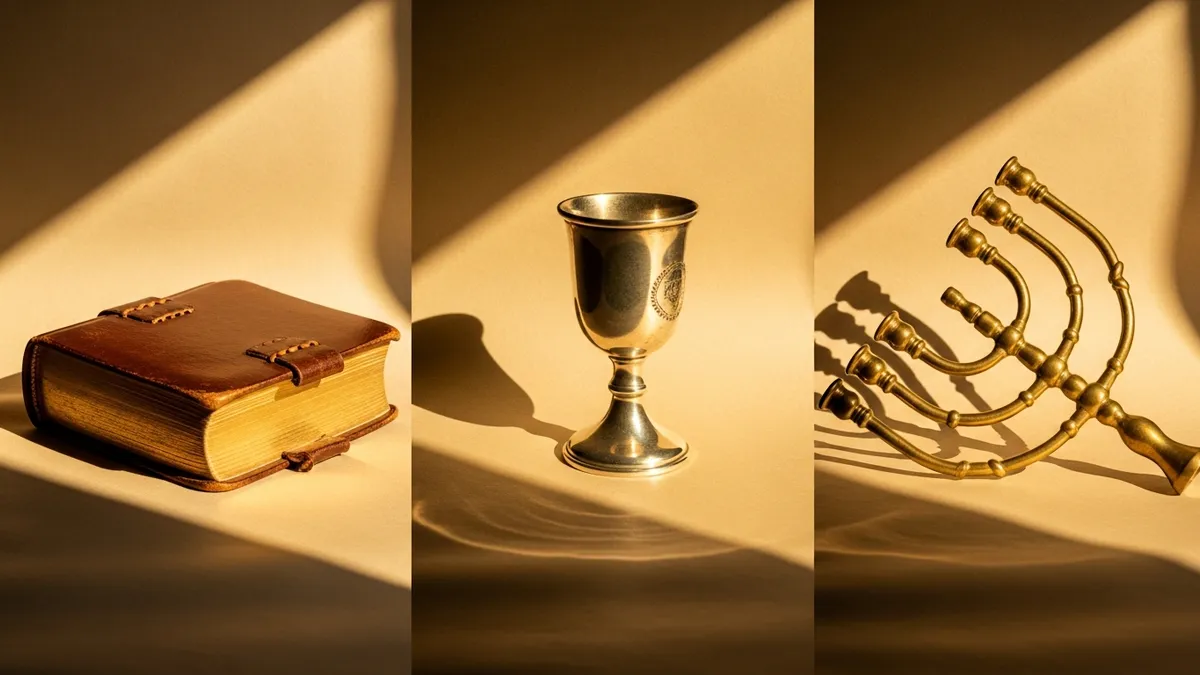
The key differences between Orthodox, Conservative, and Reform Judaism — beliefs, practices, and how each movement approaches Jewish law and tradition.
Quick Answer
Orthodox Judaism believes the Torah is divinely given and Jewish law (halacha) is binding. Conservative Judaism accepts halacha but believes it can be adapted by rabbinic authorities over time. Reform Judaism views Jewish law as a guide rather than an obligation, emphasizing personal autonomy and ethical principles over ritual observance.
People always want to know: what is the difference between Orthodox, Conservative, and Reform? And honestly, I understand the confusion. From the outside, we all identify as Jewish, we all reference the Torah, and we all celebrate the same holidays. But the differences in how we practice — and more importantly, why — are significant.
I am Orthodox, so I will be upfront about my perspective. But I will do my best to explain each movement fairly.
The Core Question: Is Jewish Law Binding?
Everything else flows from how each movement answers this one question.
Orthodox Judaism says yes, absolutely. The Torah was given by G-d to Moses at Mount Sinai. The Oral Torah (eventually written down as the Talmud) was given alongside it. These laws are binding on every Jew in every generation. We do not get to vote on whether Shabbat still applies or whether kosher laws are outdated. They are divine commandments, and our job is to observe them. (If your real question is "what do Orthodox Jews believe," that is the heart of it.)
Conservative Judaism says yes, but with room for adaptation. Conservative Jews believe in the divine inspiration of the Torah and accept halacha as binding — in theory. However, they believe that Jewish law has always evolved and that the Conservative rabbinate has the authority to reinterpret and modify halacha for modern times. This has led to significant differences in practice: Conservative Judaism has ordained women as rabbis, permits driving to synagogue on Shabbat, and has changed its stance on various issues over the decades.
Reform Judaism says Jewish law is a guide, not an obligation. Reform Judaism emerged in 19th-century Germany as a response to modernity. It emphasizes ethical monotheism, social justice, and personal autonomy. Individual Jews are encouraged to study the traditions and adopt the practices that are meaningful to them, but no ritual law is considered binding. Reform Judaism was the first movement to ordain women, to embrace interfaith families, and to perform same-sex marriages.
Shabbat: A Case Study
Want to see these differences in action? Look at how each movement approaches Shabbat.
Orthodox: We light candles about 18 minutes before sunset on Friday (the exact custom varies by community — Jerusalem uses 40 minutes), Shabbat itself begins at sunset, and it ends after three stars appear on Saturday night. During this time, we do not drive, use electricity (in the conventional sense), cook, write, carry in public areas (without an eruv), use phones, or handle money. We walk to synagogue, eat three festive meals, learn Torah, and spend time with family. The restrictions are extensive and detailed — and they create a day that is genuinely unlike any other day of the week.
Conservative: Official Conservative halacha follows most of the same Shabbat restrictions, but with notable exceptions. The most famous is the 1950 ruling permitting driving to synagogue on Shabbat (but nowhere else). In practice, Shabbat observance varies widely among Conservative Jews — some keep it quite strictly, others less so.
Reform: Shabbat is celebrated but the specific restrictions are optional. A Reform Jew might attend Friday night services, have a Shabbat dinner, and consider that their Shabbat observance. There is no expectation of refraining from driving, using electronics, or other traditionally prohibited activities.
Prayer and Synagogue
| Orthodox | Conservative | Reform | |
|---|---|---|---|
| Prayer language | Primarily Hebrew | Mix of Hebrew and English | Significant English, some Hebrew |
| Seating | Men and women separate (mechitza) | Men and women together | Men and women together |
| Women leading services | No | Yes | Yes |
| Musical instruments on Shabbat | No | Usually no | Often yes (organ, guitar) |
| Length of Shabbat morning service | 2.5-3+ hours | 2-2.5 hours | 1-1.5 hours |
| Torah reading | Full weekly portion | Often abbreviated | Often abbreviated |
Kashrut (Dietary Laws)
Orthodox Jews keep strictly kosher — separate dishes for meat and dairy, only eating at kosher-certified restaurants, checking every ingredient. Conservative Judaism officially upholds kashrut, but observance levels vary among individuals. Reform Judaism considers kashrut a personal choice and does not require it.
I will tell you something interesting: the Conservative movement actually has its own kosher supervision standards, and some Conservative Jews keep very careful kosher homes. But the overall trend in Conservative Judaism has been toward less strict observance over time.
Conversion
This is a sensitive topic but an important difference. Orthodox conversion requires acceptance of all mitzvot (commandments), immersion in a mikvah (ritual bath), and for men, circumcision. The process typically takes one to two years of study and lifestyle change.
Conservative conversion is similar in structure but may not require the same level of commitment to full halachic observance. Reform conversion requirements vary but generally involve a course of study and a commitment to living a Jewish life as understood by the Reform movement.
Here is the practical reality: Orthodox Judaism does not recognize Conservative or Reform conversions. This means a person converted by a Conservative or Reform rabbi would not be considered Jewish by Orthodox standards. This is painful and controversial, but it stems from the Orthodox understanding of what conversion requires — it is the core of the famous who is a Jew debate.
Who Are the People?
Numbers-wise, in the United States, the movements break down roughly like this: Reform is the largest (about 35% of affiliated Jews), Conservative has been shrinking (about 18%), and Orthodox is the fastest-growing (about 10%, but with much larger family sizes).
Globally, the picture is different. In Israel, the categories do not map cleanly — most Israeli Jews identify as secular (chiloni), traditional (masorti), religious (dati), or ultra-Orthodox (charedi). Reform and Conservative have much smaller presences in Israel.
A Personal Note
I want to be honest about something. As an Orthodox Jew, I believe our approach is the correct one — that is why I practice it. But I also know that every Jew has a Jewish soul, regardless of what movement they affiliate with (or none at all). A Jew is a Jew. The question of practice is separate from the question of identity.
What I hope people take away from this is that these are not just three slightly different flavors of the same thing. The foundational beliefs about the nature of Torah, the authority of Jewish law, and the role of tradition are genuinely different. Understanding those differences is the key to understanding why we practice so differently — even though we are all part of the same people.
Common Questions
What is the biggest difference between the three movements? How they view Jewish law. Orthodox: divine and binding. Conservative: binding but adaptable by rabbinical authority. Reform: a guide, not an obligation. This single difference determines everything else — observance, ritual, dress, diet.
Can Orthodox Jews pray in Conservative or Reform synagogues? Most Orthodox authorities say no — the differences in prayer format, mixed seating, and theological approach make it problematic. In practice, Orthodox Jews attend Orthodox synagogues exclusively.
Which movement is growing fastest? Orthodox Judaism — driven by high birth rates and high retention. While still smaller in absolute numbers, the Orthodox share of American Jews is projected to keep rising significantly in the coming decades. Conservative and Reform membership has been declining.
I'm an Orthodox Jewish woman from Brooklyn. I can't speak for every Orthodox Jew — when I write outside my experience, I say so.
What is Orthodox Judaism? A Complete Guide
What Do Orthodox Jews Believe? Core Principles of Faith
Can You Convert to Orthodox Judaism?
Orthodox Judaism and Homosexuality: What the Torah Says
Keep going.
What Orthodox Jews believe is one piece of the picture. The guided tour covers beliefs, practices, and daily life in order.
The Orthodox Insider
A new letter every Thursday, before Shabbos — plus an instant download of “10 Things Everyone Gets Wrong About Orthodox Jews” when you subscribe.
No spam, unsubscribe anytime.