What Is a Kosher Kitchen? Setup, Equipment, and How It Works
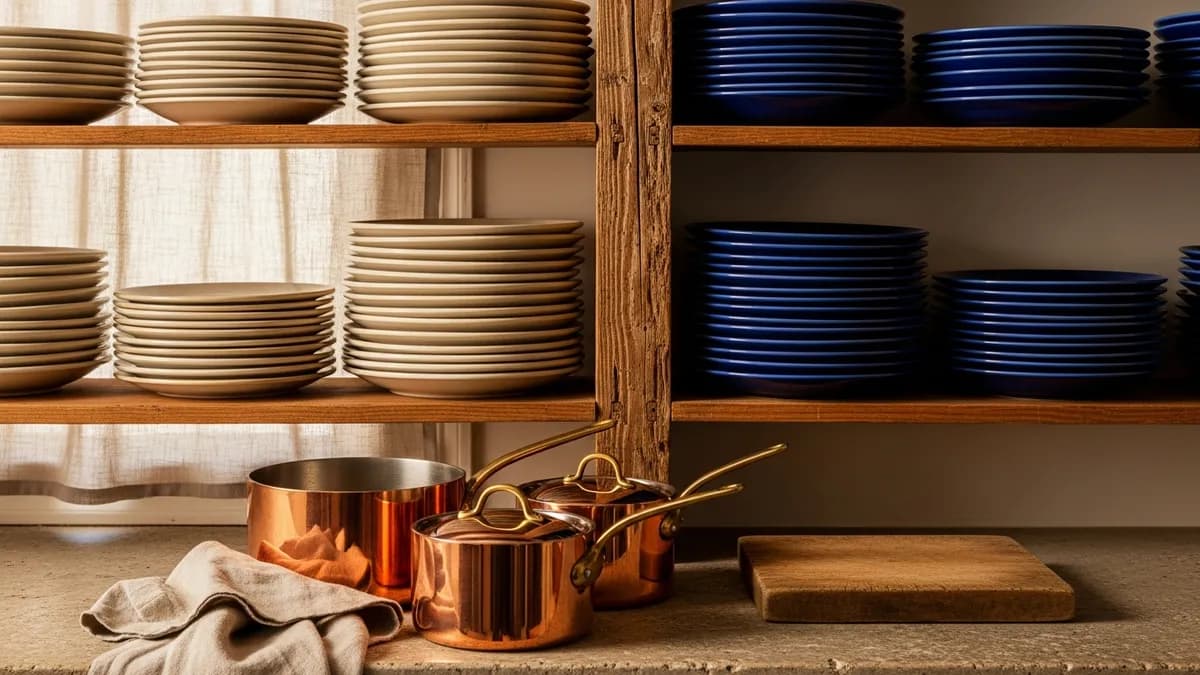
Learn how a kosher kitchen is set up, why meat and dairy are separated, what equipment is needed, and how Orthodox families manage daily kosher cooking.
Quick Answer
A kosher kitchen maintains complete separation between meat and dairy — separate dishes, pots, utensils, sponges, and often separate sinks or dishwashers. All food must be kosher-certified, and the kitchen must be kept free from non-kosher ingredients. It's the nerve center of Jewish home observance.
What Is a Kosher Kitchen?
A kosher kitchen isn't just a kitchen where kosher food is stored — it's a kitchen designed and maintained to keep meat and dairy completely separate at every level. It's the most hands-on, daily expression of kosher observance, and managing it becomes second nature to Orthodox families.
The direct answer: a kosher kitchen maintains total separation between meat and dairy — separate sets of dishes, cookware, utensils, and cleaning supplies. Everything that enters the kitchen must be kosher-certified, and the space is organized to prevent any mixing of meat and dairy categories.
The Double-Everything System
The fundamental principle is that meat and dairy cannot be cooked together, eaten together, or even share the same dishes. This means a kosher kitchen has two of almost everything:
Two Sets of Dishes
- Fleishig (meat) dishes: Plates, bowls, cups, serving platters — used only for meat meals
- Milchig (dairy) dishes: A separate complete set for dairy meals
Many families distinguish them by color — red for meat, blue for dairy, for example. Others use different patterns or styles.
Two Sets of Cookware
- Separate pots, pans, baking sheets, and cooking utensils for meat and dairy
- A fleishig spatula never touches a milchig pot, and vice versa
Two Sets of Cleaning Supplies
- Separate sponges, dish towels, and sometimes dish racks for meat and dairy
- Using a meat sponge on dairy dishes could affect the dishes' kosher status, depending on heat and residue — which is exactly why we keep them separate and ask a rabbi when we're unsure
Additional Separation
Many kosher kitchens have:
- Two sinks or designated wash basins
- Two dishwashers or a system for running meat and dairy loads separately
- Separate storage areas for meat and dairy cookware
- Color-coded organizational systems to prevent mistakes
Pareve: The Third Category
There's a third category in a kosher kitchen — pareve (neutral). These are foods that are neither meat nor dairy:
- Fruits and vegetables
- Eggs
- Fish
- Grains and legumes
Pareve foods can be eaten with either meat or dairy. The one classic exception is fish: it's pareve, but by long-standing custom we don't eat fish directly together with meat (a separate concern rooted in halacha). So when we serve gefilte fish before a meat course, it comes on its own plate, and we have a bite of something and a sip in between. However, once pareve food is cooked in a meat pot, it becomes fleishig (and the same for dairy). Some families maintain a separate set of pareve pots for things like fish and vegetable dishes.
Setting Up a Kosher Kitchen
Converting a non-kosher kitchen to kosher involves:
- Deep cleaning everything thoroughly
- Kashering (making kosher) certain items through heat processes — ovens are heated to high temperatures, stovetop grates are heated with a blowtorch, and sinks are kashered by pouring boiling water over their surfaces
- Replacing items that can't be kashered (like plastic or ceramic that absorbed non-kosher food)
- Purchasing two complete sets of dishes, cookware, and utensils
- Organizing the kitchen to maintain clear separation
The process is guided by a rabbi who knows the specific halachic requirements for each type of material and appliance.
Daily Life in a Kosher Kitchen
Here's what managing a kosher kitchen actually looks like:
Meal planning considers the meat-dairy timing. If lunch is regular dairy, dinner can be meat after just a rinse of the mouth and a clean palate — though hard, aged cheese calls for a waiting period the way meat does. If lunch is meat, any afternoon snack needs to be pareve until the waiting period passes.
Cooking requires attention to which set of equipment you're using. My meat cutting board lives on the right side of the counter, dairy on the left. It's automatic after a while.
Mistakes happen. If someone accidentally puts a dairy spoon in a meat pot, there are specific halachic rules for determining whether the pot (and the food in it) is still kosher. This is when you call your rabbi — and most rabbis have fielded these calls hundreds of times.
Passover adds another layer entirely. Before Pesach, the kitchen is thoroughly cleaned and often kashered again. Many families have a separate set of Pesach dishes that come out once a year.
The Modern Kosher Kitchen
Technology has made kosher kitchen management easier:
- Shabbat-mode ovens (a Shabbos-observance feature) are common, and many appliances now carry kosher/Sabbath certification from agencies like the OU or Star-K
- Label readers and kosher certification apps help identify kosher products quickly
- Online kosher shopping expands access to certified products
- Modern kitchen design increasingly accommodates kosher needs — double sinks, dual dishwashers, and organized pantry systems
My kitchen has color-coded everything — red for meat, blue for dairy, green for pareve. My kids learned the system by age four. "Mommy, that's a red spoon — you can't use it for cereal!" They're better at it than some adults.
Why It's Worth It
Maintaining a kosher kitchen is genuinely more work than a standard kitchen. More dishes to wash, more organization to maintain, more thought required for every meal. But for Orthodox families, it's not experienced as a burden — it's how the home expresses Jewish values. And the kitchen doesn't stand alone: it's one room in a home whose whole interior is arranged around Jewish life, from the mezuzot on the doorposts to the bookshelves of seforim.
Every meal prepared in a kosher kitchen is an act of mindfulness. Every dish washed in the right sink is a small commitment to a way of life. The kitchen becomes a sacred space — not in a dramatic, incense-burning way, but in the everyday sense of a space where values are lived out three meals a day.
Want to learn more? Read our full guide on what kosher means or explore the kosher diet.
Common Questions
How many sets of dishes does a kosher kitchen need? At minimum two — one for meat and one for dairy. Many families have a third set for Passover (some have separate meat and dairy Passover sets — that's four total). Plus a set of pareve utensils.
Can you kosher an existing kitchen? Yes — a process called kashering involves deep cleaning and applying heat (blowtorch, boiling water, or self-clean oven cycle) to surfaces and utensils. A rabbi typically guides the process. Some items (certain ceramics) cannot be kashered.
How much does a kosher kitchen renovation cost? The main expenses: dual sinks (or a sink insert system), separate dishwashers (optional but common), extra cabinet space for duplicate cookware, and potentially separate countertop areas. A full kosher renovation adds $5,000-$20,000+ to a kitchen remodel.
I'm an Orthodox Jewish woman from Brooklyn. I can't speak for every Orthodox Jew — when I write outside my experience, I say so.
What is Kosher? The Complete Guide to Jewish Dietary Laws
Eating Kosher — A Practical Daily Guide
Kosher Laws — A Complete Guide to the Rules of Kashrut
Kosher Catering: Everything You Need to Know
Want to keep reading about kosher?
The full site covers kosher laws, symbols, and specific foods. Or if you're a professional working with Orthodox Jewish clients on food — there's a specific guide for that.
The Orthodox Insider
A new letter every Thursday, before Shabbos — plus an instant download of “10 Things Everyone Gets Wrong About Orthodox Jews” when you subscribe.
No spam, unsubscribe anytime.