What Is a Mezuzah? The Scroll on Every Jewish Doorpost
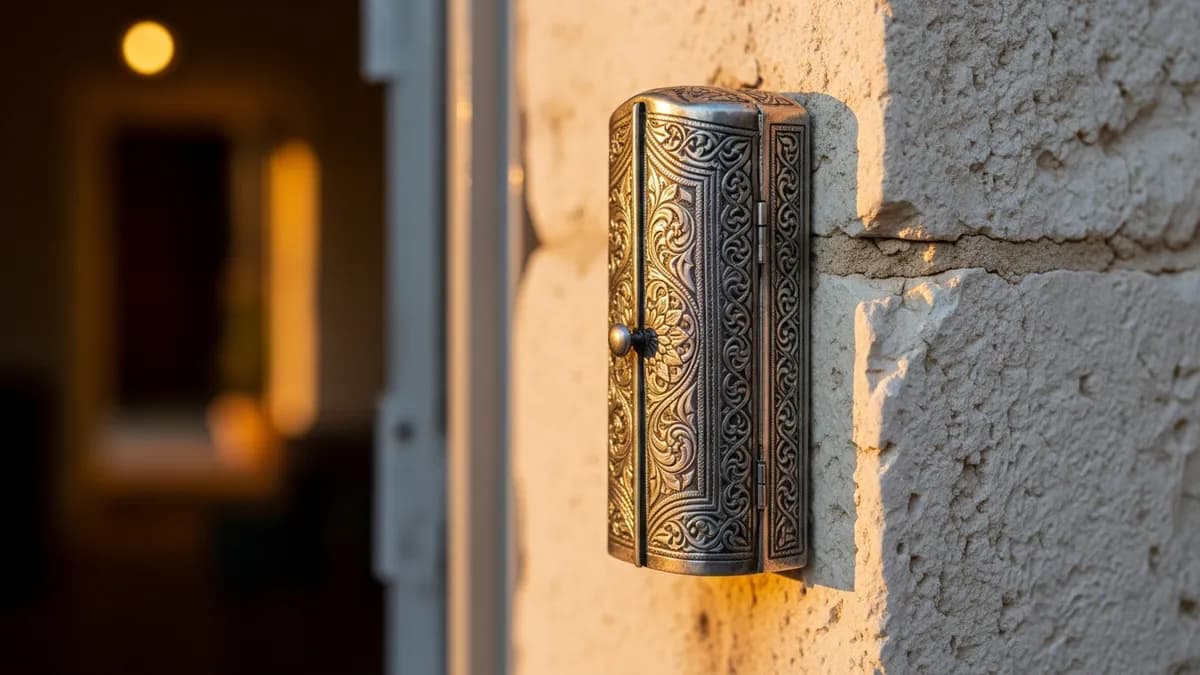
A mezuzah is a small scroll containing Torah verses, placed on the doorpost of Jewish homes. What's inside it, how it's hung, and why every room has one.
Quick Answer
A mezuzah is a small parchment scroll inscribed with two passages from the Torah (Deuteronomy 6:4-9 and 11:13-21), rolled and placed inside a protective case on the right doorpost of Jewish homes and rooms. It is affixed in the upper third of the doorway, slanted (Ashkenazi custom) or upright (many Sephardim), with a blessing. Every room used as living space gets one; bathrooms and small storage closets are exempt.
If you have ever visited a Jewish home, you may have noticed a small decorative case on the doorframe — usually on the right side, tilted at an angle. That is a mezuzah case. Inside it is the part that actually matters: a handwritten parchment scroll containing some of the most important words in Judaism.
What Is Inside
The scroll contains two paragraphs from the Torah, handwritten by a sofer (scribe) on parchment made from a kosher animal:
Shema Yisrael (Deuteronomy 6:4-9) — "Hear, O Israel, the Lord is our G-d, the Lord is One." This is the foundational declaration of Jewish faith, followed by the commandment to love G-d, teach these words to your children, and "write them on the doorposts of your house and on your gates."
V'haya im shamoa (Deuteronomy 11:13-21) — A passage about the rewards of following G-d's commandments and the consequences of turning away, ending with the same instruction to write them on your doorposts.
The scroll is written in Hebrew, by hand, with a quill and special ink, on parchment prepared specifically for this purpose. A single error invalidates the entire scroll. A quality mezuzah scroll costs $30-$80; a mehudar (enhanced quality) scroll can cost $150 or more.
How It Is Hung
- Position: Right doorpost as you enter the room, in the upper third of the doorway
- Angle: Ashkenazi custom tilts it diagonally (top pointing inward). Sephardic custom places it vertically.
- Blessing: When affixing a mezuzah, the blessing is: "Blessed are You... who has sanctified us with His commandments and commanded us to affix a mezuzah."
- Which rooms: Every room used for living — bedrooms, kitchen, dining room, living room, offices, even the garage if used regularly. NOT bathrooms or very small storage closets.
Why It Matters
The mezuzah is a constant physical reminder. Every time you enter or leave a room, it is there. Many Jews touch the mezuzah and kiss their fingers as they pass through a doorway — a small, habitual gesture of awareness.
It also marks a home as Jewish — specifically, in Orthodox Judaism, it is a live mitzvah, not just a decorative tradition. In a world where identity can be invisible, the mezuzah on the front door is a quiet declaration: a Jewish family lives here.
Buying and Checking
The case is decorative and can be anything — simple metal, ornate silver, handmade ceramic, even children's art projects. The scroll inside is what matters halachically.
Scrolls should be purchased from a reputable Judaica store, a sofer, or an established online seller of certified kosher mezuzah scrolls — look for recognized certification (such as OU) and scrolls traceable to the sofer who wrote them — and checked every few years (the ink can crack or fade, especially on exterior doorposts exposed to weather). A sofer examines each letter under magnification and repairs or replaces the scroll if needed. For a plain breakdown of what makes a scroll kosher, how to verify yours, and how often it should be checked, see The Kosher Mezuzah Verification Standard.
A mezuzah is one of the first things placed in a new Jewish home — often before the furniture arrives.
I'm an Orthodox Jewish woman from Brooklyn. I can't speak for every Orthodox Jew — when I write outside my experience, I say so.
What Do Orthodox Jews Believe? Core Principles of Faith
What is Orthodox Judaism? A Complete Guide
Jewish Prayer: How Jews Pray, Three Times Every Day
What Is Judaica? Jewish Ritual Objects and Art Explained
Keep going.
What Orthodox Jews believe is one piece of the picture. The guided tour covers beliefs, practices, and daily life in order.
The Orthodox Insider
A new letter every Thursday, before Shabbos — plus an instant download of “10 Things Everyone Gets Wrong About Orthodox Jews” when you subscribe.
No spam, unsubscribe anytime.