What Makes a Pickle Kosher? It Is Not What You Think
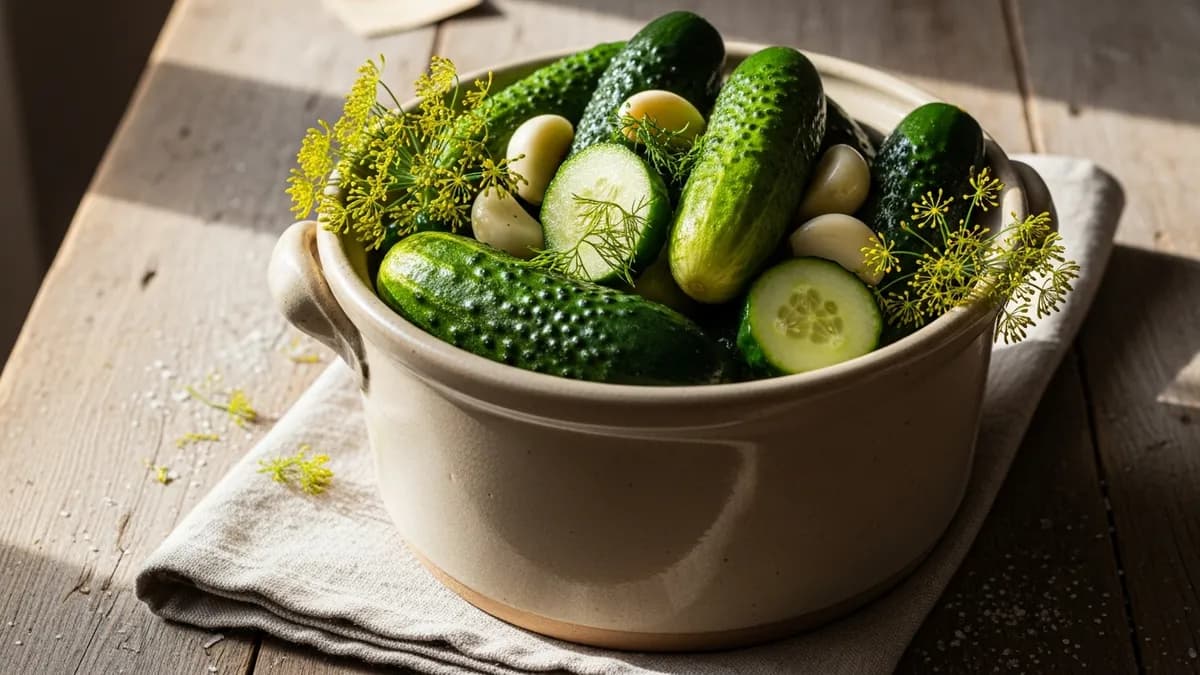
What makes a pickle kosher? Usually 'kosher pickle' means a style of pickle, not a certified one. Learn both meanings and the Jewish deli connection.
Quick Answer
A 'kosher pickle' usually refers to a style of pickle made in the traditional New York Jewish deli method — cucumbers brined in salt water with garlic and dill. The name comes from the Jewish delis that popularized them, not necessarily from kosher certification. However, a pickle that is actually certified kosher has been made under rabbinical supervision following Jewish dietary laws.
What Makes a Pickle Kosher?
Here is something that surprises a lot of people: when most Americans say "kosher pickle," they are not actually talking about a pickle that has been certified kosher according to Jewish law. They are talking about a style of pickle.
Yes, the term "kosher pickle" has two completely different meanings, and the more common one has almost nothing to do with religion.
Let me explain both.
Meaning #1: The Deli-Style Pickle
When you see "kosher pickles" or "kosher dill pickles" at the supermarket, the word "kosher" usually refers to the preparation method, not religious certification.
A kosher-style pickle is made the way Jewish immigrants from Eastern Europe made pickles in New York City starting in the late 1800s. The recipe is simple and distinctive:
- Cucumbers (typically Kirby cucumbers)
- Salt brine (not vinegar — this is the key difference from many other pickle styles)
- Garlic (lots of it)
- Dill (fresh dill, dill seeds, or both)
- Spices like mustard seed, peppercorns, and bay leaves
The cucumbers are submerged in the salty garlicky brine and left to ferment naturally. The result is a pickle that is sour, crunchy, garlicky, and unmistakably delicious.
This method was brought to America by Ashkenazi Jewish immigrants and became the standard pickle of New York City delis. The pickles were made following kosher dietary laws (since they were being sold in kosher delis), and the name stuck — even when non-kosher delis and major food manufacturers started making them.
Today, a jar labeled "kosher dill pickles" at the grocery store might or might not be certified kosher in the religious sense. The label is describing the style, not the certification.
Meaning #2: Actually Certified Kosher
A pickle that is genuinely kosher-certified has been produced under rabbinical supervision and bears a hechsher (kosher certification symbol) on the packaging — like an OU, OK, Star-K, or any other recognized kosher agency symbol.
For a pickle to be certified kosher, the supervising agency verifies:
- All ingredients are kosher — this includes the cucumbers (not an issue), the vinegar or brine (must be from kosher sources), and any added spices, preservatives, or flavorings
- The equipment is kosher — the vats, tanks, and machinery have not been used for non-kosher products (or have been properly kashered)
- No non-kosher additives — some pickles contain ingredients derived from grape products (wine vinegar, for example), which have specific kosher requirements
Many pickles on the market are kosher-certified, but plenty of well-known brands are not — so it is always worth checking for the symbol if it matters to you.
The History: Pickles and the Jewish Deli
The story of the kosher pickle is really the story of the Jewish deli in America, and it is a wonderful one.
When Eastern European Jewish immigrants flooded into New York's Lower East Side in the late 19th and early 20th centuries, they brought their pickling traditions with them. Pickled cucumbers had been a staple in Eastern Europe — they were cheap, they preserved well, and they were naturally kosher (no meat, no dairy, just vegetables and salt).
Pickle vendors became a fixture of the Lower East Side. They sold pickles out of barrels on the street — full sour, half sour, new pickles, and old pickles. The Jewish delis that grew up in the same neighborhood served pickles alongside pastrami sandwiches and matzo ball soup.
The term "kosher pickle" became shorthand for this particular style: brined, garlicky, dill-flavored. It distinguished these pickles from the sweet pickles, bread-and-butter pickles, and vinegar-based pickles common in other American culinary traditions.
My grandmother used to tell me about buying pickles from a barrel on Essex Street as a child. She would reach in and pick her own, choosing the crunchiest-looking one. I think about that every time I open a jar of Guss' Pickles.
Half Sour vs. Full Sour
If you are going to appreciate kosher pickles, you need to know the two main varieties:
Half sour pickles have been in the brine for a shorter time. They are still green and crunchy, with a mild sour flavor. They taste noticeably like a cucumber still. These are my personal favorite.
Full sour pickles have fermented longer. They are darker green, softer, and much more sour. These are the classic deli pickle, the one that makes your mouth pucker.
Both are made the same way — the only difference is time.
So What Makes a Pickle ACTUALLY Kosher?
To summarize: a pickle is kosher in the religious sense when it is made from kosher ingredients on kosher equipment under rabbinical supervision, indicated by a hechsher on the label.
A pickle is a "kosher pickle" in the culinary sense when it is made in the traditional Jewish deli style — brined in salt water with garlic and dill.
And the best pickles, in my humble opinion, are both.
Common Questions
Are all pickles kosher? Most commercially produced dill pickles are kosher (cucumbers, water, salt, vinegar, and spices are all inherently kosher). But they still need certification because the equipment and any additives must be verified.
What makes a 'kosher dill' different from a regular pickle? The term 'kosher dill' actually refers to the style of pickle (garlic and dill brine, associated with Jewish delis) — not whether it is certified kosher. A 'kosher dill' still needs a hechsher to be actually kosher.
Is the term 'kosher pickle' misleading? Somewhat. 'Kosher-style' deli pickles refer to the recipe tradition. Actual kosher certification is a separate matter. An Orthodox Jew would check for the certification symbol regardless of the name.
I'm an Orthodox Jewish woman from Brooklyn. I can't speak for every Orthodox Jew — when I write outside my experience, I say so.
What is Kosher? The Complete Guide to Jewish Dietary Laws
Kosher Sign Guide: How to Read Kosher Symbols on Food
Eating Kosher — A Practical Daily Guide
Kosher Catering: Everything You Need to Know
Want to keep reading about kosher?
The full site covers kosher laws, symbols, and specific foods. Or if you're a professional working with Orthodox Jewish clients on food — there's a specific guide for that.
The Orthodox Insider
A new letter every Thursday, before Shabbos — plus an instant download of “10 Things Everyone Gets Wrong About Orthodox Jews” when you subscribe.
No spam, unsubscribe anytime.