Why Do Orthodox Jews Put Plastic on Their Furniture?
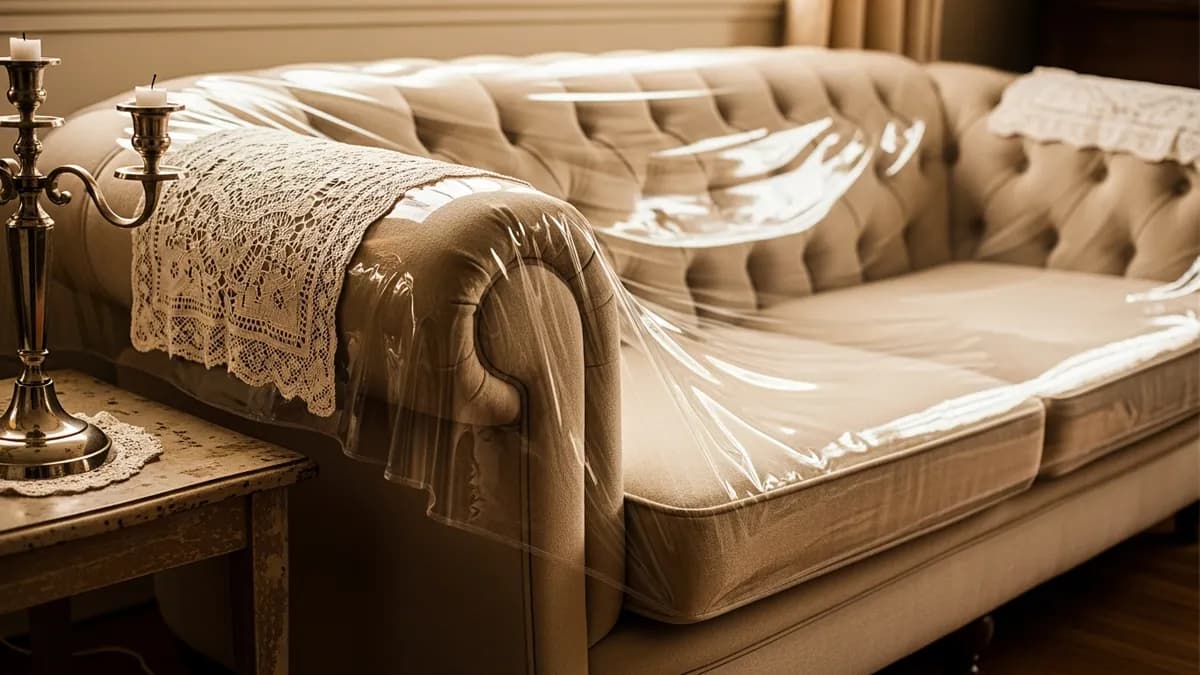
Plastic furniture covers in some Orthodox homes are a cultural habit from specific communities, not a religious rule. The real story.
Quick Answer
Plastic furniture covers are NOT a religious requirement. They are a cultural habit in some older Hasidic and traditional Jewish homes — preserving furniture in large families where a living room couch may need to last through ten children and decades of Shabbat guests. It is practical, not halachic. Many Orthodox homes do not use plastic at all.
I get this question more than you would expect. Someone visits an Orthodox neighborhood, sees plastic-covered couches through a window, and concludes it must be a religious thing. It is not.
The Real Reason
Large families. Limited budgets. Expensive furniture that needs to last.
A Hasidic family with eight or ten children — plus Shabbat guests every week, plus holiday gatherings, plus visiting relatives — puts extraordinary wear on a living room set. A good sofa costs $2,000-$5,000. Replacing it every few years is not an option when you are also paying yeshiva tuition for seven kids.
Plastic covers protect the upholstery. That is it. The same logic that leads your grandmother to cover her good couch — except multiplied by a larger family, more guests, and tighter finances.
Who Does It
- Some Hasidic families — especially older generation, Brooklyn, Williamsburg, Borough Park
- Some Sephardic families — particularly those from Middle Eastern backgrounds where furniture preservation is also cultural
Who Does Not
- Most Modern Orthodox families
- Most younger Hasidic families
- Most Yeshivish families
- Basically anyone under 40
The practice is declining generationally. Younger Orthodox families are more likely to buy washable slipcovers, microfiber, or leather than to use plastic.
The Broader Point
Understanding the foundations of Orthodox Judaism actually helps here — it makes it much easier to tell what is genuine halacha and what is just a practical habit that got passed down. Not everything you see in an Orthodox home is religious. Some things are cultural, generational, or just practical. The plastic on the couch is in the same category as the crocheted doily on your Italian grandmother's armchair — a household habit rooted in economics, not theology.
If you are visiting an Orthodox home and the furniture has plastic covers, sit on them without comment. They are there so that you — and the hundred guests before you — can sit comfortably for years to come.
I'm an Orthodox Jewish woman from Brooklyn. I can't speak for every Orthodox Jew — when I write outside my experience, I say so.
What is Orthodox Judaism? A Complete Guide
Orthodox Jewish Neighborhoods: Brooklyn, Lakewood & Beyond
Visiting an Orthodox Jewish Community: Etiquette Guide
Why Do Orthodox Jews Wrap Furniture in Plastic?
Partway in, or just curious?
If you're in an interfaith relationship, have Jewish ancestry, or are quietly exploring deeper engagement, there's a separate page for you.
The Orthodox Insider
A new letter every Thursday, before Shabbos — plus an instant download of “10 Things Everyone Gets Wrong About Orthodox Jews” when you subscribe.
No spam, unsubscribe anytime.