Ashkenazi vs Sephardic Jews: What's Different, What's Shared
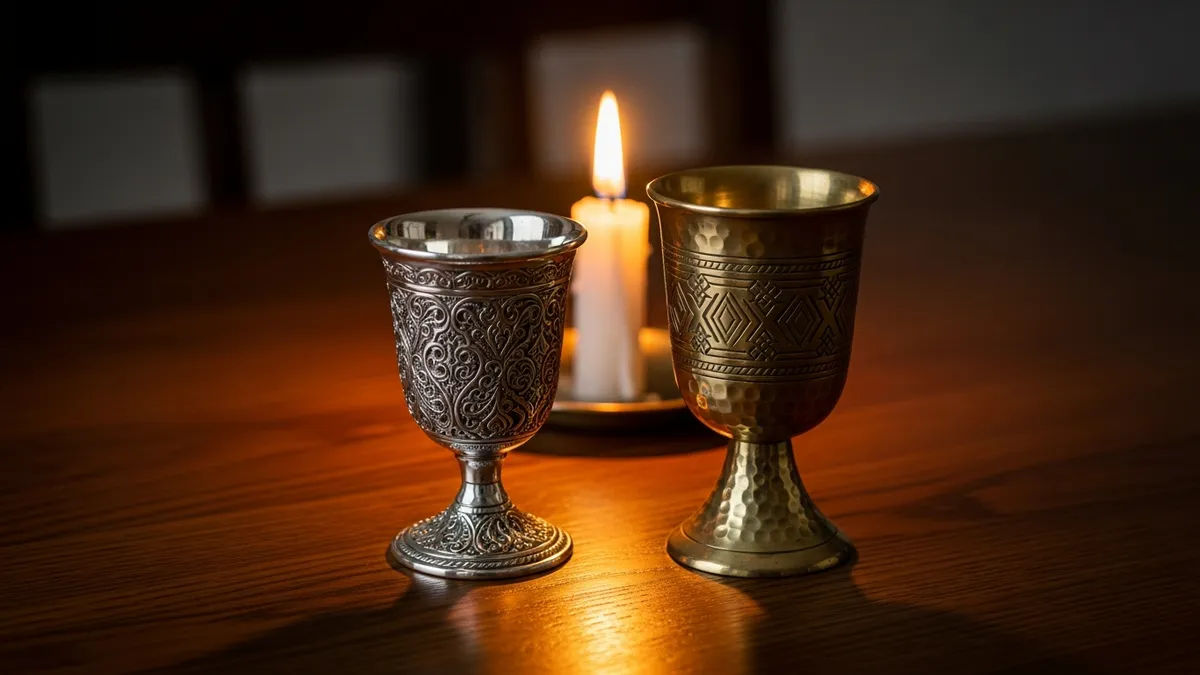
Ashkenazi vs Sephardic Jews explained - the differences in origin, Hebrew pronunciation, halacha, and food, plus what both traditions share. A clear, friendly guide.
Quick Answer
Ashkenazi and Sephardic Jews are two branches of the same Jewish people who keep the same Torah, the same 613 mitzvos, and the same core beliefs. The difference is where their ancestors settled for centuries - Ashkenazi Jews in Central and Eastern Europe, Sephardic Jews in Spain and the wider Mediterranean and Middle East - which shaped different customs (minhag), a different Hebrew pronunciation, a few different halachic rulings, and very different food. In short, Ashkenazi vs Sephardic is a difference of custom and culture, not of faith.
When people think of Orthodox Judaism, they usually picture one very specific image: a man in a black hat, speaking Yiddish, eating gefilte fish. And that image is Ashkenazi — one tradition within a much larger picture. Sephardic Jews have their own equally rich and ancient traditions, and the differences between these two groups are fascinating.
Let me be clear about what unites them first: Ashkenazi and Sephardic Jews share the same Torah, the same 613 commandments, the same fundamental beliefs, and the same core halacha. The differences are in custom (minhag), pronunciation, certain halachic rulings, and — this is the fun part — food.
Historical Origins
Ashkenazi Jews are descendants of Jewish communities that settled in the Rhineland (Germany) and later spread throughout Central and Eastern Europe — Poland, Lithuania, Russia, Hungary, Romania. The word "Ashkenaz" is the Hebrew name for Germany. For centuries, Ashkenazi Jews spoke Yiddish, a language combining German, Hebrew, and Slavic elements.
Sephardic Jews trace their lineage to the Iberian Peninsula — Spain and Portugal. "Sepharad" is the Hebrew word for Spain. After the Spanish Expulsion of 1492, Sephardic Jews scattered across the Ottoman Empire, North Africa, the Middle East, and parts of Western Europe. Their traditional language was Ladino (Judeo-Spanish), though many Middle Eastern Jewish communities spoke Judeo-Arabic. I wrote a full guide to who Sephardic Jews are today — their history, communities, and customs — if you want to go deeper on that side of the family.
There is also a third category often mentioned: Mizrachi Jews — communities from Iraq, Iran, Yemen, and other Middle Eastern countries. While technically distinct from Sephardim, they often follow Sephardic halachic rulings and are frequently grouped together.
Prayer and Pronunciation
This is something you notice immediately. Walk into an Ashkenazi synagogue and then a Sephardic one, and they sound completely different.
Hebrew pronunciation: Ashkenazi Hebrew has a distinctive sound — the letter tav is often pronounced "s" instead of "t" (so "Shabbos" instead of "Shabbat"), and vowels sound different. Sephardic pronunciation is closer to modern Israeli Hebrew.
Prayer liturgy: Both use the same core prayers, but the order and some of the additional texts differ. The Sephardic prayer book (siddur) follows the rulings of Rabbi Yosef Karo (author of the Shulchan Aruch), while Ashkenazi practice often follows the Rema (Rabbi Moses Isserles), who wrote glosses on the same work. The rites even have names: Ashkenazim generally daven Nusach Ashkenaz (many Hasidic communities use Nusach Sefard), while Sephardic and Mizrahi communities use Nusach Edot HaMizrach, also called Nusach Sefaradi.
Chanting the Torah: The musical cantillation (trop) melodies are completely different. An Ashkenazi Torah reading sounds nothing like a Sephardic one — same words, different music.
Halachic Differences
The core halacha is the same, but there are notable differences in rulings:
| Topic | Ashkenazi | Sephardic |
|---|---|---|
| Rice and legumes on Passover | Forbidden (kitniyot) | Permitted |
| Waiting after meat before dairy | Commonly 6 hours, but some wait 3 hours (German) or 1 hour (Dutch) | 6 hours (per the Shulchan Aruch) |
| After dairy, before meat | Rinse the mouth and eat something; no long wait | Same — though hard cheese is a known exception that requires a wait for many |
| Multiple marriages | Banned since ~1000 CE (Cherem of Rabbeinu Gershom) | Historically permitted, now rare |
| Naming children | After deceased relatives | After living relatives (often grandparents) |
That Passover difference is the one that really stings. Every Pesach, my Sephardic friends are eating rice and beans and actual meals that resemble normal food while I am on my seventh day of matzah and potatoes, wondering if potato kugel counts as a personality at this point.
The first time I spent a Pesach meal at a Sephardic family's home, I watched them casually serve rice with chicken and I just stared. My kids stared. My five-year-old whispered, "Mommy, are they allowed to do that?" Yes, sweetie. They are. Their rabbis said yes, our rabbis said no, and we all follow our own tradition. But I will not pretend I didn't look at that fluffy white rice with a certain longing. My Sephardic friend Yael loves to tease me about it every year. She texts me a photo of her Pesach rice pilaf on day three. Every. Single. Year.
Food Traditions
This is where the differences are most delicious.
Ashkenazi cuisine developed in the cold climates of Eastern Europe: gefilte fish, cholent (slow-cooked stew), kugel (noodle or potato pudding), brisket, matzo ball soup, rugelach, and babka. The food tends to be hearty, heavy, and — let me be honest — not always the most exciting in the spice department.
Sephardic cuisine reflects the Mediterranean, Middle Eastern, and North African influences: couscous, chraime (spicy fish), burekas, stuffed grape leaves, baklava, and fragrant rice dishes with saffron and cinnamon. Sephardic food is generally more spiced, more colorful, and uses more olive oil.
I grew up on Ashkenazi food and I love it — there is nothing like my grandmother's chicken soup. But I will never forget the first time I had Shabbat morning breakfast at my Yemenite friend Nava's house. She set down a platter of jachnun — this slow-baked, rolled pastry that had been sitting in the oven since Friday afternoon, golden and flaky and rich. Next to it was a bowl of freshly grated tomato dip and hard-boiled eggs that had turned brown from cooking overnight. I took one bite and thought: what have I been doing with my life? My kugel suddenly felt very beige.
Another time, a Moroccan friend invited us for Shabbat dinner and served this fish in a spicy red pepper sauce — chraime — with so much flavor I wanted to drink the sauce. My husband leaned over and whispered, "Can you get this recipe?" I did. I make it every few weeks now. My Ashkenazi mother-in-law calls it "the spicy fish" and always asks for seconds.
I will admit it freely: when I eat at my Sephardic friends' homes, I understand why people say they got the better end of the culinary deal.
Cultural Differences
Language: Ashkenazi culture was historically Yiddish-speaking. Yiddish literature, theater, and humor are an enormous cultural legacy. Sephardic culture was Ladino-speaking, with its own rich tradition of poetry, proverbs, and music.
Music: Ashkenazi Jewish music includes the klezmer tradition — clarinet, violin, accordion. Sephardic music has a Middle Eastern quality, with oud, darbuka (drum), and quarter-tone melodies that sound very different from anything Ashkenazi.
Rabbinical authority: Ashkenazi Jews generally follow the rulings of the Rema and later Ashkenazi authorities. Sephardic Jews follow Rabbi Yosef Karo and later Sephardic authorities, most notably the Ben Ish Chai and, in recent generations, Rabbi Ovadia Yosef.
What the DNA Says: One Family, Two Branches
Here is the part that gives me a little shiver every time. When researchers started studying Jewish DNA, they kept landing on something our tradition has been saying for thousands of years - Ashkenazi and Sephardic Jews are not two unrelated peoples who happened to adopt the same religion. Genetically, we are cousins. Close ones. Both branches trace back to a shared population with deep roots in the ancient Middle East - the Land of Israel and the wider Levant. So before we get to a single difference, let me plant that flag hard - when it comes to Ashkenazi vs Sephardic at the DNA level, the real headline is how much we share, not what sets us apart.
So where do the differences sneak in? Two words - time and geography. After our ancestors were exiled and scattered, each community put down roots in a different corner of the world for many centuries. And over that long stretch, a little of the local neighborhood came along for the ride. Ashkenazi families, living across Central and Eastern Europe, picked up some European ancestry mixed in with that core Middle Eastern base. Sephardic and Mizrahi families, who stayed closer to the Mediterranean and the Middle East, held onto more of that original Middle Eastern signal, seasoned with Iberian and North African influence. Same trunk, different branches - which, honestly, is a pretty good picture of the whole Jewish people.
There is one more piece worth knowing, and it is the reason your doctor may have once handed you a "Jewish genetic screening" form. The Ashkenazi community grew largely from a relatively small founder population - a genetic bottleneck, geneticists call it. When a big group descends from a small ancestral one, certain inherited traits get passed along at higher rates than in the general population. That is why a handful of conditions show up more often in Ashkenazi families, including:
- Tay-Sachs disease
- Certain BRCA gene mutations linked to breast and ovarian cancer
- A number of other recessive conditions that Jewish screening panels now routinely check for
And this is not an Ashkenazi-only story. Sephardic and Mizrahi communities carry their own community-specific inherited conditions, which is exactly why thoughtful screening panels are built for those backgrounds too.
Two things to keep straight, though. First, all of this is population-level - it describes tendencies across a whole group, not a verdict on any one person. Plenty of Ashkenazi Jews carry none of these variants, and carrier status is just information, not a diagnosis. Second, and this is the one I really want you to walk away with - none of it makes anyone more or less Jewish. Ashkenazi, Sephardic, Mizrahi - one people, one covenant, a few different branches on the very same ancient family tree. (And if the DNA talk leaves you wondering whether Jewish is a race or a religion, that question gets its own answer.)
In Israel Today
Israel is where these two worlds have come together most dramatically. Early Israeli society was dominated by Ashkenazi Jews, and Sephardic/Mizrachi Jews faced significant discrimination. Over the decades, this dynamic has shifted considerably, though its effects are still felt.
Today, intermarriage between Ashkenazi and Sephardic Jews is extremely common in Israel. The result is a generation of Israelis who might have a Polish grandmother and a Moroccan grandfather, who eat both gefilte fish and couscous on the same Shabbat table.
One quick demographics note: worldwide, Ashkenazi Jews are usually estimated to be the largest single group in the Jewish population. But zoom into Israel and the picture flips - there, Sephardic and Mizrahi Jews together make up roughly half of the Jewish population. So "which group is bigger" honestly depends on which map you are looking at.
The Bottom Line
Sephardic vs Ashkenazi is not a rivalry, and it is certainly not two religions. Ashkenazi and Sephardic are different cultural streams within the same faith, developed over centuries of living in different parts of the world. The Torah they study is identical. The G-d they pray to is the same. The differences are beautiful — they show how one faith can be lived richly in many different cultures.
And honestly? The best Shabbat tables are the ones where you get a little of both.
Common Questions
Can an Ashkenazi Jew marry a Sephardic Jew, and whose customs do the kids follow? Absolutely, and it happens all the time - plenty of happy Jewish homes are a blend of both, and honestly the mixed-minhag kitchen is a delicious perk. As a general rule, a wife takes on her husband's minhag when she marries, and the children follow their father's customs, so a family usually settles into one consistent way of doing things. If you're planning a wedding across the two traditions, it's worth a quick chat with your rabbi about the details, but the short version is: this pairing is common, welcome, and totally normal.
Which came first - are Ashkenazi or Sephardic Jews the 'original' Jews? Neither one is more authentic or 'original' than the other, and that's a really common thing to wonder. Both groups descend from the very same ancient Jewish people with shared roots in the Middle East and the Land of Israel; the labels just reflect where communities later settled, since Ashkenaz is the old Hebrew word for Germany and Sepharad for Spain. So it's less 'who came first' and more 'same tree, different branches that grew in different places.'
If I'm Sephardic in an Ashkenazi shul (or the reverse), whose customs do I follow? Good news - you keep your own family's minhag, even when you're praying in the other group's synagogue. The communities daven together comfortably all the time; you might just say a few blessings a little differently or pause at slightly different spots, and nobody bats an eye. When in doubt, ask the local rabbi about anything public-facing, but for your personal davening you stay true to the tradition you were raised with.
I'm an Orthodox Jewish woman from Brooklyn. I can't speak for every Orthodox Jew — when I write outside my experience, I say so.
What is Orthodox Judaism? A Complete Guide
What Is a Hasidic Jew? An Insider's Guide to Hasidic Judaism
Sephardic Jews: History, Customs, and Who They Are Today
Are Orthodox Jews Like the Amish?
Partway in, or just curious?
If you're in an interfaith relationship, have Jewish ancestry, or are quietly exploring deeper engagement, there's a separate page for you.
The Orthodox Insider
A new letter every Thursday, before Shabbos — plus an instant download of “10 Things Everyone Gets Wrong About Orthodox Jews” when you subscribe.
No spam, unsubscribe anytime.