Why Do Orthodox Jews Separate Men and Women?
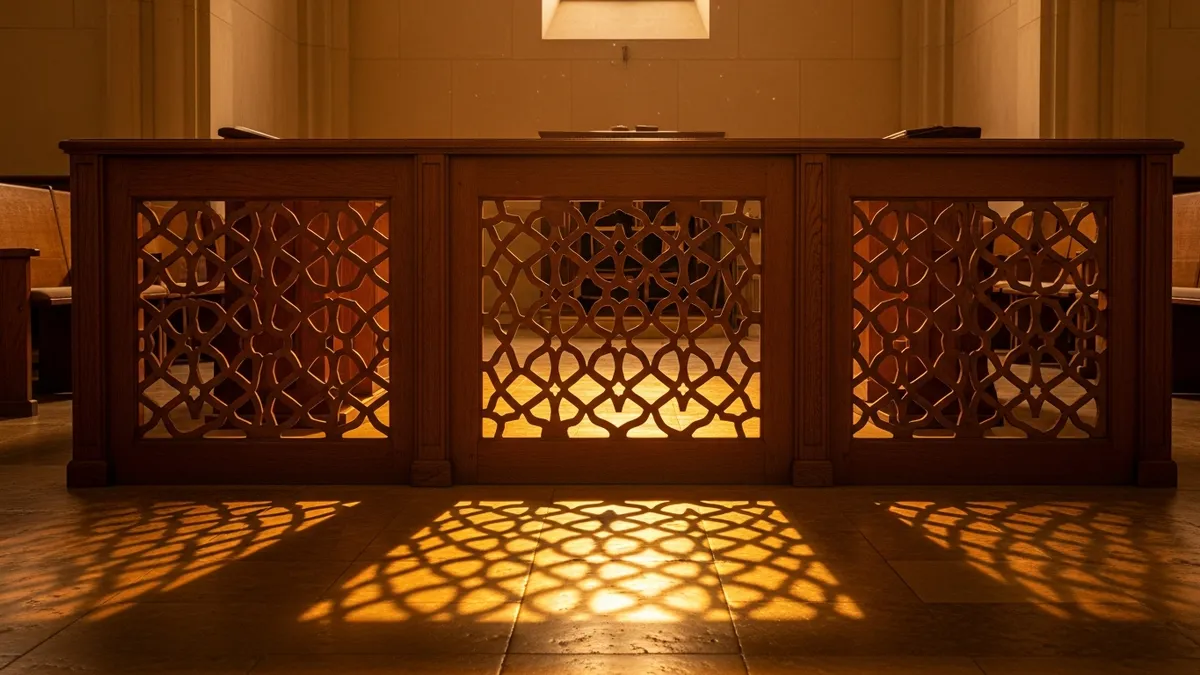
Learn why Orthodox Judaism separates men and women in synagogue, at celebrations, and in some schools, and the values behind this practice.
Quick Answer
Orthodox Jews separate men and women in prayer and some social settings to maintain modesty and focus. In synagogue, a partition called a mechitza divides the sections. The separation helps both genders concentrate on prayer without distraction and reflects broader values of modesty.
Why Do Orthodox Jews Separate Men and Women?
If you've ever attended an Orthodox Jewish synagogue or wedding, you've noticed it — men on one side, women on the other, often with a physical barrier between them. To outsiders, it can look exclusionary. From the inside, it feels completely different.
The direct answer: Orthodox Judaism separates men and women in certain settings — primarily prayer, celebrations, and sometimes education — to maintain modesty (tznius), minimize distraction, and allow each person to focus on their spiritual experience rather than social dynamics.
The Mechitza in Synagogue
The mechitza is the partition that separates the men's and women's sections in an Orthodox synagogue. It comes from the Talmud (Sukkah 51b), which describes how a physical separation was established in the Temple in Jerusalem during the Simchas Beis HaShoeivah celebration to prevent frivolity between men and women.
Mechitzas come in many forms:
- Balcony: Women sit upstairs, men downstairs. This was common in older European synagogues and remains popular.
- Side-by-side sections with a wall, curtain, or one-way glass between them.
- Center divider splitting the room in half.
The core requirement is a partition that creates a real separation and prevents the frivolity the Talmud is concerned about. Poskim differ on the details — some hold that men shouldn't be able to see the women's section, while others (such as Rav Moshe Feinstein) rule that a shoulder-height partition suffices even if some visibility remains. That's why some mechitzas are opaque walls, while others are lower partitions or latticework.
Why During Prayer?
Prayer in Judaism is meant to be an intimate conversation with G-d. The Talmud and later authorities express concern that the presence of the opposite gender can be distracting during this deeply personal spiritual act. Not because there's anything wrong with men and women interacting, but because prayer demands a level of focus that's hard to achieve in mixed company.
Think of it this way: if you were having a deeply personal phone call, you might step into another room for privacy. The mechitza creates that kind of private spiritual space.
Beyond the Synagogue
Separation extends to other areas of Orthodox life:
- Weddings and celebrations: At many Orthodox weddings, men and women eat at separate tables and dance separately. The dancing is often the most energetic and joyful part of the event — and ironically, the separation often makes it more fun, because people feel freer to really let loose.
- Schools: Many Orthodox communities have single-sex education from elementary school onward. Boys and girls study the same core subjects but in separate classrooms or buildings.
- Social interactions: In more traditional communities, casual socializing between unrelated men and women is limited. This doesn't mean men and women never interact — they do at work, in family settings, and in community functions. But casual, recreational mixed socializing is minimized.
Isn't This Unfair to Women?
This is the most common critique, and it deserves a real answer. Many Orthodox women don't experience separation as discriminatory. The women's section in synagogue isn't a second-class area — it's a separate space where women pray, often with intense devotion, free from the communal, minyan-based obligations that structure men's prayer — like being counted for a quorum or leading the service.
That said, there are legitimate concerns. When women's sections are cramped, poorly designed, or feel like afterthoughts, that's a real problem — and one that many communities are actively addressing. A good women's section should have comfortable seating, clear sightlines to the Torah reading, and adequate space. When it doesn't, the issue isn't separation itself but poor implementation.
Some women in the Modern Orthodox community have started women's prayer groups and Torah readings within the framework of halacha, specifically to create more spiritually active spaces for women. This is an ongoing conversation within Orthodoxy.
What Does Separation Teach?
At its best, gender separation reflects an understanding that men and women relate to spirituality differently and benefit from spaces tailored to their needs. It says that your relationship with G-d doesn't need to be mediated by or performed for anyone else.
There's also something countercultural about it. In a world that insists men and women must be in the same space at all times to be equal, Orthodoxy pushes back: equality doesn't require sameness. Different roles and different spaces don't automatically mean one is inferior.
I'll admit — at my brother's wedding, the women's dancing was so wild and joyful that the men kept trying to peek over the mechitza. The separation didn't diminish the celebration. It amplified it.
Want to learn more? Read about single-sex education in Orthodoxy or explore Jewish prayer.
Common Questions
Is the separation the same in every synagogue? No. Modern Orthodox synagogues typically have a balcony or a partial divider where women can see the service clearly. Hasidic and Yeshivish synagogues may have a more substantial mechitza (divider). The requirement is separation during prayer — the implementation varies by community.
Can women lead prayers in Orthodox Judaism? In Orthodox practice, the prayer leader (shaliach tzibbur) for communal services is male. Some Modern Orthodox communities have experimented with women's prayer groups and partnership minyanim, though these are controversial within Orthodoxy. Women have their own significant religious roles, including candle lighting and many personal prayers.
Does separation apply outside the synagogue? At weddings and some celebrations, yes — dancing is typically separate, and seating may be separate in more traditional communities. In daily life (work, shopping, public spaces), men and women interact normally, though with modesty boundaries around physical contact.
Is this considered unequal? This is one of the most debated topics in discussions about Orthodox Jewish women. Within the community, most women I know experience separation not as exclusion but as having their own space. From the outside, it is often interpreted differently. The honest answer is that perspectives vary, even within Orthodoxy.
I'm an Orthodox Jewish woman from Brooklyn. I can't speak for every Orthodox Jew — when I write outside my experience, I say so.
Why Orthodox Jews Separate Boys and Girls in School
Jewish Prayer: How Jews Pray, Three Times Every Day
What Is a Hasidic Jew? An Insider's Guide to Hasidic Judaism
Do Orthodox Jews Go to College?
Partway in, or just curious?
If you're in an interfaith relationship, have Jewish ancestry, or are quietly exploring deeper engagement, there's a separate page for you.
The Orthodox Insider
A new letter every Thursday, before Shabbos — plus an instant download of “10 Things Everyone Gets Wrong About Orthodox Jews” when you subscribe.
No spam, unsubscribe anytime.