Bar Mitzvah Meaning: What the Words Actually Mean
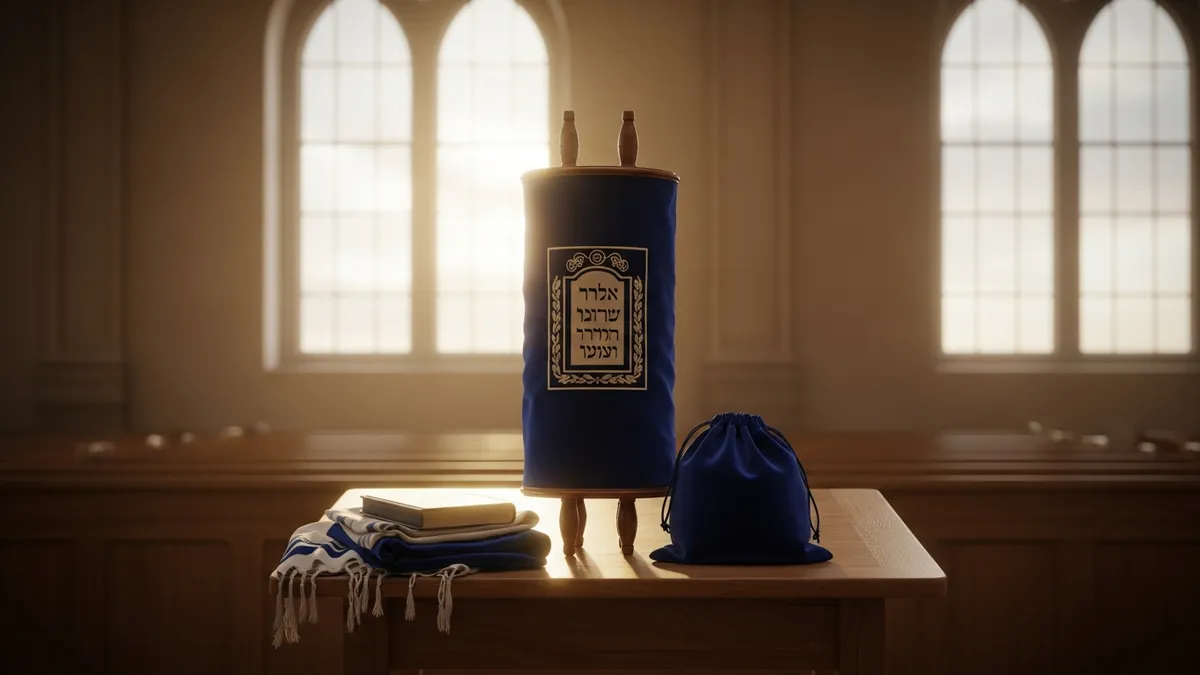
Bar mitzvah means 'son of the commandment' — but the real meaning goes much deeper than a party. Here's what actually changes at 13.
Quick Answer
Bar mitzvah means 'son of the commandment' in Aramaic and Hebrew. At age 13, a Jewish boy automatically becomes bar mitzvah — fully responsible for keeping the Torah's commandments — whether or not there is any ceremony. A girl becomes bat mitzvah (daughter of the commandment) at age 12. The party celebrates the status change; it does not cause it.
People ask me this question constantly — at the school where I teach, at my kids' playdates, from neighbors who got invited to a bar mitzvah and want to know what they're actually walking into. "What does bar mitzvah mean?" And then I tell them, and their next question is always: "Wait, so the party is... optional?"
Yes. Sort of. We'll get to that.
Among the orthodox Jews I grew up with in Brooklyn, the bar mitzvah was treated with a kind of quiet reverence that the outside world doesn't quite capture. It was never just a party. It was a moment. So let me explain what the words actually mean, what halachically (legally, in Jewish law) changes that day, and why some of the things people say about it are slightly — or completely — wrong.
What "Bar Mitzvah" Literally Means
The phrase is two words from two related Semitic languages. Bar is Aramaic for "son." Mitzvah is Hebrew for "commandment." So a bar mitzvah is, literally, a "son of the commandment" — a male who is now bound by the commandments of the Torah.
The female version is bat mitzvah — "daughter of the commandment." Bat is Hebrew for "daughter." Same concept, same depth of meaning, different word.
This is not a title someone gives you. It is a status you reach. At the stroke of a Jewish boy's thirteenth birthday (calculated by the Hebrew calendar), he becomes bar mitzvah — a full member of the Jewish covenant, obligated in all of the Torah's commandments that apply to men. At a girl's twelfth Hebrew birthday, she becomes bat mitzvah. No rabbi has to declare it. No ceremony has to happen. The status is simply there.
Which brings me to the most important thing I want you to understand.
The Status Change People Miss
Here is what most people — including a lot of Jewish people — get wrong: a boy does not get bar mitzvahed. He becomes bar mitzvah.
The ceremony, the Torah reading, the party, the candy being thrown — none of that is what makes him bar mitzvah. He was going to become bar mitzvah at exactly 13 years of age regardless. What changes at 13 is not ceremonial. It is legal, in the most serious halachic sense.
Before a child reaches bar or bat mitzvah age, the mitzvot are the parents' responsibility. The father is obligated to educate his son, to teach him, to train him — but if the boy eats non-kosher food, the sin rests on the parents' account, not the child's. The child is exempt. He is a katan, a minor, and the Torah does not hold minors fully accountable.
At 13 (for boys) or 12 (for girls), that ends. The child is now a gadol — an adult, in Jewish law. Every mitzvah he keeps is now his mitzvah. Every mitzvah he fails is now his accountability. He is on his own in the most beautiful, terrifying, empowering way.
The celebration — whether a simple kiddush or a full-scale party with a band — is marking something real. But the thing it marks already happened automatically the moment that Hebrew birthday arrived. (The bar mitzvah is the big one, but Hebrew birthdays carry quiet meaning all through life — here is how Orthodox Jews celebrate birthdays in general.)
What Actually Changes on That Day
A few specific things shift when a boy becomes bar mitzvah, and they matter:
He can be counted in a minyan. A minyan is the quorum of ten Jewish adult males required for communal prayer — for services, for certain blessings, for saying Kaddish. Until the day he turns 13, a boy cannot be counted. The morning after his Hebrew birthday, he counts. That is not symbolic. It is practical. There are communities, especially small ones or mourning families trying to say Kaddish, where counting one more man is not a small thing.
He begins wearing tefillin. Tefillin — the black leather boxes with Torah passages inside, strapped to the arm and head during weekday morning prayer — are a man's obligation. Boys begin the practice shortly before their bar mitzvah (in Ashkenazic communities, typically a month or two before; in some Sephardic communities, the same day). The first time a boy puts on his own tefillin is one of those moments. I've watched it happen. It gets to you.
He is responsible for his own mitzvot. He fasts on Yom Kippur. He prays three times a day. He keeps Shabbat. He keeps kosher. Not because his parents tell him to — because it is now, in the truest sense, his Torah.
He can serve as a halachic witness. In Jewish legal proceedings — a contract, a transaction, a marriage — adult Jewish males can serve as valid witnesses. Before bar mitzvah, a boy cannot. After, he can.
The Father's Blessing — Baruch Shepatrani
This is the part that always stops people in their tracks, so let me explain it warmly.
When the bar mitzvah boy is called up to the Torah during synagogue services, his father recites a blessing: Baruch shepatrani mei-onsho shel zeh — "Blessed is the One who has exempted me from the punishment of this one."
People hear that and laugh nervously. "Exempted me from the punishment?" It sounds like a dad joking about finally being off the hook for his teenager's behavior.
But the meaning is much more tender than it sounds. Until this moment, the father was halachically responsible for his son's religious development. If the son stumbled, some of that weight fell on the father. Now — right now, at this Torah reading — that weight transfers to the son. The father is not saying "good riddance." He is saying: my job of carrying you is done. You are strong enough to carry yourself. And he is thanking G-d for that moment, because it means his son has arrived.
I think about it like a parent standing at the edge of the pool while their kid swims their first lap alone. You're not relieved to stop watching. You're overwhelmed that they can swim.
The custom regarding the exact blessing text varies by community — some say it with G-d's name and kingship, some without, and the details of the wording differ. Ask your rabbi what your family's custom is.
Why 13? Why 12?
The ages are traditional, rooted in the Talmudic principle that boys reach halachic maturity at 13 and girls at 12. The traditional understanding is that girls mature earlier — cognitively, emotionally, spiritually — and so the Torah's responsibility arrives for them a year sooner. That is how the tradition understands it, and there's no need to hedge it into something it isn't: girls reach the obligations of adulthood earlier because girls are, in this sense, ahead.
The specific ages of 13 and 12 are derived from various Talmudic discussions about the behavior of biblical figures and the development of moral reasoning. What matters practically is that these ages are the established boundary: below them, a child; at them and above, an adult.
A Brief History of the Celebration
Here is something that might surprise you: the elaborate bar mitzvah party as most people know it is a fairly modern invention. For most of Jewish history, a bar mitzvah was marked modestly — a boy was called to the Torah, maybe there was a small kiddush, and that was that. The emphasis was on the halachic milestone, not the event.
The custom of a festive meal developed over centuries, but the large-scale celebrations — the catered hall, the DJ, the video montage of the bar mitzvah boy from birth to thirteen — are really a twentieth-century phenomenon, particularly in America. They grew alongside general American party culture and the prosperity of postwar Jewish communities.
This doesn't make a big celebration wrong. A seudas mitzvah — a festive meal in honor of a mitzvah occasion — has genuine halachic value, and celebrating the moment a child takes on the Torah's obligations is worth celebrating. But it's worth knowing that the party is the garnish, not the main course. The main course is the status.
"Bar Mitzvahed" — A Gentle Correction
You will hear people say "he was bar mitzvahed" as if it is something that happened to him. Or "she got bat mitzvahed." I understand why — it follows English grammar logic. But it's slightly off.
You cannot be bar mitzvahed the way you can be baptized or confirmed — in the sense of receiving a sacrament that changes your status. The status change in bar mitzvah comes from inside: from turning 13, from the passage of time, from halacha. No one can bar mitzvah you. You become bar mitzvah.
The correct usage: "He became bar mitzvah last month." Or: "His bar mitzvah was last Shabbat" (meaning the celebration). It's a small thing, but language matters when you're trying to understand what something actually is.
What to Say and Give If You're Invited
If you're heading to a bar mitzvah celebration, what to say is easy: Mazel tov. That's it. Mazel tov means "good fortune" or "congratulations" — the words literally mean "good constellation" in Hebrew/Aramaic, from the idea that the stars are aligned in your favor. Say it warmly and mean it.
For gifts, the traditional amount is a multiple of 18. In Hebrew, every letter has a numerical value (this is called gematria), and the letters that spell chai — life — add up to 18 (chet = 8, yud = 10). So giving $18, $36, $54, $72, $108, $180, or higher honors the symbolism of life and blessing. You don't have to do this, but it's a lovely touch and it signals that you know what you're doing. The bar mitzvah boy's family will notice.
The full ceremony walkthrough will tell you what to expect during the synagogue service — what happens when the boy is called to the Torah, what the candy throwing is about, when to say mazel tov. For the overall structure of the milestone and how families celebrate, see the complete bar and bat mitzvah guide.
Common Questions
Why is a bar mitzvah at age 13? Because the Mishnah (Pirkei Avot 5:21) sets thirteen as the age of obligation for the commandments — the age at which tradition holds a boy's judgment mature enough to be responsible for his own actions. Nothing needs to happen at the party for this to occur; at 13 he simply is bar mitzvah, celebration or no celebration.
What is a bar mitzvah for a girl called? A bat mitzvah — "daughter of the commandment" — and it arrives at age 12, a year earlier than for boys, because tradition holds girls mature earlier. How the two compare, from ceremony to party to what actually changes.
Does the boy have to have a ceremony to be bar mitzvah? No. He becomes bar mitzvah the moment he turns 13 on the Hebrew calendar, whether or not any ceremony takes place. The celebration marks the milestone; it does not create it.
What if the Hebrew birthday falls on a weekday — does the bar mitzvah still happen? Yes. The status change happens on the Hebrew birthday regardless. The synagogue celebration is usually scheduled for the Shabbat nearest to the birthday, because that's when the Torah is read publicly and there's a full community present. But a boy who turns 13 on a Tuesday is bar mitzvah from Tuesday.
Can a non-Jew attend the bar mitzvah? Absolutely. You are an invited guest and you are welcome. The family wants you there.
Is the bat mitzvah less important because girls don't read Torah publicly in Orthodox synagogues? Less public, not less meaningful. A girl becoming bat mitzvah is the same halachic transformation — she is now personally responsible for her own Torah obligations. The celebration looks different in Orthodox communities (typically a party or special event rather than a synagogue service), but the moment is just as real.
What should I wear? Modest dress is expected in an Orthodox synagogue setting — sleeves past the elbow, skirt below the knee for women; a suit or dress clothes for men. Men will need a kippah; they're available at the entrance.
The next time someone uses the phrase "bar mitzvah" around you, you'll know exactly what they're talking about: a thirteen-year-old who woke up one morning and found the whole Torah sitting on his shoulders. Not placed there by a rabbi or a party planner. Just there, because that's how Hashem made it work. The party is beautiful. But that quiet moment of becoming — that's the thing.
I'm an Orthodox Jewish woman from Brooklyn. I can't speak for every Orthodox Jew — when I write outside my experience, I say so.
Bar & Bat Mitzvah: Meaning, Customs & What to Expect
What Happens at a Bar Mitzvah? A Complete Guide for Guests
What Are Tefillin? The Leather Prayer Boxes Explained
What Does Mazel Tov Mean? More Than Just Congratulations
Attending one of these in real life?
Weddings, bar mitzvahs, and other Jewish life events often include non-Jewish guests. If you want practical guest etiquette, ask.
The Orthodox Insider
A new letter every Thursday, before Shabbos — plus an instant download of “10 Things Everyone Gets Wrong About Orthodox Jews” when you subscribe.
No spam, unsubscribe anytime.