What Are Tefillin? The Leather Prayer Boxes Explained
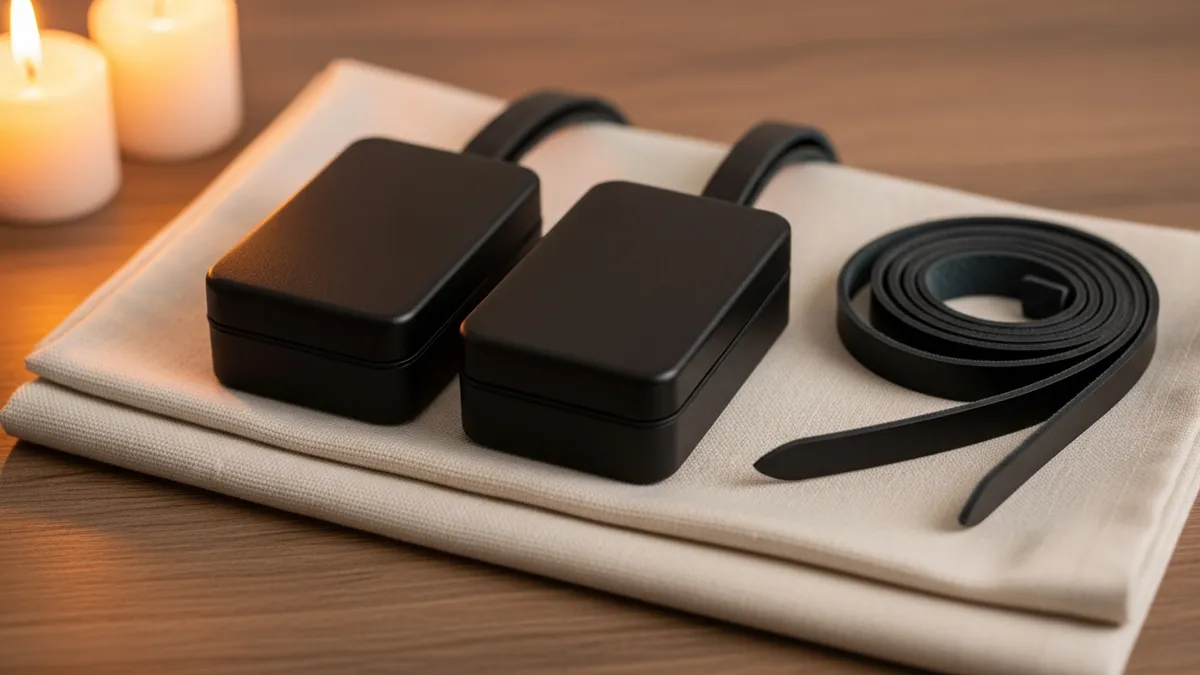
Tefillin are black leather boxes holding Torah scrolls, worn on the arm and head during Jewish morning prayer. Learn what is inside and how they are worn.
Quick Answer
Tefillin are two small black leather boxes containing parchment scrolls with Torah verses, bound to the arm and head with leather straps during weekday morning prayers. They fulfill the Torah's command to 'bind them as a sign on your hand and as frontlets between your eyes.'
The first time a non-Jewish friend saw my husband putting on tefillin, she stared for a good thirty seconds before asking, very carefully, "What are those black boxes?" It is a fair question. If you have never seen tefillin before, the sight of a man wrapping black leather straps around his arm and placing a black box on his forehead is... unexpected. But for Jewish men, this is one of the most fundamental daily mitzvos — a physical binding of Torah to the body, performed every weekday morning for thousands of years.
Tefillin (Hebrew: תפילין, sometimes called "phylacteries" in English, though nobody in the Orthodox world uses that word) are two small black leather boxes, each containing four sections of the Torah written by hand on parchment. They are attached to the body using leather straps — one box on the upper arm (the shel yad), and one on the head (the shel rosh).
What Is Inside?
Each tefillin box contains the same four Torah passages:
- Shema (Devarim 6:4-9) — "Hear O Israel, Hashem is our G-d, Hashem is One," the first paragraph of Shema, which continues with V'ahavta
- V'hayah im shamoa (Devarim 11:13-21) — the second paragraph of Shema, about reward and consequence for keeping the mitzvos
- Kadesh (Shemos 13:1-10) — about sanctifying the firstborn and remembering the Exodus
- V'hayah ki yeviacha (Shemos 13:11-16) — continuing the firstborn narrative
In the arm tefillin, all four passages are written on a single piece of parchment. In the head tefillin, each passage is on a separate parchment in a separate compartment — which is why the head tefillin has four distinct sections visible on the outside of the box.
The parchments are written by a trained sofer (scribe) with the same care and precision as a Torah scroll. If a single letter is malformed or missing, the tefillin are invalid. A good pair of tefillin is a significant investment — often hundreds or even thousands of dollars — and they last for many years with proper care.
How Are They Worn?
Tefillin are put on during weekday morning prayers (Shacharis). They are not worn on Shabbat or Yom Tov, since those days are themselves an "ot" (sign) of the covenant, making the additional sign of tefillin unnecessary.
The arm tefillin (shel yad) is placed on the upper arm — the left arm for right-handed people, the right arm for lefties — angled toward the heart. The strap is wound seven times around the forearm (the number and style of windings vary by custom) and then around the hand and fingers.
The head tefillin (shel rosh) is placed on the head, centered above the forehead, at the hairline. It rests right between the eyes — well, above them — sitting just above where the hair begins. The straps hang down in front, over the shoulders.
The order matters: the arm tefillin is put on first, with a bracha, and then the head tefillin. When removing them, the head comes off first. My husband does this every morning — it takes about two minutes — and then he davens Shacharis wrapped in his tallit with his tefillin on.
The Significance
The Torah says: "Bind them as a sign on your hand and as frontlets between your eyes." The arm tefillin, positioned near the heart, represents the devotion of our emotions and actions to Hashem. The head tefillin, positioned on the brain, represents the devotion of our thoughts and intellect. The straps wrapping around the arm and hand symbolize channeling our strength and our deeds toward serving G-d.
There is something profoundly physical about this mitzvah. Judaism is not a religion that lives only in the mind. We do not just think about G-d — we bind His words to our bodies. We wrap leather straps around our arms. We place a box on our heads. The Torah becomes something you can feel pressing against your skin.
A Bar Mitzvah Milestone
One of the most significant moments in a Jewish boy's life is putting on tefillin for the first time, usually beginning about a month before his bar mitzvah (age 13). My oldest son practiced with his father for weeks before his bar mitzvah. The first morning he put on tefillin "for real" — with the full intention of fulfilling the mitzvah — was emotional for everyone. He stood there, this boy of mine, wrapped in leather and parchment, connected to every Jewish man who had done this same thing going back to Moshe Rabbeinu.
That is what tefillin are. Not strange black boxes. A connection — physical, tangible, daily — between a Jew and his Creator, between this generation and every generation before it.
Common Questions
What is inside the tefillin boxes? Handwritten parchment scrolls containing four passages from the Torah — Shema Yisrael and three other sections about accepting G-d's sovereignty and remembering the Exodus. A trained sofer (scribe) writes them by hand.
How much do tefillin cost? Quality tefillin range from $400-$2,000+. The parchments must be handwritten by a certified scribe, and the leather boxes are handmade. Cheaper sets exist but may have quality issues that affect their kosher status.
When are tefillin worn? Every weekday morning during Shacharit prayers — not on Shabbat or holidays. Boys begin wearing tefillin at bar mitzvah age (13). Putting them on takes only a minute or two; they are then worn through the morning Shacharit service.
I'm an Orthodox Jewish woman from Brooklyn. I can't speak for every Orthodox Jew — when I write outside my experience, I say so.
Tefillin, Tallit & Kippah: Sacred Jewish Objects Explained
What Is a Tallit? The Jewish Prayer Shawl Explained
How Do Orthodox Jews Pray?
What Is That Box on Their Forehead? (Tefillin Explained)
Want to understand the whole picture?
The guided tour walks you through 8 topics — prayer fits into a larger rhythm of Orthodox life.
The Orthodox Insider
A new letter every Thursday, before Shabbos — plus an instant download of “10 Things Everyone Gets Wrong About Orthodox Jews” when you subscribe.
No spam, unsubscribe anytime.