How Do Orthodox Jews Get Married?
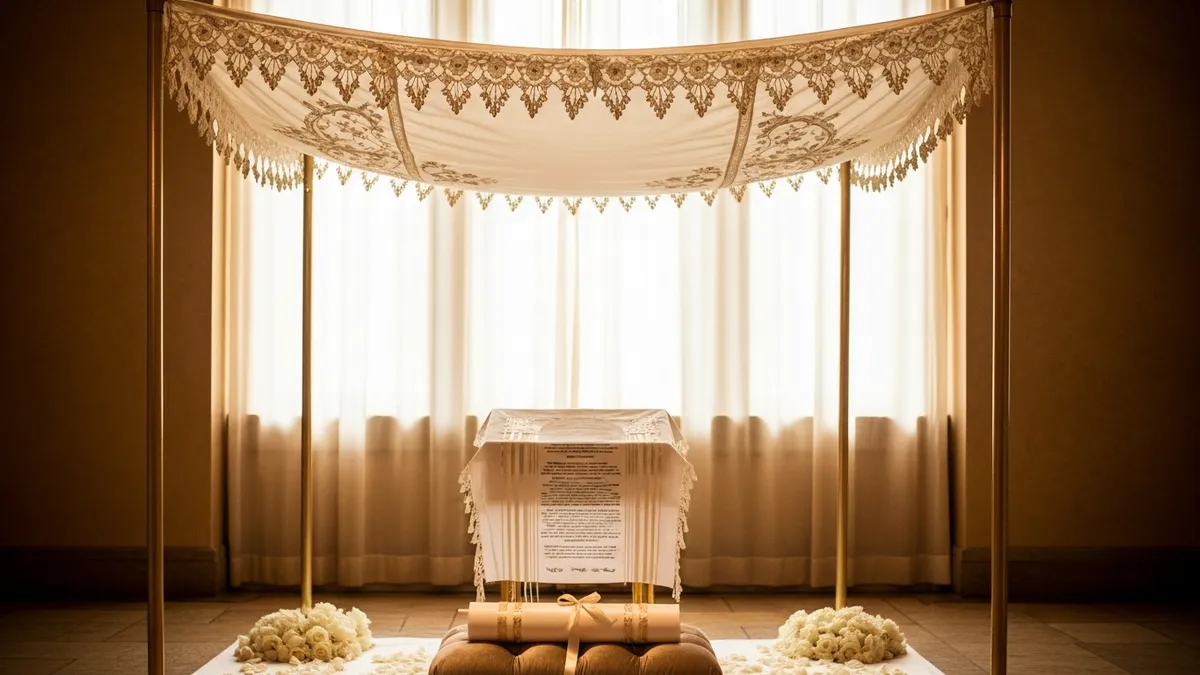
The Orthodox Jewish wedding explained — the chuppah, the ring, breaking the glass, and every step of the ceremony and celebration.
Quick Answer
An Orthodox Jewish wedding centers on the chuppah ceremony, where the groom places a ring on the bride's finger, the ketubah (marriage contract) is read, and seven blessings are recited. The celebration includes separate dancing for men and women, festive music, and a week of sheva brachot (celebratory meals). The groom breaks a glass to remember the destruction of the Temple.
An Orthodox Jewish wedding is unlike anything you have experienced at a secular wedding. It is longer, louder, more emotional, and involves traditions that go back thousands of years. People dance harder, cry more openly, and celebrate with an intensity that is hard to describe unless you have been there.
Before the Wedding
The Aufruf: On the Shabbat before the wedding, the groom is called up to the Torah in synagogue. After his aliyah, the congregation pelts him with candy. Yes, really. Bags of candy fly through the air. Children scramble to collect them. It is joyful chaos.
Fasting: In most Ashkenazi communities, both the bride and groom fast on the wedding day until after the ceremony (many Sephardim and some Hasidic couples follow different customs). The wedding day is compared to a personal Yom Kippur — a day when their sins are forgiven as they begin a new life together.
The Wedding Day
Kabbalat Panim (Reception)
Before the ceremony, the bride and groom are in separate rooms, each receiving guests. The groom is surrounded by men singing and toasting. The bride sits on a special chair (like a throne), greeting guests who come to wish her mazal tov.
Badeken (Veiling)
The groom, escorted by singing and dancing men, comes to the bride's room and lowers the veil over her face. This tradition goes back to the biblical story of Jacob, who was tricked into marrying Leah instead of Rachel because Leah was veiled. By personally veiling his bride, the groom confirms he is marrying the right woman.
This is one of the most emotional moments of the wedding. I have seen fathers cry, mothers cry, grandparents cry. The room is packed and the singing is powerful.
The Chuppah (Canopy)
The ceremony takes place under a chuppah — a canopy held up by four poles, symbolizing the home the couple will build together. The chuppah is open on all sides, recalling the tent of Abraham and Sarah, which was open in every direction to welcome guests.
The bride circles the groom seven times (in most Ashkenazi traditions), symbolizing the creation of a new family unit and the protective walls of their shared life.
The ring: The groom places a plain gold ring (no stones, no designs) on the bride's right index finger and says: "Behold, you are sanctified to me with this ring, according to the law of Moses and Israel." Two witnesses observe. This is the legal moment of marriage.
The ketubah: The marriage contract is read aloud. It is an Aramaic document outlining the husband's obligations to his wife — financial support, clothing, and marital rights. The ketubah is a legal document, and many families frame it and display it in their home.
Sheva Brachot (Seven Blessings): Seven blessings are recited over wine, praising G-d for creating humanity, for joy, for love, and for the couple's happiness. Different honored guests are often given the privilege of reciting each blessing.
Breaking the Glass: At the very end, the groom smashes a glass with his foot. This is a reminder that even in our greatest joy, we remember the destruction of the Holy Temple. The crowd shouts "Mazal Tov!" and the celebration begins.
The Celebration
The dancing at an Orthodox wedding is separated — men dance with men, women dance with women. And the energy is extraordinary. Men lift the groom on a chair. Women lift the bride. There are circle dances, line dances, acrobatics, and costumes. Professional entertainers sometimes perform tricks to make the bride and groom laugh.
The music is loud. The dancing is intense. People who look like they could not possibly jump that high are jumping that high. It goes on for hours.
Sheva Brachot Week
The celebration does not end at the wedding. For seven nights after the wedding, the couple attends festive meals hosted by friends and family, where the seven blessings are recited again. It is a week-long celebration that surrounds the new couple with love and community.
My own wedding week was a blur of joy, gratitude, and approximately 400 pieces of cake. I would not trade a single moment.
Common Questions
What is the engagement process? After the couple agrees to marry, there is a vort (engagement celebration). The families sign tna'im (a betrothal document) — some sign it at the vort, while in many communities it is signed at the wedding itself, just before the badeken. The engagement typically lasts 3-6 months while wedding preparations are made.
Who pays for an Orthodox Jewish wedding? Traditionally, the bride's family covers most wedding expenses. In practice, both families often share costs. Community expectations about wedding scale vary — some are lavish, others modest.
How long after meeting do Orthodox couples get married? It varies by community. Hasidic couples may go from first meeting to wedding in 3-4 months. Modern Orthodox couples may date for a year or more. Yeshivish falls in between — typically 2-4 months from first date to wedding.
See also: Jewish Wedding Traditions
I'm an Orthodox Jewish woman from Brooklyn. I can't speak for every Orthodox Jew — when I write outside my experience, I say so.
Attending one of these in real life?
Weddings, bar mitzvahs, and other Jewish life events often include non-Jewish guests. If you want practical guest etiquette, ask.
The Orthodox Insider
A new letter every Thursday, before Shabbos — plus an instant download of “10 Things Everyone Gets Wrong About Orthodox Jews” when you subscribe.
No spam, unsubscribe anytime.