Is Caviar Kosher?
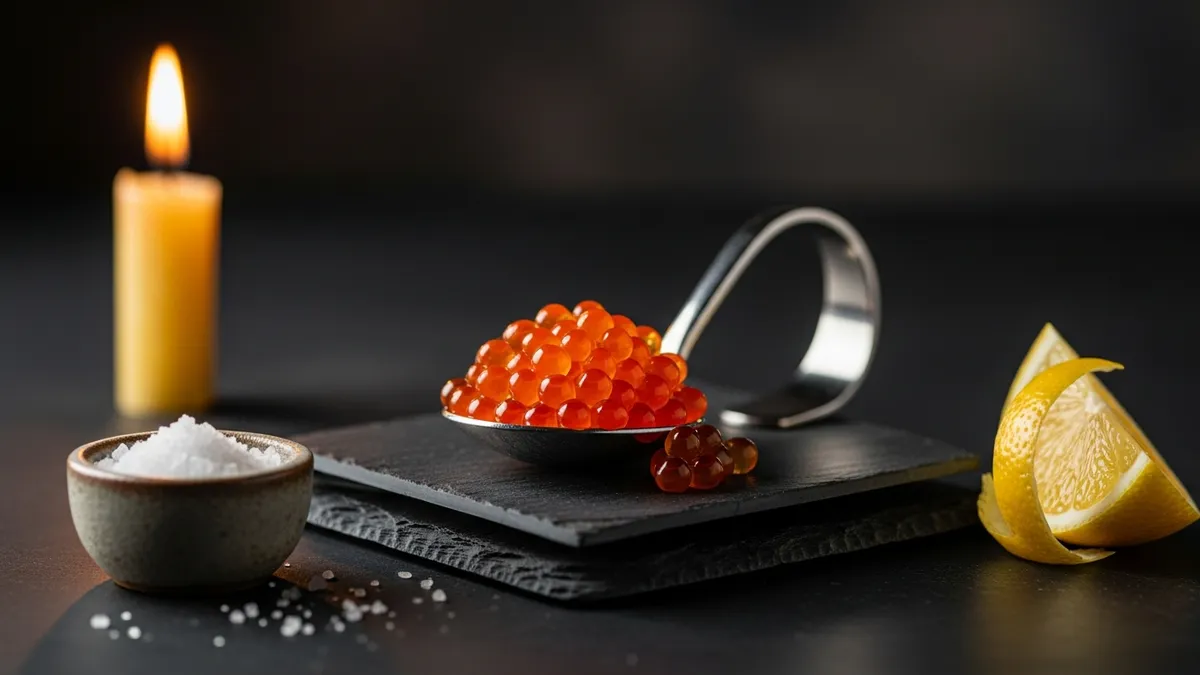
Is caviar kosher? It depends on the fish. Learn which types of caviar are kosher, why sturgeon caviar is not, and the simple rule for kosher fish.
Quick Answer
It depends on the fish. Traditional caviar from sturgeon is NOT kosher because sturgeon lacks proper scales. However, roe (fish eggs) from kosher fish like salmon, trout, whitefish, and herring IS kosher. The rule is simple: if the fish has fins and scales, its eggs are kosher.
Is Caviar Kosher?
The answer is: it depends entirely on which fish the caviar comes from.
The word "caviar" traditionally refers to the salted eggs (roe) of sturgeon — and sturgeon is not a kosher fish. So classic caviar, the fancy kind you see at upscale restaurants and cocktail parties, is not kosher.
But here is the good news: there are kosher alternatives that are delicious, and the rule for figuring out which fish eggs are kosher is beautifully simple.
The Rule for Kosher Fish
The Torah gives us a clear, easy-to-remember standard for kosher fish. A fish is kosher if it has both fins and scales. That is it. Two requirements, both must be met.
- Fins and scales = kosher (salmon, tuna, herring, trout, carp, cod, halibut, and many more)
- Fins but no scales = not kosher (catfish, shark). Swordfish is a famous edge case — adults look scaleless, but they have scales when young, which led to a historical dispute; mainstream Orthodox kashrus today does not certify it.
- No fins and no scales = not kosher (shellfish like shrimp, lobster, crab)
And here is the key principle for caviar: the eggs of a kosher fish are kosher, and the eggs of a non-kosher fish are not kosher. The status of the roe follows the status of the fish it came from.
Why Sturgeon Caviar Is Not Kosher
Sturgeon — the fish that produces traditional caviar varieties like Beluga, Osetra, and Sevruga — has a complicated relationship with scales. Sturgeon have bony plates called "scutes" along their bodies, but these are not considered true scales according to halacha (Jewish law). Kosher scales must be removable without tearing the skin, and sturgeon scutes do not meet this criterion.
Since sturgeon is not a kosher fish, its eggs are not kosher either. This means the most expensive and prestigious caviars in the world are off the table for kosher consumers.
I will be honest — I have never felt particularly deprived by this. I tried kosher salmon roe at a kiddush once and it was lovely. I do not stay up at night thinking about Beluga caviar.
Kosher Alternatives to Caviar
If you want to enjoy fish roe while keeping kosher, you have several excellent options:
Salmon roe (ikura) — large, beautiful orange eggs with a mild, slightly briny flavor. This is probably the most popular kosher caviar alternative. You will find it at sushi restaurants with kosher certification and at many kosher grocery stores.
Trout roe — smaller than salmon roe, with a delicate taste. Very similar in appearance to traditional caviar.
Whitefish roe — often dyed black to resemble sturgeon caviar. Common in kosher catering and available in most kosher supermarkets.
Herring roe — a traditional Ashkenazi delicacy that has been part of Jewish cuisine for centuries.
Tobiko and masago — flying fish roe and capelin roe, commonly used in sushi. The fish themselves — flying fish and capelin — do have fins and scales, so the roe can be kosher. But commercial tobiko and masago are almost always dyed and flavored, so only buy them with a reliable hechsher.
Certification Matters
Even when caviar or roe comes from a kosher fish species, you should look for a kosher certification (hechsher) on the packaging. Why? Because the processing matters too:
- The roe might be processed on equipment shared with non-kosher fish products
- Additives, preservatives, or flavorings might not be kosher
- There needs to be verification that the roe actually came from the fish species listed on the label (mislabeling in the seafood industry is well-documented)
A reliable kosher certification ensures that someone has verified the entire production process, from the species of fish to the final packaged product.
A Note on Kosher Sushi
Since we are talking about fish eggs, it is worth mentioning that many of the fish roe items you encounter at sushi restaurants are from kosher species. However, a sushi restaurant needs proper kosher supervision for the roe (and everything else) to be considered kosher, since the kitchen also handles non-kosher items like shrimp, eel, and crab.
The kosher sushi scene has actually grown tremendously in recent years. In Brooklyn alone, there are multiple kosher sushi restaurants that serve beautiful salmon roe, tobiko, and other kosher fish eggs. My kids love the orange tobiko on their California rolls — they call them "the little popping things."
So while classic sturgeon caviar is not in our repertoire, the world of kosher fish roe is more diverse and delicious than most people realize.
Common Questions
Which fish eggs are kosher? Only eggs from kosher fish (fish with fins and scales) are kosher. Salmon roe, whitefish roe, and flying fish roe (tobiko) are kosher. Sturgeon caviar is not — sturgeon lacks scales.
Is expensive caviar ever kosher? Traditional Beluga, Osetra, and Sevruga caviar from sturgeon is never kosher. However, there are kosher caviar alternatives from other fish species that look and taste similar.
Does caviar need kosher certification? Yes — the processing, equipment, and any additives must be certified. Even if the base fish is kosher, processing on shared equipment with non-kosher species makes it problematic without supervision.
I'm an Orthodox Jewish woman from Brooklyn. I can't speak for every Orthodox Jew — when I write outside my experience, I say so.
What is Kosher? The Complete Guide to Jewish Dietary Laws
Kosher Laws — A Complete Guide to the Rules of Kashrut
Surprising Kosher Questions — Gelatin, Beer, Candy & More
Kosher Catering: Everything You Need to Know
Want to keep reading about kosher?
The full site covers kosher laws, symbols, and specific foods. Or if you're a professional working with Orthodox Jewish clients on food — there's a specific guide for that.
The Orthodox Insider
A new letter every Thursday, before Shabbos — plus an instant download of “10 Things Everyone Gets Wrong About Orthodox Jews” when you subscribe.
No spam, unsubscribe anytime.