Jewish Names and Their Meanings: A Complete Guide
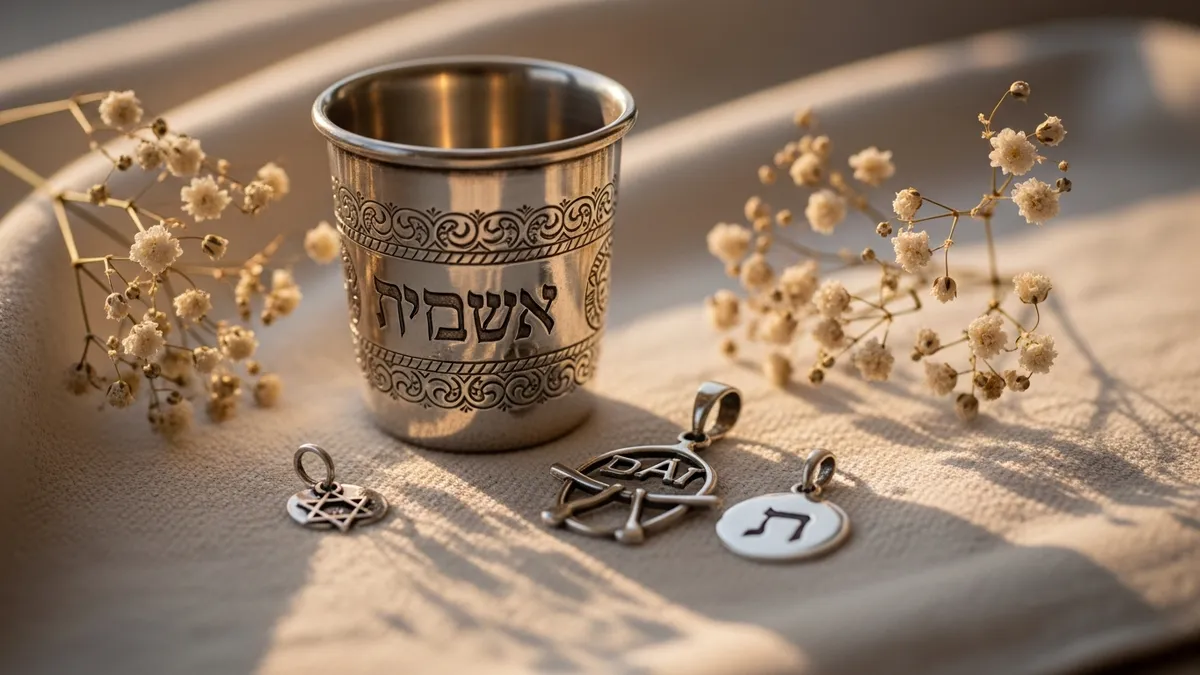
Popular Jewish names for boys and girls — Hebrew names, Yiddish names, their meanings, origins, and the tradition behind Jewish naming.
Quick Answer
Jewish names fall into several categories: biblical names (Moshe, Sarah, David, Rachel), Yiddish names (Shaindy, Feivel, Gittel), modern Hebrew names (Noa, Ori, Yael), and virtue names (Chaim/life, Bracha/blessing, Simcha/joy). Each name carries deep meaning, often connecting the child to biblical figures, family ancestors, or spiritual qualities.
When I introduce my children to non-Jewish friends, I sometimes get the "wait, how do you spell that?" look. Jewish names — especially the ones common in Orthodox communities — can sound unfamiliar to the outside ear. But every one of them carries a story, a meaning, and often centuries of history.
Here is your guide to Jewish names and what they mean.
Biblical Names
The most enduring Jewish names come straight from the Torah and Tanach. These names have been in continuous use for over 3,000 years.
Boys
| Name | Meaning | Origin |
|---|---|---|
| Avraham (Abraham) | Father of many nations | First patriarch |
| Yitzchak (Isaac) | He will laugh | Second patriarch |
| Yaakov (Jacob) | Heel-grasper; also interpreted as "will supplant" | Third patriarch |
| Moshe (Moses) | Drawn from the water | Greatest prophet |
| David | Beloved | King of Israel |
| Shlomo (Solomon) | Peace | Wisest king |
| Yosef (Joseph) | He will add | Patriarch who saved Egypt |
| Binyamin (Benjamin) | Son of the right hand | Youngest of the tribes |
| Eliyahu (Elijah) | My G-d is the L-rd | Prophet |
| Shmuel (Samuel) | G-d has heard | Prophet and judge |
| Yehoshua (Joshua) | G-d is salvation | Moses' successor |
| Daniel | G-d is my judge | Prophet in Babylon |
Girls
| Name | Meaning | Origin |
|---|---|---|
| Sarah | Princess | First matriarch |
| Rivka (Rebecca) | To bind/captivate | Second matriarch |
| Rachel | Ewe (lamb) | Third matriarch |
| Leah | Weary; also interpreted as "gazelle" | Fourth matriarch |
| Miriam | Bitter sea; also "rebellion" (against oppression) | Moses' sister |
| Devorah (Deborah) | Bee | Prophetess and judge |
| Chana (Hannah) | Grace | Mother of Samuel |
| Esther | Star (from Persian); hidden (Hebrew) | Queen who saved the Jews |
| Ruth | Friend/companion | Convert, great-grandmother of King David |
| Tamar | Date palm | Daughter-in-law of Judah |
Yiddish Names
Yiddish names emerged in the Ashkenazi communities of Eastern Europe. They are particularly common in Hasidic and Yeshivish communities. Sephardic communities took a different path — no Yiddish, and a naming custom all their own: Sephardim proudly name children after living grandparents, something Ashkenazim traditionally avoid.
Boys
- Shloime — Yiddish form of Shlomo
- Feivel/Shraga — Often paired; Feivel means "bright" in Yiddish, Shraga means "candle" in Aramaic
- Hershel/Tzvi — Hershel means "deer" in Yiddish; Tzvi is the Hebrew equivalent
- Berel/Dov — Bear (Yiddish/Hebrew)
- Yankel — Yiddish form of Yaakov
- Zelig — Blessed, fortunate
- Mendel — From the name Menachem (comforter)
Girls
- Shaindy/Shaindel — Beautiful (Yiddish)
- Gittel — Good (Yiddish)
- Raizel — Rose (Yiddish)
- Fraidel/Fraidy — Joy (Yiddish)
- Golda — Gold (Yiddish)
- Blima/Bluma — Flower (Yiddish)
- Hinda — Deer (Yiddish, paired with Hebrew Ayala)
Many Yiddish names are paired with a Hebrew name: Tzvi Hershel (both mean deer), Dov Ber (both mean bear), Aryeh Leib (both mean lion). The doubling ensures both a Hebrew and a Yiddish name.
Modern Hebrew Names
Popular especially in Israel and Modern Orthodox communities:
Boys
- Eitan — Strong, enduring
- Ori — My light
- Noam — Pleasantness
- Eyal — Strength
- Ido — His ornament
- Itai — With me
Girls
- Noa — Movement, motion (biblical name experiencing a revival)
- Yael — Mountain goat (biblical heroine)
- Shira — Song
- Maya — Water (Hebrew interpretation)
- Talia — Dew of G-d
- Avigail (Abigail) — My father's joy
Virtue and Meaning Names
Some names express hopes or qualities:
- Chaim/Chaya — Life
- Bracha — Blessing
- Simcha — Joy
- Shalom — Peace
- Baruch — Blessed
- Emunah — Faith
- Tehilla — Praise
- Gavriel — G-d is my strength
- Refael — G-d heals
- Netanel — G-d has given
Names to Know in Orthodox Communities
If you spend time around Orthodox Jews, you will hear certain names constantly. The most common boys' names in the Orthodox world are probably Moshe, Yosef, Chaim, Yaakov, Shlomo, David, and Avraham. For girls: Sarah, Rivka, Rachel, Leah, Chaya, Miriam, and Esther.
In Hasidic communities, names of rebbes are extremely common — Menachem Mendel (Lubavitch), Aharon (Belz), Yoel (Satmar). Naming after a rebbe is considered a great honor and a source of blessing.
The Power of a Name
In Jewish thought, a name is not just a sound — it is a vessel for the soul. Our sources teach that the name (shem) is bound up with the neshamah (soul), so much so that the very letters of a person's name are tied to who they are. When parents choose a name, they are not just picking something that sounds nice. They are making a statement about who this child is meant to become. The moment of naming is defined, too — a boy receives his name at his bris, and a girl is traditionally named in shul when her father is called to the Torah.
That is why, in my community, people do not take names lightly. A name carries legacy, meaning, and hope. It is the first word you hear as a baby and the last word inscribed on your gravestone. Choose wisely — it matters.
Common Questions
Do Jewish names have meanings? Yes — Hebrew names are chosen for their meaning. Chaim means 'life,' Shira means 'song,' Noam means 'pleasant,' Eliyahu means 'my G-d is Hashem.' The meaning is considered prophetic for the child's character.
Why do some Orthodox Jews have two names? Many have a Hebrew name (for religious use) and an English name (for daily life). Some have a double Hebrew name — like Yosef Chaim or Sarah Rivka — often combining a relative's name with an additional meaningful name.
Can you change your Jewish name? In serious illness, a name is sometimes added (like 'Chaim' for life) as a prayer for recovery. Otherwise, the name given at birth/bris is permanent and deeply connected to the soul.
I'm an Orthodox Jewish woman from Brooklyn. I can't speak for every Orthodox Jew — when I write outside my experience, I say so.
Jewish Baby Naming: Traditions, Customs & Meaning
Who Is a Jew? The Two Ways Jewish Identity Is Determined
What Is a Hasidic Jew? An Insider's Guide to Hasidic Judaism
Do Orthodox Jews Go to College?
Partway in, or just curious?
If you're in an interfaith relationship, have Jewish ancestry, or are quietly exploring deeper engagement, there's a separate page for you.
The Orthodox Insider
A new letter every Thursday, before Shabbos — plus an instant download of “10 Things Everyone Gets Wrong About Orthodox Jews” when you subscribe.
No spam, unsubscribe anytime.