Jewish Customs and Traditions: The Complete Guide
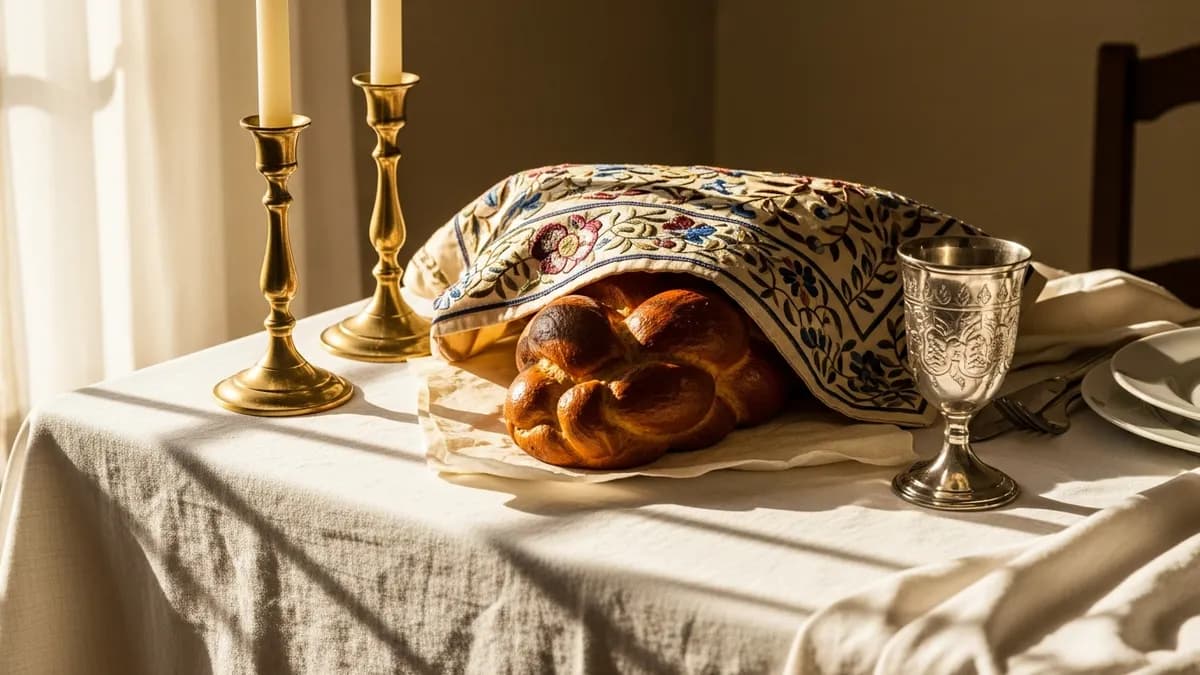
Jewish customs and traditions explained from the inside — Shabbat, holidays, kosher laws, prayer, lifecycle events, charity, and the practices of daily life.
Quick Answer
Jewish traditions and customs encompass every aspect of life — from weekly Shabbat observance and holiday celebrations to kosher dietary laws, daily prayer, life cycle events (birth, bar mitzvah, marriage, mourning), charitable giving, and home practices like mezuzah and bedtime Shema. These traditions connect Jews to thousands of years of history and community.
Jewish Customs and Traditions: More Than a Religion
Jewish traditions touch every part of life — what you eat, how you dress, how you mark time, how you celebrate, how you mourn, and how you interact with the people around you. These practices are the foundations of Orthodox Judaism. For observant Jews, they are not just cultural habits — they are mitzvot (commandments) that structure each day and give life its rhythm and meaning.
I sometimes try to explain this to people who are not familiar with Jewish life, and the best way I can put it is this: Judaism is not something you do on Saturday morning. It is something you live from the moment you wake up until the moment you go to sleep, every single day.
Here is an overview of the major traditions and customs that define Jewish life.
Shabbat: The Weekly Day of Rest
If there is one tradition that defines Jewish life above all others, it is Shabbat (the Sabbath). Every week, from Friday evening until Saturday night, observant Jews stop working and dedicate the day to rest, prayer, family, and spiritual renewal.
Shabbat involves:
- Candle lighting on Friday evening, traditionally done by women of the household
- Kiddush — a blessing over wine sanctifying the day
- Challah — two braided loaves of bread, representing the double portion of manna in the desert
- Three festive meals with family, often including guests
- Synagogue services on Friday night and Shabbat morning
- Refraining from work — which in Jewish law includes 39 categories of creative activity, from writing to cooking to using electronic devices
- Havdalah — the ceremony marking the end of Shabbat, with wine, spices, and a braided candle
Shabbat is the heartbeat of the Jewish week. Everything builds toward it, and everything flows from it. In my home, the whole week is oriented around Shabbat — shopping, cooking, cleaning — and when it arrives, there is a tangible sense of peace.
Jewish Holidays
The Jewish calendar is filled with holidays, each with its own customs, foods, and spiritual themes:
Rosh Hashanah — the Jewish New Year, marked by blowing the shofar (ram's horn), eating apples dipped in honey for a sweet new year, and intense prayer and reflection.
Yom Kippur — the Day of Atonement, the holiest day of the year. A 25-hour fast dedicated to prayer, repentance, and spiritual accounting.
Sukkot — the Festival of Tabernacles. Families build and eat in temporary huts (sukkot) and shake the lulav and etrog (four species of plants).
Chanukah — eight nights of lighting the menorah, celebrating the Maccabees' victory and the miracle of oil in the Holy Temple.
Purim — a joyous holiday commemorating the salvation of the Jewish people as told in the Book of Esther. Customs include reading the Megillah, giving food gifts (mishloach manot), charity, and a festive meal.
Passover (Pesach) — commemorating the Exodus from Egypt. The highlight is the Seder, a structured meal with storytelling, symbolic foods, and songs. For eight days (seven in Israel), Jews do not eat chametz (leavened bread).
Shavuot — celebrating the giving of the Torah at Mount Sinai. Customs include staying up all night studying Torah and eating dairy foods.
These are just the major ones. The calendar also includes Tisha B'Av (a fast day mourning the destruction of the Temples), Tu B'Shvat (the new year for trees), Lag B'Omer, and more.
Kosher Laws: What Jews Eat
The kosher dietary laws (kashrut) govern what Jews can and cannot eat, and how food must be prepared:
- Permitted animals must have split hooves and chew their cud (beef, lamb, deer — yes; pork — no)
- Permitted fish must have fins and scales (salmon, tuna — yes; shrimp, crab — no)
- Permitted birds follow an accepted tradition (chicken, turkey, duck — yes; birds of prey — no)
- Meat and dairy are never mixed — separate dishes, separate cooking, and a waiting period between eating one and the other
- Meat must be slaughtered by a trained shochet according to specific laws
- Blood is forbidden — meat is salted to remove blood; eggs are checked for blood spots
- Fruits and vegetables are checked for insects, which are not kosher
Keeping kosher shapes everything about a Jewish kitchen — from having two sets of dishes (meat and dairy) to reading every ingredient label at the grocery store.
Daily Prayer
Traditional Jewish practice includes three daily prayer services:
- Shacharit — the morning service
- Mincha — the afternoon service
- Maariv — the evening service
Men in Orthodox communities pray with a minyan (quorum of ten men) whenever possible, often at a synagogue. Prayer includes the Shema (the declaration of G-d's oneness) and the Amidah (the standing prayer, also called Shemoneh Esrei).
Men wear tefillin (phylacteries — small leather boxes containing Torah passages, bound on the arm and head) and a tallit (prayer shawl) during morning prayers. A kippah (skullcap) is worn throughout the day.
Life Cycle Events
Jewish tradition marks every major stage of life with specific customs:
Birth and naming: Boys are circumcised on the eighth day in a ceremony called a bris (brit milah). Girls receive their Hebrew name in a naming ceremony at the synagogue. Both are celebrated with a festive meal.
Bar and Bat Mitzvah: At age 13 (boys) or 12 (girls), a Jewish child becomes responsible for observing the commandments. Boys are called to the Torah for the first time. This milestone is celebrated with a festive gathering.
Marriage: A Jewish wedding includes the chuppah (wedding canopy), the ketubah (marriage contract), blessings over wine, the ring, and the breaking of a glass. In many communities, especially Ashkenazi ones, the bride also circles the groom (customarily seven times) under the chuppah. The celebration afterward is joyous and often includes dancing that separates men and women.
Mourning: When a loved one passes, the family observes shiva — seven days of mourning at home, during which the community visits, brings food, and offers comfort. The mourning period continues in diminishing stages for up to a year, including reciting Kaddish (the mourner's prayer).
The Jewish Home
A Jewish home is filled with visible signs of Jewish life:
Mezuzah: A small case containing a scroll with Torah verses, affixed to the doorpost of every room (except bathrooms). It is a constant reminder of G-d's presence and the Jewish identity of the home.
Shema before bed: Many Jews recite the Shema prayer before going to sleep each night, entrusting their soul to G-d's care.
Blessings: Observant Jews say blessings (brachot) throughout the day — before and after eating, upon seeing natural wonders, when putting on new clothing, and for many other occasions. These blessings cultivate an awareness of gratitude in everyday moments.
Tzedakah (charity): Many Jewish homes have a tzedakah box (pushke) where family members regularly deposit coins for charity. Giving to those in need is not just encouraged in Judaism — it is obligated. Many observant Jews give a tenth of their income to charity, a practice known as maaser. The word tzedakah comes from the Hebrew word for justice, reflecting the idea that sharing resources is a matter of justice, not just generosity.
Clothing and Appearance
Certain clothing customs are distinctive to Jewish life:
- Kippah (yarmulke): A head covering worn by Jewish men as a sign of reverence for G-d
- Tzitzit: Fringes worn on a four-cornered garment, as commanded in the Torah
- Modest dress: Observant Jewish women and men follow standards of modest clothing (tzniut), which vary by community but generally include covering the knees, elbows, and collarbone for women, and long pants for men
- Married women's hair covering: Orthodox married women cover their hair with a wig (sheitel), scarf (tichel), or hat
The Common Thread
What ties all these traditions together? At their core, Jewish customs are about three things: connecting to G-d, building community, and sanctifying everyday life.
There is nothing too mundane for Jewish tradition to touch. The way you wake up in the morning (there is a blessing for that), the way you wash your hands (there is a specific method), the way you eat lunch (blessings before and after), the way you speak to others (laws of ethical speech) — everything becomes an opportunity for mindfulness and holiness.
I have been living this way my whole life, and what strikes me most is how these traditions create a sense of continuity. When I light Shabbat candles on Friday night, I am doing exactly what Jewish women have done for thousands of years. When my children recite the Shema before bed, they are saying the same words that Jewish children have whispered in the dark for generations.
That unbroken chain — that is what Jewish tradition really is.
Common Questions
What is the difference between a minhag and a halacha? Halacha is binding Jewish law (Shabbat, kosher, etc.). A minhag is a custom — practices adopted by communities over generations that carry moral weight but are not strictly required by Torah law. Both are taken seriously.
Do all Orthodox Jews follow the same customs? No — customs vary by community origin (Ashkenazi vs Sephardic, Hasidic vs Yeshivish, German vs Polish). The laws are the same; the customs (melodies, foods, dress details, timing) differ. For who the Sephardic world actually is — Spain, the expulsion, Ladino — see my guide to Sephardic Jews.
Can customs change over time? Slowly. Established customs have deep authority — the Talmud says 'minhag Yisrael Torah hi' (the custom of Israel is Torah). But customs can evolve: new prayers are added, foods change, and practices adapt to new circumstances.
What are the most important Jewish traditions? If you had to rank them by how much they shape daily life: Shabbat first — it reorganizes every single week; then kosher, which governs every meal; then daily prayer and blessings; then the holiday cycle; then the lifecycle customs from bris to shiva. All of them sit on the same foundation of halacha.
What Jewish customs would a guest notice first? In a home: the mezuzah on the doorposts, blessings whispered before food, and — on Friday — a transformed house heading into Shabbat. With people: modest dress, perhaps a declined handshake from the opposite sex (never personal), and food questions answered with "is it kosher?" If you are visiting, our guide to hosting Orthodox Jewish guests covers the practical details, and the full picture of who Orthodox Jews are is the best place to start.
I'm an Orthodox Jewish woman from Brooklyn. I can't speak for every Orthodox Jew — when I write outside my experience, I say so.
Partway in, or just curious?
If you're in an interfaith relationship, have Jewish ancestry, or are quietly exploring deeper engagement, there's a separate page for you.
The Orthodox Insider
A new letter every Thursday, before Shabbos — plus an instant download of “10 Things Everyone Gets Wrong About Orthodox Jews” when you subscribe.
No spam, unsubscribe anytime.