What is a Mikvah? The Jewish Ritual Bath Explained
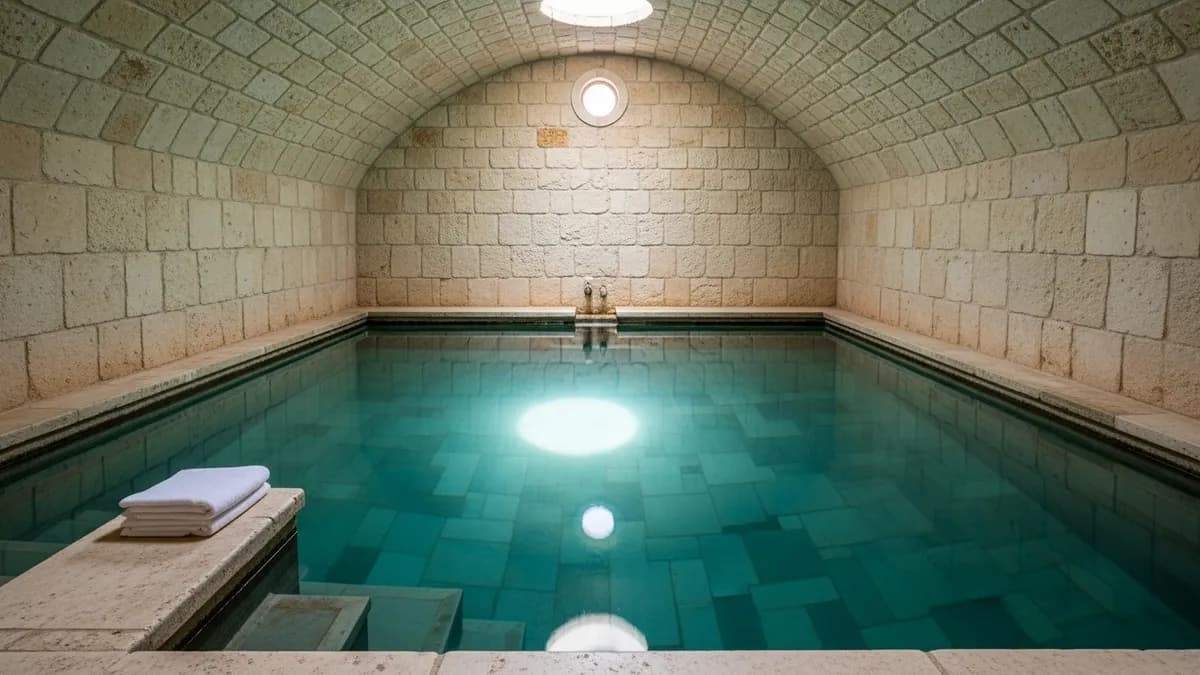
A mikvah is the Jewish ritual bath used for spiritual purification. Learn its water requirements, meaning, link to family purity, and how modern mikvahs work.
Quick Answer
A mikvah is a Jewish ritual bath used for spiritual purification. It must contain at least 191 gallons of natural water (rainwater, spring water, or well water). Women immerse monthly as part of the laws of family purity (taharat hamishpacha), brides immerse before their wedding, and some men immerse before Shabbat or holidays.
Of all the aspects of Orthodox Jewish life that people are curious about, the mikvah is one of the most mysterious to outsiders. A ritual bath? What does that even mean? Is it about hygiene?
No. It is not about hygiene at all. The mikvah is about something much deeper than physical cleanliness. It is about spiritual transformation, and it is one of the most ancient and most important institutions in Jewish life.
What Exactly Is a Mikvah?
A mikvah is a pool of water that meets very specific halachic (Jewish legal) requirements. It is used for ritual immersion, a process through which a person transitions from a state of ritual impurity to a state of ritual purity.
But let me be clear about something: ritual impurity has nothing to do with being dirty, sinful, or unworthy. It is a spiritual concept. The Torah describes various states that create ritual impurity, and immersion in a mikvah is the Torah-prescribed way of transitioning out of that state. Think of it more as a spiritual reset than a bath.
The Physical Requirements
The mikvah has very precise construction specifications, which is why Jewish communities have been building purpose-built mikvahs for centuries.
The water must come from a natural source. This means rainwater, spring water, well water, or water from a natural body like a lake or ocean. Municipal tap water alone is not sufficient for the core mikvah pool. However, modern mikvahs use an ingenious system where a reservoir of natural water is connected to a larger pool that can be heated and maintained for comfort.
The mikvah must hold at least 191 gallons of water. This is approximately 40 se'ah, the Talmudic measurement that defines the minimum volume. The pool must be large enough for an average adult to immerse completely at once, with all of that water gathered in a single connected body.
The water cannot be manually transported. It must flow naturally into the mikvah, not be carried in buckets or containers. This is why rainwater collection systems are so common in mikvah construction.
Most modern mikvahs are much larger than the minimum requirements. They are beautifully maintained, heated to a comfortable temperature, and designed to provide complete privacy and dignity.
The Mikvah and Family Purity
The most common use of the mikvah is in connection with taharat hamishpacha, the laws of family purity. These are among the most intimate and sacred laws in Judaism.
Here is how the cycle works: when a woman's menstrual period begins, she enters a state called niddah. During this time, physical contact between husband and wife is prohibited. This includes not only intimacy but all physical touch, according to rabbinic law. This period of separation continues through the menstrual flow. Once the bleeding has stopped, she performs an internal examination (hefsek taharah) to confirm it has ceased, and then counts seven "clean days," ideally checking each morning and evening to verify there is no further bleeding.
After nightfall following the seventh clean day, the woman immerses in the mikvah. She prepares carefully beforehand, bathing and showering in a private preparation room, removing nail polish, jewelry, and anything else that might create a barrier between her body and the water. She then recites a special blessing and fully submerges.
The moment she emerges from the mikvah, the couple can resume physical and intimate contact. The Talmud explains the beauty of this system through the words of Rabbi Meir (Niddah 31b): "Why did the Torah say that a niddah is separated for seven days? So that a wife should be beloved to her husband as on the day she entered the chuppah."
And that is exactly what it feels like. The night of mikvah immersion is a renewal, a reunion. Couples who observe these laws describe it as a constant cycle of longing and reunion that keeps their marriage fresh decade after decade.
The Bridal Mikvah
Before her wedding, a bride immerses in the mikvah in a special, deeply meaningful experience. This pre-wedding immersion symbolizes spiritual rebirth and the beginning of a new chapter in life.
The Talmud connects the waters of the mikvah to the rivers of Gan Eden (the Garden of Eden), the source of all water in existence. Gan Eden is the birthplace of humanity and the site of the first marriage, that of Adam and Chava (Eve). When a bride immerses before her wedding, she is connecting to that primordial source.
Many mikvahs have beautiful bridal suites, special private rooms designed specifically for brides. These rooms require advance reservation and often come with a fee, as the preparation process takes considerable time.
In Sephardi communities especially, the bridal mikvah is followed by a celebration with friends and family: food, sweets, wine, singing, and blessings for the bride. It is a joyous and emotional event.
In some communities, the groom also immerses in a mikvah before the wedding.
Other Uses of the Mikvah
While family purity is the primary use, the mikvah serves other functions in Jewish life:
Conversion. When a person converts to Judaism, immersion in a mikvah is the final step. The convert goes in as a non-Jew and emerges as a Jew. It is a spiritual rebirth in the most literal sense.
Erev Shabbat and holidays. Many men, particularly in Hasidic communities, immerse in a mikvah on Friday afternoons before Shabbat or before holidays. This is a custom (minhag) rather than a law, but it is widely practiced.
Erev Yom Kippur. It is customary for men to immerse before Yom Kippur as part of the spiritual preparation for the holiest day of the year.
Keilim (vessels). New metal and glass food vessels — dishes, utensils, and cookware — that come into Jewish ownership from a non-Jew must be immersed in a mikvah before use (tevilas keilim). Many mikvahs have a separate pool specifically for this purpose.
Modern Mikvahs
If you are imagining some ancient stone pool in a basement, let me update your picture. Modern mikvahs are often stunningly beautiful facilities. Many feature:
- Marble and tile finishes
- Heated pools at comfortable temperatures
- Private preparation rooms with showers, bathtubs, and full amenities
- Hair dryers, robes, and toiletries
- Trained attendants (called "mikvah ladies") who ensure the immersion is performed correctly
- Evening hours for convenience and privacy
Community mikvahs are typically overseen by the local rabbinate and maintained to the highest standards of both halacha and hygiene. The water is filtered and treated, and the entire facility is cleaned regularly.
Building a mikvah has always been a top priority for Jewish communities. The Talmud teaches that a community should build a mikvah even before building a synagogue. That is how central this institution is to Jewish life.
A Woman May Use a Natural Body of Water
In an emergency situation where a mikvah is not available, a woman may immerse in a natural body of water such as a lake, ocean, or river, as long as it meets the minimum volume requirements. However, this is rarely done in practice because it does not provide the privacy that a woman needs. This is precisely why Jewish communities have been constructing purpose-built mikvahs for thousands of years, ensuring that women can fulfill this mitzvah with dignity and comfort.
Why the Mikvah Matters
The mikvah stands at the intersection of the physical and spiritual worlds. It uses something as simple as water to accomplish something as profound as spiritual transformation. It connects a woman to the Garden of Eden, to the very source of creation. It renews marriages month after month, decade after decade. It welcomes converts into the Jewish people. It prepares the soul for Shabbat and for the holiest days of the year.
For the women who use it regularly, the mikvah is not a burden or an imposition. It is a gift. It is a private, sacred space where the everyday falls away and something eternal takes its place.
Common Questions
Who uses the mikvah? Married women immerse monthly as part of family purity observance. Converts immerse as part of their conversion. Many men immerse before Shabbat or holidays. New dishes are sometimes immersed (tevilat keilim).
What does a modern mikvah look like? Modern mikvaos are private, spa-like facilities with preparation rooms (shower, bath, hair supplies), warm pools, and individual privacy. They are nothing like the cold, dark images some people imagine.
Is mikvah immersion like baptism? Superficially similar (water immersion for spiritual purposes) but theologically different. Mikvah is about ritual status change, not sin removal. It is repeated throughout life, not a one-time event. The concept predates Christianity by centuries.
I'm an Orthodox Jewish woman from Brooklyn. I can't speak for every Orthodox Jew — when I write outside my experience, I say so.
Family Purity Laws (Taharat Hamishpacha)
Jewish Wedding Traditions: A Guide to the Orthodox Ceremony
What Is a Hasidic Jew? An Insider's Guide to Hasidic Judaism
Do Orthodox Jews Go to College?
Partway in, or just curious?
If you're in an interfaith relationship, have Jewish ancestry, or are quietly exploring deeper engagement, there's a separate page for you.
The Orthodox Insider
A new letter every Thursday, before Shabbos — plus an instant download of “10 Things Everyone Gets Wrong About Orthodox Jews” when you subscribe.
No spam, unsubscribe anytime.