Orthodox Jewish Humor: Why Laughter Matters
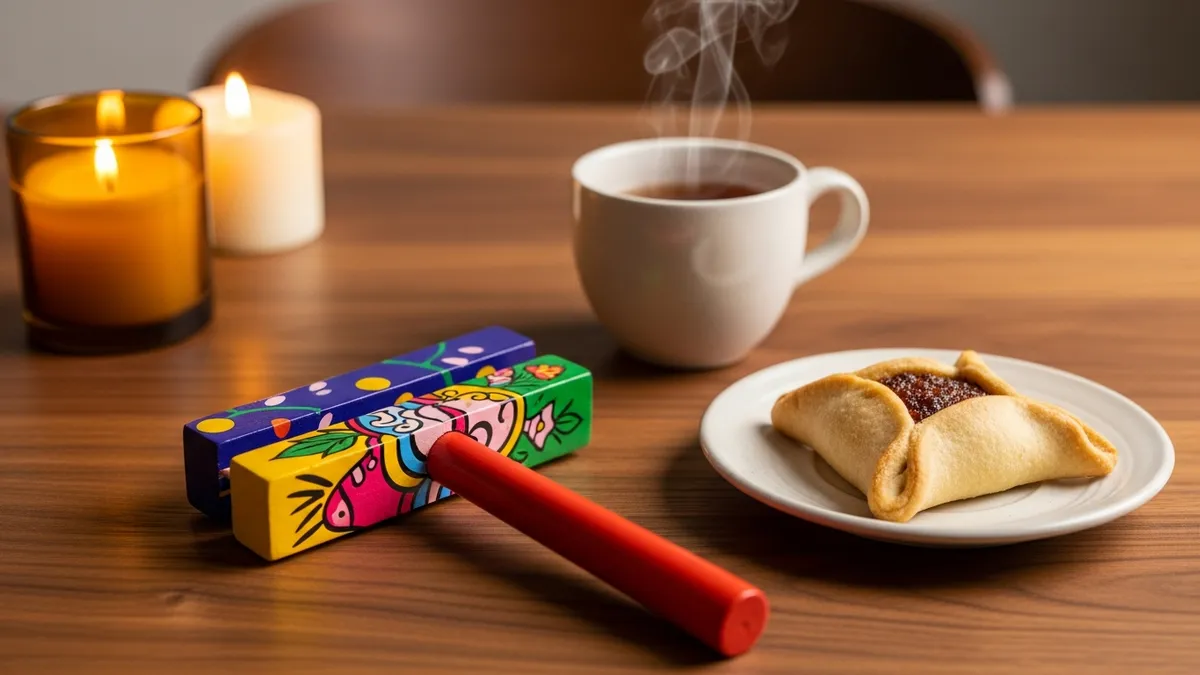
Jewish humor explained — why Orthodox Jews value laughter, classic Jewish joke traditions, and how humor plays a role in faith and community.
Quick Answer
Jewish humor has a long and rich tradition rooted in the ability to laugh at life's absurdities while maintaining faith. Orthodox Jewish humor often involves wordplay, self-deprecation, Talmudic wit, and the contrast between sacred and mundane. From Purim shpiels to Shabbat table jokes, humor is considered a genuine spiritual value in Jewish tradition.
Last Shabbos, my three-year-old announced at the table — in front of twelve guests — "Tatty, why does Zaidy always fall asleep during the rabbi's speech?" My father-in-law, who had been nodding off approximately thirty seconds earlier, opened one eye and said, without missing a beat, "I wasn't sleeping. I was meditating on the drasha." My mother-in-law whispered, "He's been meditating for thirty-seven years."
That is Orthodox Jewish humor. Nobody wrote it. Nobody rehearsed it. It just happened, because when you put Jews around a table with food and family, comedy is inevitable.
The Sacred Art of the Jewish Kvetch
Complaining, in Orthodox Judaism, is not negativity. It is connection. It is how we say "I love you" and "I see you" and "we are in this together."
"How was your Yom Tov?" "You know. Three-day Yom Tov. Into Shabbos. Four days of cooking, five days of eating, zero days of rest, and somehow my mother-in-law's brisket was still dry."
The kvetch is never actually about the brisket. The brisket is fine. The kvetch is a ritual — a communal exhale. After three days of Yom Tov rolling into Shabbos, you have been in your best clothes for 96 hours, you have eaten approximately 14 meals, and you still have to figure out where to put the succah schach. You do not need a therapist. You need someone at the kiddush to look at you and say, "So? How was yours?" and then you both laugh, because what else can you do.
My neighbor once described a five-day Yom Tov stretch as "beautiful, spiritual, and I wouldn't wish it on my worst enemy." That is the kvetch in its purest form — total gratitude, total exhaustion, expressed simultaneously.
Purim: When Humor Becomes Halacha
Purim is the one day a year when being funny is practically a mitzvah. And the frum world does not waste it.
Every shul has the guy who takes his Purim costume way too seriously. One year, a man in our community dressed as the shul president, complete with a fake mustache and a clipboard, and walked around the kiddush telling people their parking was being revoked. Three people actually believed him. One moved his car.
The Purim shpiel is where years of repressed communal commentary come out. The rabbi's tendency to go twenty minutes over? Addressed. The building fund that has been "almost complete" since 2014? Satirized. The eruv committee's weekly email that reads like a spy thriller? Performed as a dramatic reading with background music.
A yeshiva I know puts out a Purim newsletter every year. Last year's headline: "Local Ba'al Teshuvah Discovers He Was Already Frum." Below that: "Area Man Unsure If He Bentched." That second one hit a little too close to home for everyone.
The genius of Purim humor is that it is the one time you can say out loud what everyone has been thinking all year. The rest of the year, you keep it to yourself. On Purim, you put it in a skit and the rabbi laughs the hardest.
Shabbat Table Humor: A Tradition of Repetition
Every family has the one person who tells the same jokes at the Shabbat table. In our family, it is my father-in-law, and he has a rotation of approximately forty jokes that he has been telling since before I was born. We have all heard them. We all know the punchlines. We laugh anyway — partly because they are funny, partly because watching him set up a joke he has told 400 times with the same enthusiasm as the first time is its own comedy.
His current favorite: A man walks into a shul and sits in someone's makom kavua (regular seat). The regular guy shows up and says, "Excuse me, you're in my seat." The visitor says, "I didn't see a name on it." The regular guy says, "Look under the cushion." There is a brass plaque.
It is not a great joke. It is a perfect Shabbat table joke, because every single person at the table has an opinion about the makom kavua situation in their own shul, and suddenly the joke is forgotten and everyone is arguing about whether Yankel really owns the third seat from the right or if he just thinks he does.
That is the function of the Shabbat table joke. It is a conversation starter disguised as comedy.
Shadchan Humor: The Comedy Gold of Matchmaking
If you want to understand Orthodox humor, spend five minutes talking to a shadchan, or better yet, spend five minutes listening to someone describe their experience with a shadchan.
"She's a wonderful girl" — this phrase has been used to describe every single Jewish woman between the ages of 19 and 35 in the tristate area. What it means varies enormously. "She's a wonderful girl" can mean anything from "she is genuinely wonderful" to "she is alive and Jewish and I need to make a shidduch this month."
"He's very serious about learning" can mean "he learns fourteen hours a day" or it can mean "he owns a sefer."
The resume itself is comedy. Height, weight, tablecloth color on Shabbos (this is a real question), what the father does, what the grandfather did, which rav the family holds by, and — crucially — hat size. Someone once told me a shadchan asked whether the boy stacks or doesn't stack (benchers after a meal). I thought she was joking. She was not joking.
But the best shadchan humor comes from the dates themselves. A friend of mine went on a date where the young man opened with, "So, I heard you're very into chesed." She said, "Sure, I guess." He said, "Great, because I forgot my wallet." He was kidding. She married him.
What the Children Say
I taught in a frum school for three years, and I am convinced that children between the ages of five and eight are the funniest people in the Orthodox world, entirely by accident.
A five-year-old, during a lesson on Bereishis: "If Adam and Chava didn't have a mommy, who packed their lunch?"
A seven-year-old, asked to name the Avos: "Avraham, Yitzchak, Yaakov, and... is Moshe a bonus one?"
A six-year-old, on why we wash our hands before eating bread: "Because Hashem doesn't like crumbs."
An eight-year-old, asked what bracha you make on pizza: "Whichever one gets me the pizza faster."
A second-grader, writing about Shabbos: "On Friday night my family goes to shul. My father davens. My mother davens. I count the ceiling tiles. There are 847."
You cannot write material this good. It only comes from genuine, unfiltered encounters with halacha by people who are three feet tall and completely literal.
Self-Deprecating Humor: Laughing at Our Own Frumkeit
We are very good at laughing at ourselves, and honestly, we have a lot of material.
The kippah in the wind situation. Every frum man has experienced the moment when a gust catches your yarmulke and suddenly you are sprinting down the street chasing a small circle of fabric like it contains state secrets. You always catch it. You never look dignified doing so.
The eruv panic. Every community has a WhatsApp group that sends out the eruv status on Friday. The message says "The eruv is up" and everyone relaxes. One week the message is late. By 2:15 PM, the entire community is in a state of emergency. Women are recalculating their Shabbos plans. Men are texting "Did you hear about the eruv??" to everyone they know. Then the message comes: "The eruv is up. Sorry, was in a meeting." Three hundred people exhale simultaneously.
The pre-Pesach insanity. By Erev Pesach, every frum household has been cleaning for weeks and everyone is slightly unhinged. My wife once found a Cheerio behind the dryer and reacted like she had discovered a ticking bomb. I was standing on a ladder at 11 PM scrubbing the top of a doorframe that no human has touched since the house was built, wondering if this is what Hashem really had in mind.
The WhatsApp Groups: Where Real Comedy Lives
If you want to see Orthodox Jewish humor in its natural habitat, you need access to the community WhatsApp groups. This is where it all happens.
The shul WhatsApp group: 200 members, 195 of whom are muted, 4 of whom post "Good Shabbos" every single week, and 1 who uses it exclusively to complain about the kiddush. "Again with the herring? What happened to the sushi they had that one time in 2019?"
The neighborhood group: Someone posts a picture of a lost glove. Fourteen people respond. None of them have the other glove. Someone suggests checking the shul lost and found. Someone else says the shul lost and found has been "temporarily relocated" since 2021. A philosophical debate about the nature of lost property ensues. The original poster finds the glove in their coat pocket and does not update the group.
The mothers' group: "Does anyone have a size 7 Shabbos shoe for a 4-year-old by tomorrow morning?" Posted at 11:47 PM on Thursday. By 11:52 PM, three pairs have been offered, one with matching socks, and someone has thrown in a barely-used Shabbos dress "just in case." The chesed is real. The speed is supernatural.
The carpool group is its own comedy special, but I am not allowed to talk about carpool group because what happens in carpool group stays in carpool group.
Modern Orthodox vs. Yeshivish vs. Chassidish Humor
The humor varies across the Orthodox spectrum, and the differences are themselves funny.
Modern Orthodox humor tends to be the most self-aware. It lives in the tension between secular culture and religious life. "I keep Shabbos, but my Netflix queue doesn't know that — it just thinks I'm really inconsistent." Modern Orthodox humor often sounds like it could be a stand-up bit, because it kind of is.
Yeshivish humor is drier, more internal, and often requires a working knowledge of Gemara to land. There is an entire genre of jokes that are only funny if you know what a kal v'chomer is. If you know, you know, and if you don't, no amount of explaining will help. A yeshivish joke that kills in the beis medrash will get blank stares at a dinner party, and that is part of what makes it funny.
Chassidish humor is storytelling. It comes wrapped in a moshol (parable) and ends with a lesson, but somewhere in the middle you are laughing and you are not entirely sure why. The Chassidic tradition of the holy fool — the simple Jew whose sincerity accidentally reveals a deep truth — is humor at its most profound. The punchline is not a punchline. It is an insight. And then you laugh again because you realize the insight applies to you.
Why Humor Matters: The Deepest Jewish Value You Never Heard a Shiur About
The Gemara in Taanis 22a tells the story of Eliyahu HaNavi pointing out two men in the marketplace and saying they are destined for Olam Haba — the World to Come. Who were they? Not great Torah scholars. Not wealthy philanthropists. They were jesters. Comedians. People who cheered up those who were sad and made peace between people who were fighting.
Think about that for a moment. In a tradition that values Torah study as the highest pursuit, two comedians earned eternity. That is not a footnote. That is a statement about what Hashem values.
Rebbe Nachman of Breslov taught that joy is the foundation of spiritual life, and that a person should use humor to pull themselves out of sadness. Not fake joy. Not pretending everything is fine. Real humor — the kind that looks at the mess of life and finds the absurdity, the warmth, the humanity in it.
There is an old Yiddish saying: "A Jew without humor is like a fish without water." We swim in it. It is the medium through which we process our history, our faith, our families, our 96-hour Yom Tov marathons, and our flying kippot.
Because at the end of the day, we are a people who have been through everything — exile, persecution, destruction, rebirth — and we are still here, still arguing about the eruv, still telling the same jokes at the Shabbat table, still laughing.
And if that is not a sign of something holy, I do not know what is.
I'm an Orthodox Jewish woman from Brooklyn. I can't speak for every Orthodox Jew — when I write outside my experience, I say so.
Partway in, or just curious?
If you're in an interfaith relationship, have Jewish ancestry, or are quietly exploring deeper engagement, there's a separate page for you.
The Orthodox Insider
A new letter every Thursday, before Shabbos — plus an instant download of “10 Things Everyone Gets Wrong About Orthodox Jews” when you subscribe.
No spam, unsubscribe anytime.