The Complete Shabbat Food Guide: Friday Night to Saturday
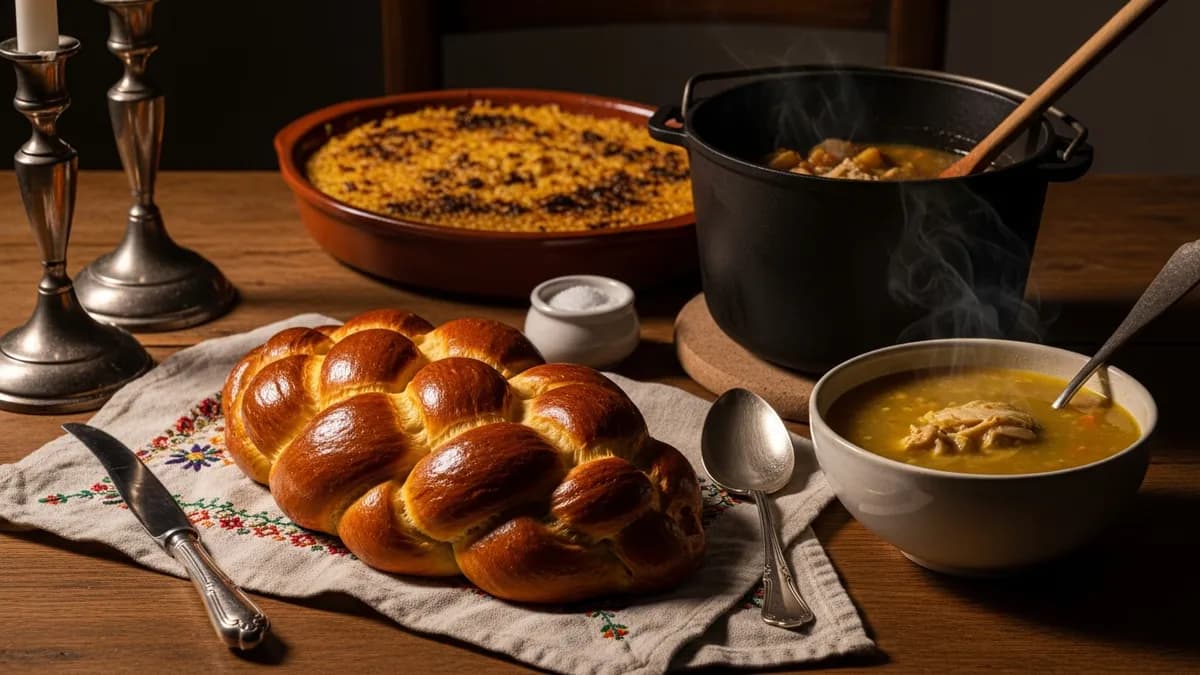
Everything served at a Shabbat table — Friday night dinner, Shabbat lunch, seudah shlishit, and the customs and blessings behind each meal.
Quick Answer
Shabbat includes three festive meals: Friday night dinner (challah, soup, fish, main course), Shabbat lunch (cholent, kugel, salads), and seudah shlishit (a lighter afternoon meal). Each meal begins with kiddush over wine and the blessing over two challahs. All food is prepared before Shabbat since cooking is prohibited.
If there is one thing Orthodox Jews know how to do, it is eat on Shabbat. Three full meals, each with its own character, its own customs, and its own signature dishes. By Saturday night, you are full in every sense — physically, spiritually, and emotionally.
Here is what happens at each meal.
The Preparation
Everything — and I mean everything — must be cooked before Shabbat begins. Since cooking, baking, and even reheating (in certain ways) are prohibited on Shabbat, Friday is an intense cooking day. By Friday afternoon, my kitchen has produced soup, fish, salads, a main course, side dishes, dessert, challah, and cholent. The cholent goes on the hot plate or blech (a metal sheet placed over the stove to keep food warm) before Shabbat and stays there until lunch. It is the same principle behind a Shabbat elevator — set everything up before Shabbat so that nothing needs to be switched on, adjusted, or pressed once it begins.
The timing is tight. In winter, when Shabbat starts early, I might be cooking from 7 AM to 3 PM. In summer, there is more time, but also more courses since the meals are bigger. It is a labor of love. Literally.
Friday Night Dinner
This is the main event of the week. The table is set with a white tablecloth, good dishes, and two challahs covered with a challah cover.
The Order
Kiddush: The meal begins with kiddush — a blessing over wine recited by the head of the household, declaring the sanctity of Shabbat. Everyone listens and responds "Amen," then drinks from the wine.
Netilat yadayim (hand washing): Ritual hand washing with a special cup, pouring water over each hand twice (or three times). After the blessing, silence is maintained until the challah is eaten.
HaMotzi (challah): The blessing over bread is made over two challahs — symbolizing the double portion of manna that fell on Fridays in the desert. The challah is cut (or torn), dipped in salt, and distributed to everyone at the table.
The Courses
Fish: Many families start with gefilte fish, others with salmon or another fish dish. There is a kabbalistic tradition of eating fish on Shabbat.
Soup: Chicken soup is the classic — with kneidlach (matzo balls), noodles, or kreplach (filled pasta).
Main course: Chicken is the most common, but roast beef, brisket, or lamb are also popular. Served with side dishes — rice, potatoes, roasted vegetables, kugel.
Dessert: Cake, fruit, or mousse. Nothing too heavy after a multi-course meal, though who am I kidding — by dessert, we are all too full and we eat it anyway.
The Atmosphere
Shabbat dinner is not a quick meal. It typically lasts 1.5 to 3 hours. There is singing — zemiros (Shabbat songs) between courses, and often a d'var Torah (words of Torah). Guests are common. The conversation ranges from the weekly parsha to school news to community gossip (within halachic limits, of course).
Shabbat Lunch
After Shabbat morning services (which end around noon), the family sits down for the second meal.
Kiddush and Challah
Kiddush is made again (a shorter version than Friday night), followed by hand washing and challah.
The Star: Cholent
Cholent is the dish that defines Shabbat lunch. This slow-cooked stew — beef, potatoes, beans, barley, and kishke (a savory stuffing of flour, fat, and spices cooked in a casing) — has been simmering on the hot plate since Friday afternoon. After 18+ hours of cooking, the flavors have melded into something magical. Every family has their own recipe, and every family thinks theirs is the best.
Sephardic families serve chamin or dafina — their own versions of a slow-cooked Shabbat stew, often with rice, chickpeas, and eggs cooked until brown.
Sides
Salads (Israeli salad, coleslaw, hummus), kugel (potato or noodle), and sometimes an additional meat or fish course. Shabbat lunch tends to be heavier than dinner — partly because of the cholent, partly because you need fuel for the afternoon nap.
The Post-Lunch Nap
This is not officially a halachic requirement, but it might as well be. After a morning of prayer and a heavy meal, the Shabbat nap is a sacred institution. My husband considers it a mitzvah. I consider it survival.
Seudah Shlishit (The Third Meal)
Late Shabbat afternoon, the third meal is eaten. This is a lighter, more reflective meal — often just challah or bread with spreads, salads, and maybe some fish. The mood shifts. Shabbat is ending. The sun is going down. The zemiros sung at this meal are slower, more contemplative.
In many communities, seudah shlishit is eaten together in the synagogue after Mincha (afternoon prayers). There is something poignant about a room full of people eating together as Shabbat slips away. And many families are not quite finished even then — after Shabbat ends, there is a beloved custom of melaveh malkah, "escorting the queen," one more small Saturday-night meal to see Shabbat out.
The Spiritual Dimension
The three Shabbat meals are not just about food — each one corresponds to a different spiritual level. Friday night is associated with joy and anticipation. Shabbat day is associated with the revelation at Sinai. The third meal is associated with the future messianic era.
But even without the mystical dimensions, the practical reality is beautiful enough: three times during Shabbat, you sit down with the people you love, eat food you prepared with intention, and experience something that has become almost impossible in modern life — a meal with no interruptions, no screens, and no rush.
That is worth every minute of Friday cooking.
Common Questions
What is a typical Shabbat dinner menu? Challah, gefilte fish or salad, chicken soup with matzah balls, roasted chicken or meat, side dishes (kugel, roasted vegetables), and dessert. Wine for kiddush. Three courses minimum.
What is cholent? Cholent is a slow-cooked stew prepared before Shabbat and left warming overnight. Typically contains meat, potatoes, beans, barley, and onions. It is the quintessential Shabbat lunch dish — every family has their own recipe.
How is food kept warm if you cannot cook on Shabbat? Food is prepared before Shabbat and kept warm on a blech (metal sheet covering the stovetop), a hot plate, or in a Shabbat-mode oven set before the holiday begins. No temperature adjustments are made during Shabbat.
I'm an Orthodox Jewish woman from Brooklyn. I can't speak for every Orthodox Jew — when I write outside my experience, I say so.
Shabbat — The Jewish Day of Rest Explained
Classic Orthodox Jewish Recipes: Challah, Cholent & More
What is Kosher? The Complete Guide to Jewish Dietary Laws
Why Do Orthodox Jews Eat So Much? Food in Jewish Life
Want to keep reading about kosher?
The full site covers kosher laws, symbols, and specific foods. Or if you're a professional working with Orthodox Jewish clients on food — there's a specific guide for that.
The Orthodox Insider
A new letter every Thursday, before Shabbos — plus an instant download of “10 Things Everyone Gets Wrong About Orthodox Jews” when you subscribe.
No spam, unsubscribe anytime.