What Do Orthodox Jews Wear?
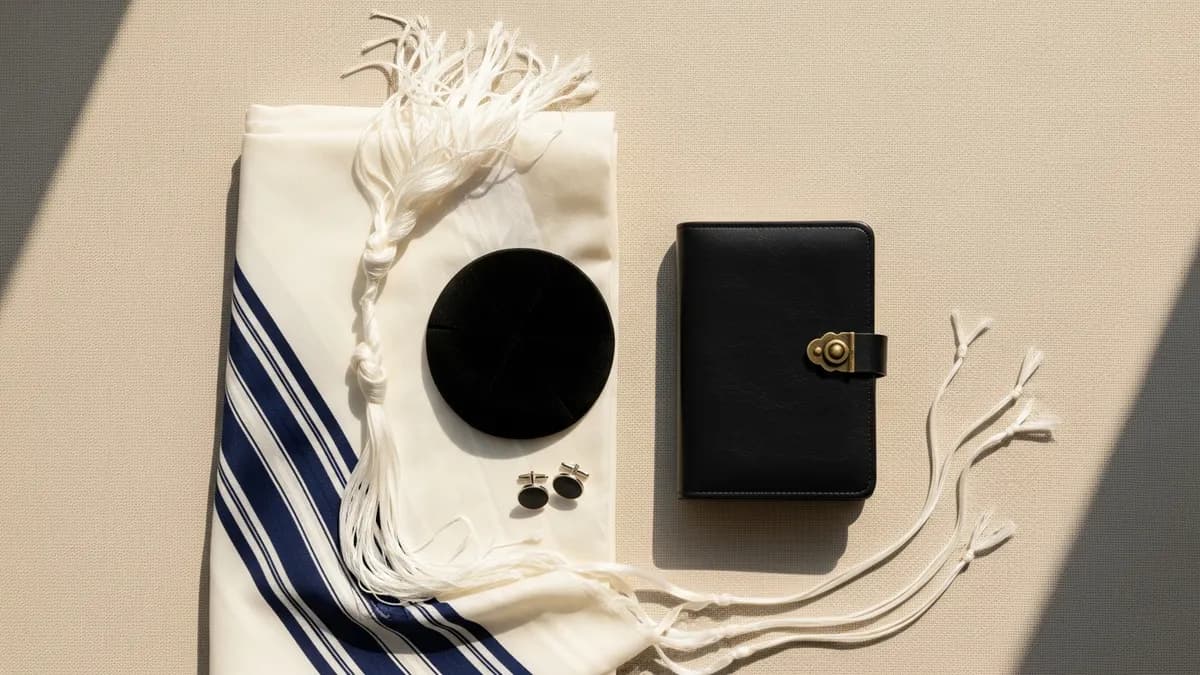
A complete guide to Orthodox Jewish clothing for men and women, including the meaning behind specific garments and how dress varies across communities.
Quick Answer
Orthodox Jewish men typically wear a kippah (head covering), tzitzit (fringed garment), and modest clothing. Women dress modestly with covered elbows, knees, and collarbone, and married women cover their hair. Specific styles vary widely — from black-hat Yeshivish to modern professional to Chassidic traditional garb.
What Do Orthodox Jews Wear?
Orthodox Jewish clothing ranges from virtually indistinguishable from mainstream fashion to highly distinctive traditional garb. What unites all Orthodox dress is the underlying principle of tznius (modesty) and specific religious garments — beyond that, the variety is enormous.
The direct answer: Orthodox Jewish men wear a kippah (head covering), tzitzit (fringed undergarment), and modest clothing. Women cover their elbows, knees, and collarbone, and married women cover their hair. The specific style depends heavily on which community someone belongs to.
Men's Clothing
Universal Elements
Every Orthodox Jewish man wears:
- Kippah (yarmulke): A head covering worn at all times, signifying awareness of G-d above
- Tzitzit: A four-cornered garment with fringes on each corner, worn under the shirt. This everyday garment is called a tallit katan (small tallit); the larger tallit gadol is the prayer shawl worn during morning services. Whether the fringes are left visible at the waist or tucked in varies by community and custom — many Chassidic and Yeshivish men leave them out, while many Modern Orthodox and yekkish men tuck them in. Either way, the garment fulfills the commandment in Numbers 15:38.
Style Variations
Modern Orthodox: Dress like their professional peers — suits, business casual, jeans on weekends. A knitted kippah is the main visible marker. You might not identify them as Orthodox at first glance aside from the kippah.
Yeshivish/Litvish: Black suits, white shirts, black hats (fedora-style). This is the "uniform" of the yeshiva world — neat, formal, and understated. Worn during the week and elevated for Shabbat with better fabrics and a more formal hat. The dark color is a deliberate choice — there is a longer story behind why the suits and hats are black.
Chassidic: The most distinctive. Long black coats — a rekel (the everyday wool or polyester frock coat) during the week, with the plural reklech — black hats (various styles by group), beards, peyos (sidelocks), white shirts, and black pants. On Shabbat and holidays, many Chassidic men wear a shtreimel (fur hat) and a bekishe (a silk or satin coat). The specific style identifies the Chassidic group immediately.
Women's Clothing
Modesty Guidelines
The core tznius requirements for women include:
- Elbows covered — sleeves must reach at least the elbow
- Knees covered — skirts must cover the knee even when sitting
- Collarbone covered — no low necklines
- No pants in most Orthodox communities (some Modern Orthodox women wear pants)
- Married women cover their hair — with wigs, scarves, hats, or combinations
Style Variations
Modern Orthodox women often dress fashionably within modesty guidelines — pencil skirts, blouses, blazers, stylish shoes. Finding trendy modest clothing has become easier with brands catering specifically to this market.
Yeshivish women tend toward classic, put-together styles — often dark or neutral colors, well-fitted but not form-hugging. Think professional polish.
Chassidic women dress more conservatively — longer skirts, higher necklines, thicker stockings (often seamed or opaque), and hair covered with wigs (sometimes with additional coverings). Colors tend to be darker, though this varies by community.
Children's Clothing
Orthodox children dress modestly but age-appropriately. Boys wear kippot from a young age and begin wearing tzitzit around age three (the custom in many communities). Girls dress modestly but with bright colors and styles appropriate for kids.
By school age, most Orthodox children are in uniform at their schools — white shirts and dark pants for boys, blouses and skirts for girls. Outside school, kids wear regular children's clothing within modesty parameters.
Shabbat and Holiday Clothing
Shabbat brings a significant wardrobe upgrade. The concept of kavod Shabbat (honoring Shabbat) includes wearing nicer clothes than weekday wear:
- Men wear suits, pressed white shirts, and their best hats
- Women wear their best outfits, often with jewelry and nicer sheitels
- Children get dressed up too
- Some families have specific "Shabbat clothes" that are only worn on Shabbat
The visual transformation of a neighborhood from Friday afternoon to Friday evening is striking — everyone elevates their appearance to honor the day.
The Modest Fashion Industry
A growing industry caters specifically to Orthodox women seeking fashionable modest clothing. Brands like Shabby Apple, Kosher Casual, and dozens of smaller labels create stylish clothing that meets modesty requirements without looking frumpy.
Online shopping has been transformative. Women who once struggled to find appropriate professional or occasion wear can now access a wide range of modest fashion options. Instagram and social media have spawned a "modest fashion" movement that extends well beyond the Jewish community, with Muslim and Christian women also participating.
Why Clothing Matters
In Judaism, how you dress isn't superficial — it's an expression of inner values. Clothing shapes how you carry yourself, how others perceive you, and how you move through the world. The attention Orthodox Jews give to dress reflects a belief that the external and internal are connected, and that presenting yourself with dignity is a form of self-respect and respect for others.
Want to learn more? Read our comprehensive guide to Orthodox Jewish clothing or explore Chassidic clothing by sect.
See also: Orthodox Jewish Clothing
I'm an Orthodox Jewish woman from Brooklyn. I can't speak for every Orthodox Jew — when I write outside my experience, I say so.
Orthodox Jewish Clothing — Why They Dress That Way
Hasidic Clothing by Sect: A Visual Guide
Modest Fashion: A Complete Guide to Tznius Style
Why Do Jews Wear Yarmulkes? The Kippah, Explained
There's more where this came from.
Orthodox Jewish dress touches on modesty, community identity, and religious law. The full tour covers it all.
The Orthodox Insider
A new letter every Thursday, before Shabbos — plus an instant download of “10 Things Everyone Gets Wrong About Orthodox Jews” when you subscribe.
No spam, unsubscribe anytime.