What Is a Kibbutz? Israel's Communal Living Explained
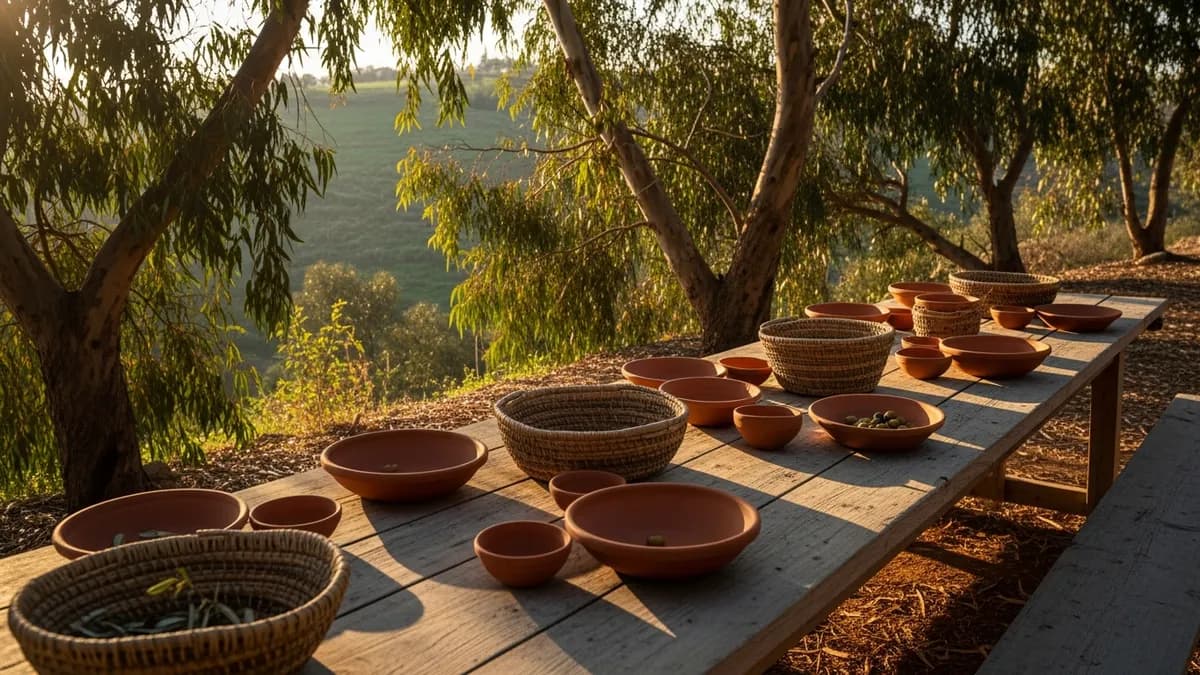
A kibbutz is Israel's unique communal settlement. Learn how kibbutzim work, their roots in Zionism, their role in building Israel, and how they've changed.
Quick Answer
A kibbutz is a communal settlement in Israel where members traditionally shared property, work, and meals equally. Founded by early Zionist pioneers in the early 1900s, kibbutzim played a crucial role in building the State of Israel. Today most have modernized and privatized, though the communal spirit remains.
When people think of Israel, a few images come to mind: the Kotel, falafel, the IDF — and kibbutzim. The kibbutz is one of the most unique social experiments in modern history, and it is inseparable from the story of how the State of Israel was built. But it is also a concept that has changed enormously since its founding, and what a kibbutz looks like today is very different from what it looked like in 1920.
A kibbutz (Hebrew: קיבוץ, plural: kibbutzim) is a communal settlement where members historically pooled their resources, worked collectively, and shared the products of their labor equally. The word comes from the Hebrew root meaning "gathering" or "group."
The History
The first kibbutz, Degania, was founded in 1910 on the shores of the Sea of Galilee by a group of young Jewish immigrants from Eastern Europe. These pioneers — chalutzim — were driven by Zionist idealism: they wanted to build a new kind of Jewish life in the Land of Israel, one based on manual labor, agriculture, and communal living rather than the mercantile life of the European diaspora.
The kibbutz movement grew rapidly during the British Mandate period and was instrumental in establishing the Jewish presence across the land. Kibbutzim drained swamps, cultivated deserts, and established settlements in strategic locations. Many of Israel's early political and military leaders came from kibbutzim. The kibbutz was not just a farm — it was a statement about what a Jewish society could look like.
How Traditional Kibbutzim Worked
In the classic kibbutz model:
- Shared ownership — Everything belonged to the community. There was no private property. Members did not own their homes, cars, or even clothing in some cases.
- Communal dining — Everyone ate together in a large dining hall (chadar ochel). Meals were prepared collectively.
- Collective child-rearing — In many kibbutzim, children slept in communal children's houses rather than with their parents. Parents visited their children during designated hours. This was one of the most radical and controversial aspects of kibbutz life, and most kibbutzim eventually abandoned it.
- Equal distribution — Members received an equal share of the kibbutz's resources, regardless of the work they did. A farmer and a teacher and a factory worker all received the same.
- Democratic governance — Decisions were made collectively in general assemblies where every member had an equal vote.
The Orthodox Relationship with Kibbutzim
This is where things get interesting from an Orthodox perspective — and if you want to understand what Orthodox Judaism is at its core, how it relates to the kibbutz movement is a good window into that. The early kibbutz movement was overwhelmingly secular — in many cases, actively anti-religious. The founders were socialists who saw traditional Judaism as part of the "old world" they were leaving behind. Many early kibbutzim did not have synagogues, did not observe Shabbat in a traditional sense, and did not keep kosher.
However, religious Zionists established their own kibbutz movement — the Kibbutz HaDati (Religious Kibbutz Movement). These kibbutzim combined communal living with full Torah observance: Shabbat, kashrus, daily davening, and Torah study alongside agricultural work. Notable religious kibbutzim include Kvutzat Yavne, Ein HaNatziv, and Shluchot.
The religious kibbutz proved that communal idealism and Torah observance were not contradictory. You could work the land with your hands and still put on tefillin every morning. That combination was powerful and continues to inspire.
Kibbutzim Today
The kibbutz of 2026 looks almost nothing like the kibbutz of 1950. Most kibbutzim have undergone "privatization" — members now earn individual salaries, own their homes, and make their own financial decisions. The communal dining halls still exist in many places, but participation is optional. Children live with their families. Some kibbutzim have become essentially suburban communities with shared facilities.
The economic base has shifted dramatically too. While agriculture was once the backbone of kibbutz life, today many kibbutzim run factories, tech companies, tourism operations, and other businesses. Some kibbutzim are quite wealthy.
There are roughly 250 kibbutzim in Israel today, home to about 125,000 people — a small slice of Israel's population. Despite their small numbers, their cultural impact on Israeli society has been enormous.
The Legacy
The kibbutz movement is a remarkable chapter in Jewish history — an attempt to build a just society from scratch, rooted in Jewish values of community and shared responsibility (even if many founders would not have described it in those terms). Not everything worked. The communal child-rearing was painful for many families. The rigid equality sometimes stifled individual initiative. But the idealism was real, the sacrifice was real, and the land they cultivated became a state.
Whether you are secular or religious, the kibbutz story is part of the broader Jewish story of return — to the land, to self-sufficiency, and to the dream of building something better.
I'm an Orthodox Jewish woman from Brooklyn. I can't speak for every Orthodox Jew — when I write outside my experience, I say so.
Partway in, or just curious?
If you're in an interfaith relationship, have Jewish ancestry, or are quietly exploring deeper engagement, there's a separate page for you.
The Orthodox Insider
A new letter every Thursday, before Shabbos — plus an instant download of “10 Things Everyone Gets Wrong About Orthodox Jews” when you subscribe.
No spam, unsubscribe anytime.