What Is an Orthodox Jewish Home Like Inside?
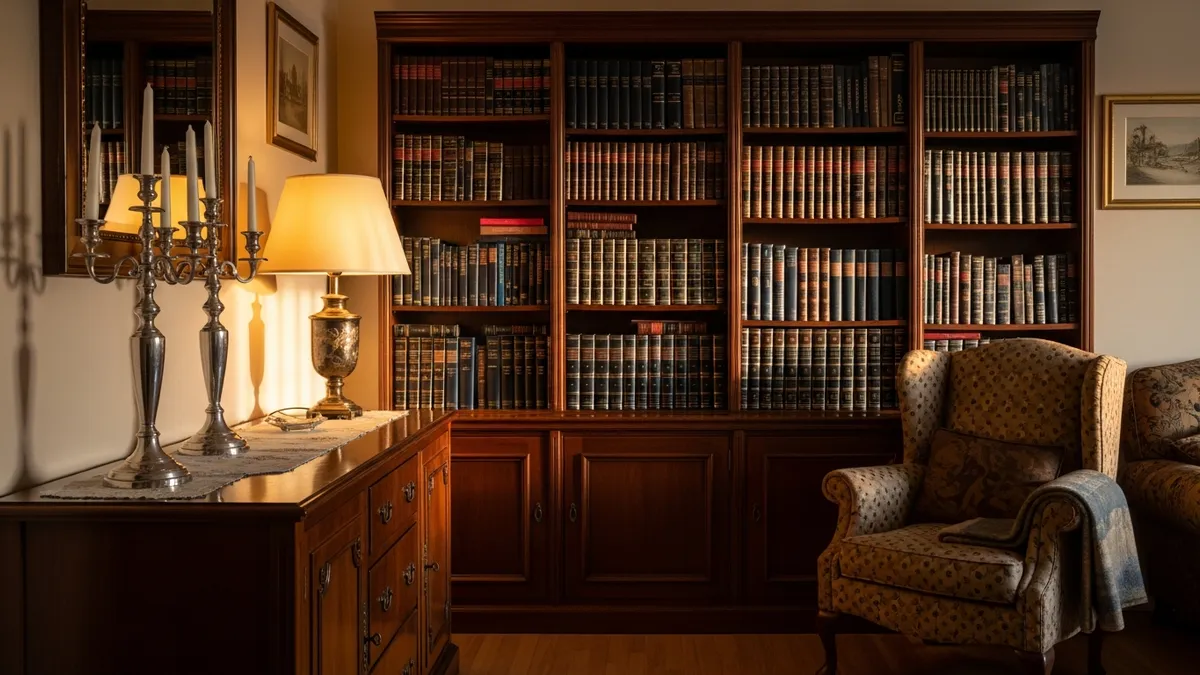
An Orthodox Jewish home has mezuzot on every door, a kitchen split for meat and dairy, walls of holy books, and a table built for big Shabbat meals.
Quick Answer
An Orthodox Jewish home has several distinctive features: mezuzot on every doorframe, a kitchen with separate areas for meat and dairy (sometimes two sinks, two ovens, color-coded dishes), extensive bookshelves of religious texts, a large dining table (Shabbat meals seat 8-14), and an overall atmosphere that is warm, lived-in, and designed around family and hospitality.
If you have never been inside an Orthodox Jewish home, you might imagine something austere — white walls, minimal furniture, religious severity. The reality is almost the opposite. Orthodox homes are warm, full, and built for people. Lots of people.
Let me walk you through mine.
The Front Door
The first thing you will notice: a mezuzah on the doorframe. A small decorative case, usually on the right side, tilted at an angle. Inside is a parchment scroll with Torah verses. There is one on every door in the house except the bathrooms.
Many visitors touch the mezuzah and kiss their fingers when they enter. You do not have to. But you will notice everyone else doing it.
The Living Room
Bookshelves. This is the most distinctive visual feature of an Orthodox home. Floor-to-ceiling shelves of seforim (religious books) — Talmud sets, Torah commentaries, prayer books, halachic codes, philosophy, Hasidic texts. A family might own 200-500 volumes. In some homes, the bookshelf IS the decor.
The furniture is functional — designed for a family with children, not for a magazine photoshoot. Couches that can survive seven kids. A coffee table covered in books, toys, and Shabbat candy wrappers.
The Kitchen
This is where the Orthodox home differs most visibly from a non-Jewish one:
- Two sinks (or one sink with two basin inserts) — one for meat dishes, one for dairy
- Two sets of dishes, pots, and utensils — often color-coded (red for meat, blue for dairy)
- Two dish racks or a divided dishwasher system
- A large oven (or two ovens if the family can afford them)
- A blech or hot plate for Shabbat (keeps food warm from Friday afternoon)
- A water urn — electric, plugged in before Shabbat, keeps hot water available all day Saturday
The refrigerator is large. The pantry is deep. An Orthodox family of six that hosts Shabbat guests weekly goes through enormous quantities of food. Do not be surprised by a chest freezer in the basement.
The Dining Room
The table is the heart of the house. In my home it seats twelve. On a regular weeknight, we are six. On Shabbat, we are ten to fourteen. The table expands. Extra chairs live in the hallway.
Shabbat candles sit on the table or a sideboard. On Friday night, the table is set with a white tablecloth, challah covered by a special cloth, wine cups, and the best dishes. It transforms from a weekday mess to something beautiful.
The Bedrooms
Multiple children often share rooms. Bunk beds are common. The house is organized for efficiency: labeled drawers, shared closets, laundry systems designed for volume.
In the master bedroom, you might notice a small bookshelf of personal religious texts — a siddur (prayer book), Tehillim (Psalms), a book of Jewish law. Many Orthodox couples keep these at the bedside.
The Bathroom
Normal. The only Jewish-specific feature: pre-cut toilet paper or tissues may be available on Shabbat (tearing is a prohibited creative act). Elsewhere in the house, you might also notice a two-handled washing cup (negel vasser) and a small basin kept at the bedside — used for the ritual morning hand-washing first thing upon waking, before walking through the house.
What You Won't See
- No Christmas tree, Easter decorations, or Halloween pumpkins. These holidays are not observed.
- No crosses, saints, or Christian imagery. Obviously — but visitors sometimes ask.
- No family photos of women displayed publicly in some Hasidic homes (modesty custom). In Modern Orthodox homes, family photos are everywhere.
- No TV in the living room in some Hasidic and Yeshivish homes. In Modern Orthodox homes, a TV is normal.
What You Will Feel
The overwhelming impression of an Orthodox home is warmth. It is a house designed for living — for children running through the hallway, for guests at the table, for Friday night singing, for Saturday afternoon napping on the couch with a book.
It is not a showroom. It is not minimalist. It is full — of books, of food, of people, of life. If that sounds chaotic, it is. Beautifully so.
If you are invited into an Orthodox home, go. Say "Good Shabbos" at the door. Touch the mezuzah if you feel moved to. Sit at the table. Eat the food. Ask questions. You are welcome.
I'm an Orthodox Jewish woman from Brooklyn. I can't speak for every Orthodox Jew — when I write outside my experience, I say so.
What Is a Mezuzah? The Scroll on Every Jewish Doorpost
How to Set Up a Kosher Kitchen — Step by Step
What is Kosher? The Complete Guide to Jewish Dietary Laws
Shabbat — The Jewish Day of Rest Explained
Partway in, or just curious?
If you're in an interfaith relationship, have Jewish ancestry, or are quietly exploring deeper engagement, there's a separate page for you.
The Orthodox Insider
A new letter every Thursday, before Shabbos — plus an instant download of “10 Things Everyone Gets Wrong About Orthodox Jews” when you subscribe.
No spam, unsubscribe anytime.