Why Orthodox Jews Cover Their Kitchen in Foil for Passover
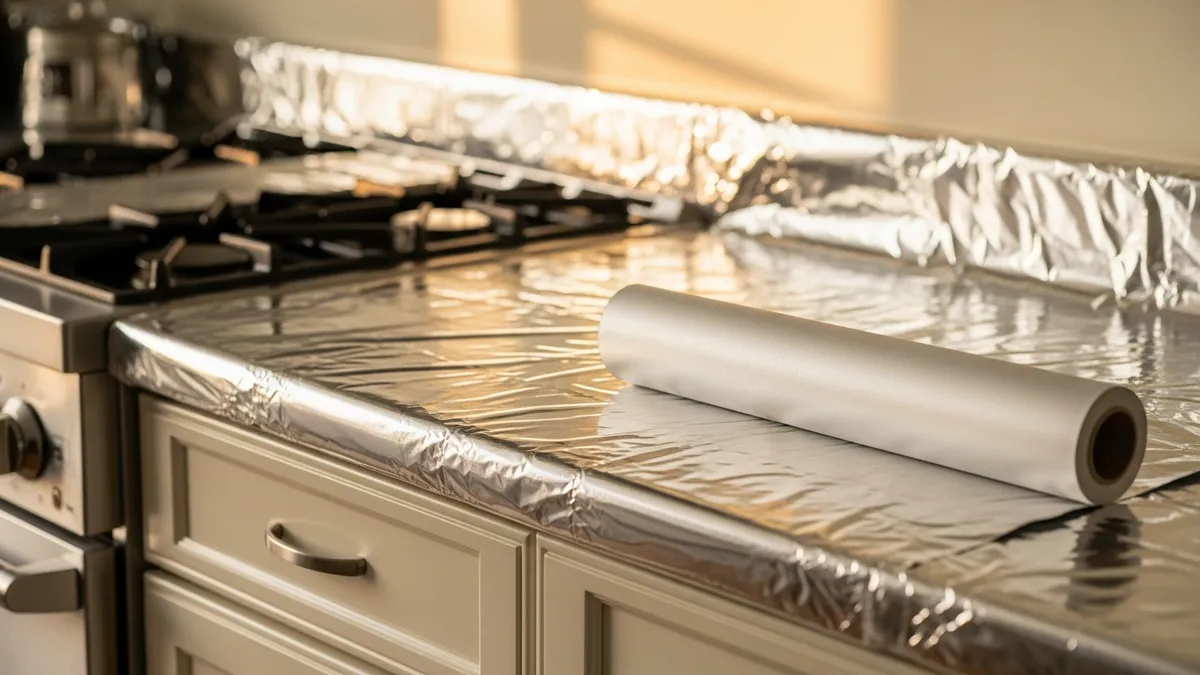
Orthodox Jews cover their kitchen in foil before Passover to seal off surfaces that can't be kashered, blocking any contact with leavened chametz.
Quick Answer
Before Passover, Orthodox Jews must remove all chametz (leavened grain products) from their home. Surfaces that may have absorbed chametz — countertops, stovetops, shelves — are either kashered with boiling water or covered with aluminum foil to create a barrier. The foil-covered kitchen is temporary (eight days) and the most visible sign of Passover preparation.
Orthodox Jews cover their kitchen in aluminum foil before Passover to create a barrier over surfaces that absorbed chametz (leavened food) all year and cannot be fully kashered. On Passover, even trace contact with chametz is forbidden, so countertops, shelves, and stovetops get wrapped to keep the eight-day holiday kitchen completely clean.
Every spring, the same thing happens: my non-Jewish neighbor sees me carrying seventeen rolls of aluminum foil into the house and asks if I am building a spaceship. I am not. I am preparing for Passover.
The Rule
On Passover (Pesach), Jews are forbidden from owning, eating, or benefiting from chametz — any food product made from wheat, barley, oats, rye, or spelt that has been allowed to rise (leaven). This is not a preference. It is a Torah commandment with unusual intensity: the Torah uses the word "destroy" regarding chametz, and commands that not even a crumb remain in your possession.
This means the kitchen — which handles chametz all year long (bread, pasta, cookies, cereal, beer) — must be completely transformed for the eight days of Passover.
Why Foil
Some surfaces — stainless steel and certain metals — can be kashered (made kosher for Passover) with boiling water. Stone counters like granite can sometimes be kashered too, but families differ and many ask their rabbi. Other surfaces cannot be kashered through heat at all:
- Laminate countertops — porous, may have absorbed chametz
- Oven racks (if not self-cleaning)
- Refrigerator shelves — where chametz food sat all year
- Cabinet shelves — where chametz products were stored
- Stovetop surfaces around the burners
For these surfaces, the solution is covering. And aluminum foil is cheap, moldable, heat-resistant, and available in bulk at Costco.
What Gets Covered
In a typical Passover kitchen:
- Countertops that are not granite or steel
- Stovetop surface between burners
- Oven interior (if the self-clean cycle was not run)
- Refrigerator and freezer shelves (lined with shelf paper or foil)
- Sink basins (if porcelain or ceramic — separate basin inserts are used)
- Cabinet shelves where Passover dishes will be stored
The result looks dramatic — a kitchen wrapped in silver — but it is functional. The foil creates a physical barrier between the surface (which may have absorbed chametz) and the Passover food.
The Bigger Picture
The foil is just the visible tip of the iceberg. Passover preparation also involves:
- Deep cleaning every room in the house where food may have been eaten (including cars, offices, and coat pockets)
- Selling chametz — a legal sale of all remaining chametz products to a non-Jew for the duration of Passover, facilitated by the rabbi
- Switching dishes — most families have an entirely separate set of pots, pans, dishes, and utensils used only for Passover, stored in the basement or attic the rest of the year
- Shopping — all food for the week must be certified "Kosher for Passover" (a stricter standard than year-round kosher)
The process typically starts 2-4 weeks before Passover and intensifies in the final days. The night before Passover, we do a formal search for chametz (bedikat chametz) by candlelight, checking corners, drawers, and hidden spots.
Why It Matters To Your Neighbor
If your Orthodox neighbor seems stressed in late March or early April, this is why. Passover preparation is the most labor-intensive event in the Jewish calendar. It is also deeply meaningful — the entire household transforms to reenact the Exodus from Egypt. The physical work is part of the spiritual experience.
If you want to be a good neighbor: do not bring cookies, bread, or baked goods to an Orthodox family during Passover (check the dates — they shift each year). Fruit, flowers, or kosher-for-Passover items (clearly labeled) are always welcome.
And yes, the foil comes down after the holiday. The spaceship is temporary.
I'm an Orthodox Jewish woman from Brooklyn. I can't speak for every Orthodox Jew — when I write outside my experience, I say so.
What is Kosher? The Complete Guide to Jewish Dietary Laws
Kosher Laws — A Complete Guide to the Rules of Kashrut
Passover (Pesach): The Complete Guide
How to Set Up a Kosher Kitchen — Step by Step
Want to keep reading about kosher?
The full site covers kosher laws, symbols, and specific foods. Or if you're a professional working with Orthodox Jewish clients on food — there's a specific guide for that.
The Orthodox Insider
A new letter every Thursday, before Shabbos — plus an instant download of “10 Things Everyone Gets Wrong About Orthodox Jews” when you subscribe.
No spam, unsubscribe anytime.