Passover (Pesach): The Complete Guide
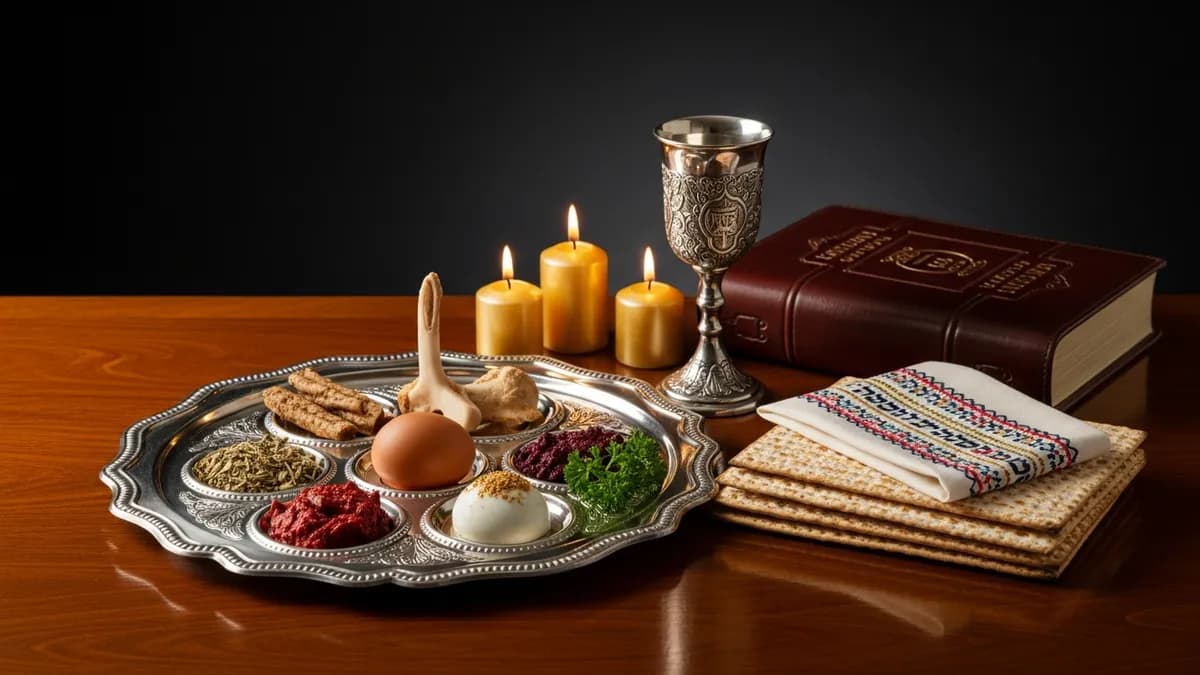
Passover (Pesach) explained: the Exodus story, the seder, matzah, cleaning for Pesach, and how Orthodox Jews observe this major spring holiday.
Quick Answer
Passover (Pesach) is a seven-day holiday (eight outside Israel) commemorating the Israelites' Exodus from Egyptian slavery. The centerpiece is the seder — a structured meal on the first two nights with the retelling of the Exodus. Jews eat matzah (unleavened bread) and completely eliminate chametz (leavened grain products) from their homes.
If there is one holiday that defines the Jewish experience, it might be Pesach. The Exodus from Egypt is not just a story we tell — it is the foundation of Jewish identity. Every Shabbat kiddush mentions it. Every major prayer references it. And once a year, we do not just remember it — we relive it.
But I will be honest with you: Pesach is also the most work-intensive holiday of the year. The cleaning, the cooking, the shopping, the preparation — it starts weeks in advance. By the time the seder actually begins, I am exhausted. But I am also proud, because the effort itself is part of the story.
The Story in Brief
Around 3,300 years ago, the Israelites were slaves in Egypt. G-d sent Moses to demand their freedom. Pharaoh refused. G-d sent ten plagues — blood, frogs, lice, wild beasts, pestilence, boils, hail, locusts, darkness, and the killing of the firstborn. Before the final plague, the Israelites were commanded to slaughter a lamb and put its blood on their doorposts so that the plague would "pass over" their homes — hence the name Pesach.
Pharaoh finally relented and let the Israelites go. They left in such a hurry that their bread did not have time to rise — which is why we eat matzah.
Cleaning for Pesach
The Torah commands us not to own, eat, or even see chametz (leavened grain products) during Pesach. This includes bread, pasta, cookies, crackers, beer — anything made from wheat, barley, rye, oats, or spelt that has been allowed to rise.
The preparation starts weeks before the holiday and takes over your entire life. I am not exaggerating.
Deep cleaning — every room gets turned inside out. I have found Cheerios in places that defy the laws of physics — inside shoes, behind radiators, wedged between car seat buckles. Last year I pulled the couch away from the wall and discovered what I can only describe as a granola bar graveyard. The kids suddenly have no memory of eating anything, ever, anywhere.
Kashering the kitchen — this is the big one. Countertops get covered or kashered with boiling water — this is the week when Orthodox kitchens disappear under aluminum foil. Ovens are cleaned until they gleam and then blasted at the highest temperature. Then out come the Pesach boxes from the basement — separate dishes, separate pots, separate everything. My kitchen basically gets a new identity for eight days.
Selling chametz — anything you don't want to throw out (expensive liquor, that one box of fancy pasta you forgot about) gets legally sold to a non-Jew through the rabbi and bought back after the holiday.
Bedikat chametz — the night before the seder, we turn off the lights, light a candle, and search the house for ten hidden pieces of bread. The kids treat it like a treasure hunt. My youngest takes it very seriously — she brings her own flashlight even though the whole point is the candle.
Biur chametz — the next morning, we burn the last bread outside. In our neighborhood, you see little fires on every sidewalk. It smells like burnt challah and feels like crossing a finish line.
The Seder
The seder is the main event — a structured meal that takes place on the first two nights of Pesach (one night in Israel). The word "seder" means "order," and the evening follows a precise 15-step sequence, all laid out in the Haggadah.
The seder plate holds the symbolic foods:
- Zeroa — a roasted shank bone representing the Pesach sacrifice
- Beitzah — a roasted egg representing the festival offering
- Maror — bitter herbs (usually horseradish) representing the bitterness of slavery
- Charoset — a sweet paste (usually apples, nuts, wine, and cinnamon) representing the mortar used by the slaves
- Karpas — a vegetable (often celery or parsley) dipped in saltwater representing tears
- Chazeret — additional bitter herbs (often romaine lettuce)
We drink four cups of wine (or grape juice) corresponding to the four expressions of redemption in the Torah. We eat matzah three times during the seder. We recline on pillows at the table like free people.
And we tell the story. This is the heart of the seder — reading the Haggadah together, discussing, debating, and making the story come alive. The famous "Ma Nishtanah" — the Four Questions — is traditionally asked by the youngest child. Last year, my youngest stood on her chair, held the Haggadah upside down (she can't read yet), and sang the whole thing from memory at the top of her lungs. My father's eyes filled with tears. He told me later that she sounded exactly like I did at that age. The Haggadah says: "In every generation, a person is obligated to see themselves as if they personally left Egypt." Watching my daughter sing those words, I felt that chain stretching back through the centuries.
Matzah
Matzah is flour and water, mixed and baked in under 18 minutes — before it has a chance to rise. That time limit is taken very seriously. In matzah bakeries, every surface is cleaned between batches, and workers move with intense speed and precision.
Shmurah matzah (guarded matzah) is matzah made from wheat that has been watched from the time of harvest to ensure it never came in contact with water. It is handmade, round, and bumpy. It costs significantly more than machine-made matzah, but many Orthodox families use it for the seder.
I will level with you: matzah is not the most exciting food. By day five of Pesach, you are dreaming about bread. But there is something beautiful about eating the same simple food that our ancestors ate when they walked out of slavery. It connects you across the centuries.
Pesach Foods
Pesach cooking is its own art form. No flour, no leavening, no regular pasta or bread. Everything is made from matzah meal, potato starch, eggs, and creativity.
The classics: matzah ball soup (the Pesach version of chicken soup), gefilte fish, brisket, roasted chicken, potato kugel (made without flour), macaroons, and flourless chocolate cake. Sephardic families have their own traditions — rice and legumes (kitniyot) are permitted in Sephardic households, which opens up a whole different menu.
The Deeper Meaning
Pesach is not just about ancient history. The concept of going from slavery to freedom is meant to be personally relevant, right now. What enslaves you today? What habits, fears, or patterns are you trapped in? Pesach is an invitation to break free.
The matzah itself teaches this lesson. It is bread that did not have time to rise — the ego did not have time to inflate. Matzah is flat, humble, simple. Freedom begins with humility.
By the time the seder is over, it is past midnight. The baby is asleep in someone's arms. The older kids are draped across the couch. The table looks like a battlefield of wine stains, matzah crumbs, and charoset smears. I collapse into my chair and look around at the mess, at my sleeping children, at my husband putting away the Haggadahs, at the menorah of wine cups still on the table — and I think: it is worth it. Every single hour of cleaning, every potato I peeled, every cabinet I scrubbed. This night made it worth it.
Every year, when I sit at that seder table surrounded by my family, reading the same words my great-great-grandparents read in their seders, eating the same matzah, asking the same questions — I feel the continuity of something unbreakable. That is what Pesach is. It is not just a holiday. It is who we are.
Common Questions
How long is Passover? Eight days for Jews outside Israel, seven days in Israel. The first two and last two days are full holidays with Shabbat-like restrictions. The middle days (Chol HaMoed) have fewer restrictions.
What can you eat during Passover? No leavened grain (bread, pasta, cereal, beer). The diet centers on matzah, meat, fish, vegetables, fruits, and Passover-certified products. Ashkenazi Jews traditionally also avoid rice, corn, and beans.
What is a Seder? The Seder is the ceremonial meal on the first two nights of Passover. It follows a specific order (seder means 'order') of readings, blessings, symbolic foods, and storytelling from the Haggadah.
Do people travel to Israel for Pesach? Many do. Pesach is one of the most popular times of year for Orthodox families to visit Israel — some join hotel Pesach programs, others rent apartments near relatives. Jerusalem fills with visitors for the holiday, and demand for kosher hotels in Jerusalem over Pesach runs high enough that families often book months in advance.
Why is Passover so strict? The Torah explicitly forbids even owning chametz (leavened grain) during Passover. This is why Orthodox families clean their homes so thoroughly before the holiday — removing every crumb of bread.
I'm an Orthodox Jewish woman from Brooklyn. I can't speak for every Orthodox Jew — when I write outside my experience, I say so.
Jewish Holidays: The Complete Jewish Calendar Guide
What is Kosher? The Complete Guide to Jewish Dietary Laws
Shabbat — The Jewish Day of Rest Explained
The Jewish High Holidays: Rosh Hashanah & Yom Kippur
Want to experience a Jewish holiday yourself?
Virtual Seders, Rosh Hashanah dinners, and Chanukah candle-lightings are open to non-Jewish guests.
The Orthodox Insider
A new letter every Thursday, before Shabbos — plus an instant download of “10 Things Everyone Gets Wrong About Orthodox Jews” when you subscribe.
No spam, unsubscribe anytime.