Why Do Orthodox Jews Put Rocks on Graves?
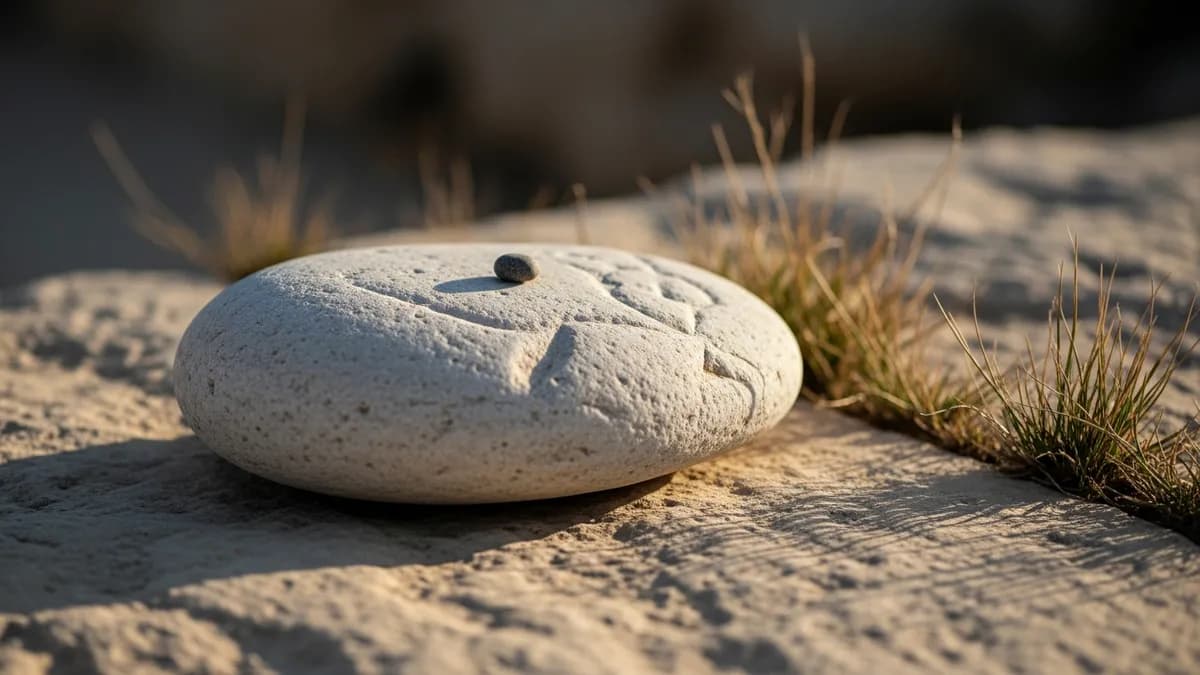
Learn why Jews place stones on graves when visiting a cemetery, the origins of this custom, and what it symbolizes about memory and respect for the deceased.
Quick Answer
Jews place stones on graves when visiting to show that someone has come to pay respects and that the deceased is remembered. Unlike flowers that wilt, stones endure — symbolizing permanent memory. The custom may originate from ancient practices of marking and protecting graves with stones.
Why Do Orthodox Jews Put Rocks on Graves?
If you've ever walked through a Jewish cemetery, you've seen them — small stones placed on top of headstones. Not flowers, not wreaths, but simple rocks. It's one of the most distinctive Jewish burial customs, and virtually every Jew, regardless of denomination, does it.
The direct answer: placing a stone on a grave is a way of showing that someone visited, that the deceased is remembered. Stones are permanent — unlike flowers that wilt and die, a stone endures, symbolizing that memory and love don't fade with time.
Where Did This Custom Come From?
The exact origin is debated, but several explanations are commonly offered:
Ancient Grave Markers
In ancient Israel, graves were sometimes marked with piles of stones (gal). Before headstones were common, stones placed on a burial site served a practical purpose — they marked the location and kept animals from disturbing the grave. Visitors adding stones reinforced the marker over time.
Spiritual Protection
Some sources suggest that placing a stone creates a spiritual boundary around the grave, providing honor and protection for the deceased. The Hebrew word for "stone" (even) contains the letters of av (father) and ben (son), hinting at a connection between generations.
A Record of Visits
Perhaps the most emotionally resonant explanation: the stones accumulate as a visible record that people came. A grave covered in small stones tells a story — this person was loved, this person is remembered, people make the effort to come here.
Flowers, beautiful as they are, disappear within a week. Stones last. And there's something deeply Jewish about choosing the permanent over the temporary when it comes to memory.
Why Not Flowers?
Jews generally don't bring flowers to graves, though this varies somewhat by community. Several reasons:
- Permanence vs. impermanence: As noted, stones endure while flowers don't. Jewish memory is meant to be lasting.
- Chukas hagoyim: Some authorities view flowers at graves as a non-Jewish custom that Jews should avoid, maintaining distinctiveness in mourning practices.
- Simplicity: Jewish burial customs emphasize equality in death — everyone gets a simple burial, a plain shroud, and — where caskets are used — a plain wooden one (in Israel, traditional burial is often without a casket at all). Stones align with this simplicity more than elaborate floral arrangements.
- Practicality: Flowers need water and maintenance. Stones just sit there, quietly testifying that someone cared enough to come.
That said, in some Sephardic communities and among some Modern Orthodox Jews, flowers at graves aren't uncommon. Custom varies.
How Is It Done?
There's no elaborate ritual. When you visit a grave, you pick up a small stone — from the ground, from a path, from wherever — and place it on top of the headstone. Some people place it gently, some say a few words, some recite a psalm.
There's no specific prayer required, no blessing to say over the stone. It's one of those beautifully simple Jewish practices that doesn't need a lot of ceremony to carry deep meaning.
The stones people choose are usually small and unassuming — pebbles, really. You're not hauling a boulder to the cemetery. Just a small rock that says "I was here. I remember."
When Do Jews Visit Graves?
Jewish custom encourages visiting the graves of loved ones at specific times:
- Yahrzeit: The anniversary of the death, calculated by the Hebrew calendar
- Before the High Holidays: Many people visit family graves in the month of Elul, before Rosh Hashanah and Yom Kippur
- End of shiva or shloshim: After the initial mourning periods
- Any time of need: When you want to feel close to someone, pray near a righteous person's grave, or simply remember
There are also times when visiting graves is discouraged — during certain holidays, on Shabbat, or too frequently in a way that interferes with moving forward in life. Judaism values honoring the dead but also living fully.
The Emotional Weight
I visit my grandfather's grave a few times a year. Every time, I notice the stones already there — placed by my parents, my aunts, cousins I may not have seen in months. There's something indescribably comforting about seeing those stones. They tell me that I'm not the only one who remembers, that he matters to all of us, that love doesn't end at the cemetery gate.
When I place my own stone, I always pause for a moment. I think about what I'd tell him if I could. Sometimes I say it out loud. The stone stays long after I leave, holding my place until I come back.
A Universal Practice
Placing stones on graves is one of those Jewish customs that has crossed every boundary — Ashkenazi and Sephardi, Chassidish and Modern, religious and secular. Even Jews who rarely set foot in a synagogue will place a stone on a grave. It's become a cultural touchstone, depicted in movies like Schindler's List and familiar to people well beyond the Jewish community.
Its universality speaks to its simplicity and power. No special knowledge required, no prayers to memorize, no equipment to bring. Just a stone, a grave, and a person who remembers.
Want to learn more? Read our full guide to Jewish funerals and mourning or explore Orthodox Judaism.
Common Questions
Why rocks instead of flowers? Flowers wilt and die — rocks endure. Placing a stone says 'I was here, I remembered you' in a permanent way. It also fulfills a mitzvah of honoring the dead without the impermanence (and non-Jewish association) of cut flowers.
Is this a religious requirement? It is a deeply ingrained custom rather than a strict halachic obligation. The practice is universal across Jewish communities — Ashkenazi, Sephardic, Orthodox, secular. Its origins are ancient and the meaning resonates across all levels of observance.
What kind of rocks should you place? Any small stone from the ground is appropriate. There is no requirement for a specific type, size, or shape. Simply pick up a pebble from the path and place it on top of the headstone.
I'm an Orthodox Jewish woman from Brooklyn. I can't speak for every Orthodox Jew — when I write outside my experience, I say so.
Jewish Funeral & Mourning Customs: What to Expect
What is Orthodox Judaism? A Complete Guide
Jewish Wedding Traditions: A Guide to the Orthodox Ceremony
My Arranged Marriage: A Hasidic Jew's Experience
Attending one of these in real life?
Weddings, bar mitzvahs, and other Jewish life events often include non-Jewish guests. If you want practical guest etiquette, ask.
The Orthodox Insider
A new letter every Thursday, before Shabbos — plus an instant download of “10 Things Everyone Gets Wrong About Orthodox Jews” when you subscribe.
No spam, unsubscribe anytime.