Why Do Orthodox Jews Wear Hats?
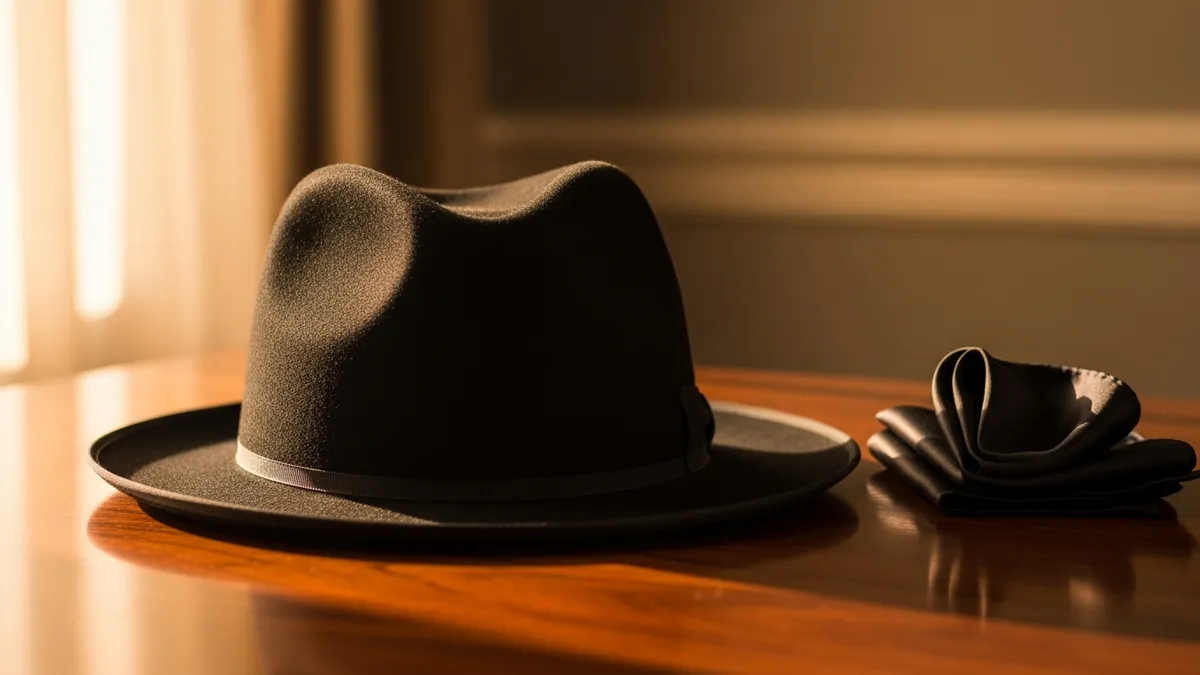
Learn why Orthodox Jewish men wear hats, the different types and their meanings, and how headcovering reflects Jewish values of reverence and identity.
Quick Answer
Orthodox Jewish men wear hats as a sign of reverence for G-d, a reminder of His constant presence above, and as a marker of Jewish identity. The basic requirement is covering the head (with a kippah/yarmulke), while the additional hat reflects community custom and added piety.
Why Do Orthodox Jews Wear Hats?
If you've noticed Orthodox Jewish men wearing distinctive hats — black fedoras, fur shtreimels, or other headcoverings — you're seeing a visible expression of Jewish values that goes back centuries.
The direct answer: Jewish men cover their heads as a sign of reverence for G-d and awareness of the divine presence above them. The basic obligation is fulfilled with a kippah (yarmulke), but many Orthodox men wear an additional hat, especially during prayer and formal occasions, reflecting their community's customs and an added level of piety.
The Kippah: The Foundation
Every Orthodox Jewish male wears a kippah — the small skullcap also called a yarmulke. The Talmud (Shabbos 156b) records that a mother was told her son would become a thief unless he kept his head covered to maintain awareness of G-d above him. While the Talmud presents this as a pious practice (midas chassidus), it has become universally binding in Orthodox communities.
The kippah itself can signal a lot about the wearer:
- Black velvet kippah: Usually indicates Yeshivish/Litvish affiliation
- Knitted/crocheted kippah (kippah serugah): Typically Modern Orthodox or Religious Zionist
- Large white knitted kippah: Often the Na Nach branch of Breslov Chassidim (one specific subgroup, not Breslov as a whole)
- Black velvet or knitted kippah: Many Sephardic men wear a small black kippah with no single distinctive style — kippah style alone doesn't reliably signal Sephardic affiliation
The Hat: Beyond the Basics
Many Orthodox men wear a hat over their kippah, particularly during prayer. This reflects the practice noted in the Mishnah Berurah (Orach Chaim 91) of praying with a hat over the kippah — a double head covering as a sign of additional reverence. In Yeshivish communities, the black fedora has become standard — virtually a uniform.
The hat signals maturity and seriousness. Yeshiva students typically begin wearing a hat around bar mitzvah age or when they enter a higher-level yeshiva. Getting your first hat is something of a milestone.
Chassidic Hats: A Whole World
Chassidic headwear is where things get really interesting:
- Shtreimel: The iconic round fur hat worn by many Chassidic men on Shabbos, holidays, and special occasions. A genuine shtreimel made from sable or mink tails can cost $1,000 to $6,000. Different Chassidic groups have slightly different shtreimel styles.
- Spodik: A taller, cylindrical fur hat worn by Ger Chassidim and a few other groups. It's visually distinct from the wider, flatter shtreimel.
- Kolpik: Similar to a shtreimel but typically worn by unmarried sons of rebbes or by chassidim on certain occasions.
- Biber hat (beaver hat): Worn weekdays by some Chassidic groups, this is a flat, wide-brimmed hat made from beaver felt.
- Hoiche hat: A tall, rounded hat worn by some Chassidim during the week.
Each style identifies the wearer's Chassidic affiliation as clearly as a jersey identifies a sports team. Someone knowledgeable can look at a hat and know whether the wearer is Satmar, Belz, Breslov, Chabad, or another group.
Why Does It Matter So Much?
Jewish tradition teaches that the way we dress affects our inner state. Covering the head isn't merely a symbol — it actively cultivates humility and G-d-consciousness. The Talmud says a person shouldn't walk four cubits (about six feet) without a head covering.
There's also a communal dimension. The hat identifies you as part of a community, signals your values, and creates a sense of belonging. In a world that often pressures conformity to secular norms, wearing a distinctive hat is a quiet act of countercultural commitment.
Practical Realities
Orthodox men wear their kippot all the time — sleeping, showering, everything (some remove them for showering, others don't). Hats are worn during prayer, formal occasions, and when going out in public. At home, many men are kippah-only.
Wind is the mortal enemy of the kippah. Every Orthodox man has a story about chasing his yarmulke down the street. Clips, bobby pins, and special velcro strips are all deployed in the ongoing battle against gravity and weather.
My husband once lost his kippah to a gust of wind on the Brooklyn Bridge. A tourist caught it and handed it back with a bewildered expression. "Is this yours?" It was a beautiful cross-cultural moment.
A Visible Jewish Identity
In an era when many religious practices are invisible, the Jewish hat is boldly public. It says: I am Jewish, I am proud, and I carry my identity wherever I go. That visibility comes with risks — anti-Semitic incidents sometimes target visibly Jewish men precisely because of their headcovering. Yet the community overwhelmingly continues the practice, viewing it as a non-negotiable expression of faith.
Want to learn more? Explore our guide to Orthodox Jewish clothing or read about Chassidic clothing by sect.
Common Questions
Do all Orthodox men wear hats? No. Modern Orthodox men typically wear only a kippah. Black hats (fedora-style) are worn by Yeshivish men. Hasidic men wear various hat styles depending on their sect — fur hats (shtreimels), tall hats, round hats.
Why specifically black? The black color represents formality, humility, and non-competition over fashion. The hat adds dignity — similar to how professionals historically wore hats as a sign of respectability.
When do they wear the hat? The regular black hat is worn daily — to work, to synagogue, running errands. The shtreimel (fur hat) is only worn on Shabbat, holidays, and at weddings by married Hasidic men.
I'm an Orthodox Jewish woman from Brooklyn. I can't speak for every Orthodox Jew — when I write outside my experience, I say so.
Orthodox Jewish Clothing — Why They Dress That Way
Hasidic Clothing by Sect: A Visual Guide
Modest Fashion: A Complete Guide to Tznius Style
Why Do Jews Wear Yarmulkes? The Kippah, Explained
There's more where this came from.
Orthodox Jewish dress touches on modesty, community identity, and religious law. The full tour covers it all.
The Orthodox Insider
A new letter every Thursday, before Shabbos — plus an instant download of “10 Things Everyone Gets Wrong About Orthodox Jews” when you subscribe.
No spam, unsubscribe anytime.