Yom Kippur — The Holiest Day of the Jewish Year
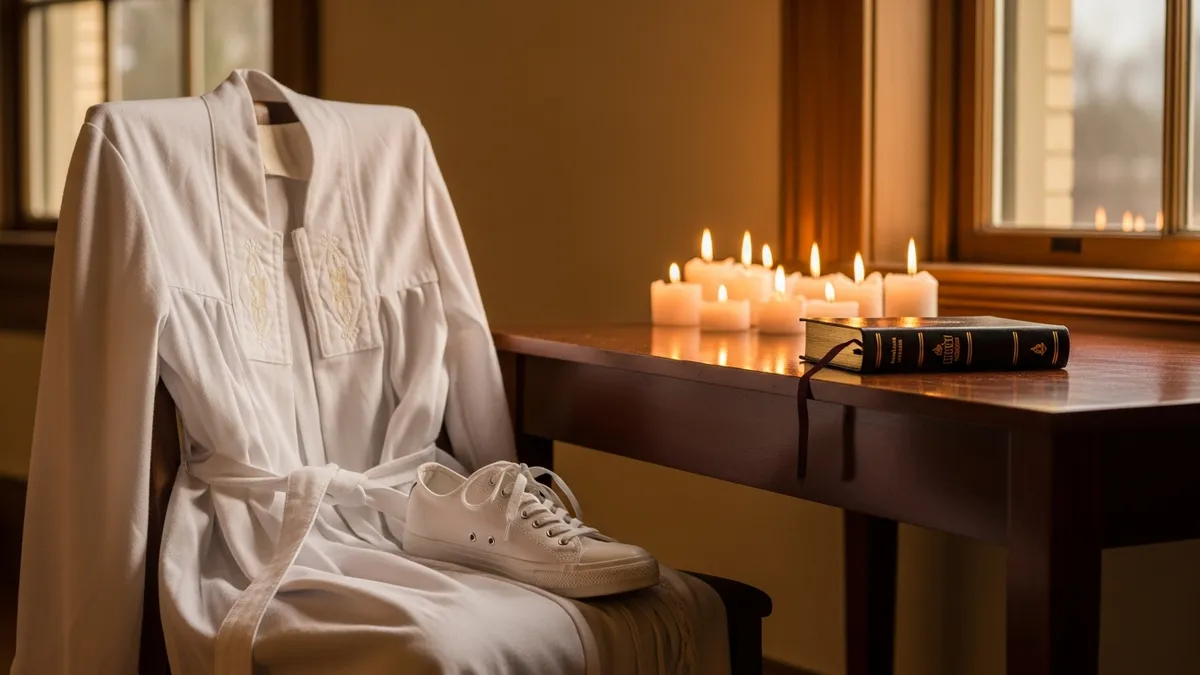
Yom Kippur is the holiest day in Judaism: a 25-hour fast, Kol Nidrei, five prayer services, and standing before G-d to ask for another year.
Quick Answer
Yom Kippur is a 25-hour fast (no food, water, leather shoes, bathing, or cosmetics) from sunset to nightfall. Five prayer services fill the day. The evening service opens with Kol Nidrei — one of the most haunting melodies in Jewish liturgy. The day ends with a single long blast of the shofar. It is the day Jews believe G-d seals their fate for the coming year.
Yom Kippur is the only day of the year when the synagogue is completely full. People who never attend services the rest of the year are there. The parking lot overflows. The room is silent in a way it never is on a regular Shabbat. In Jerusalem the day reaches another level — whole neighborhoods go car-free and on foot, the streets given over to people walking to shul in white — which is part of why the Yamim Noraim are one of the most sought-after times to be in Jerusalem for the High Holidays.
It is the Day of Atonement — the holiest day on the Jewish calendar. For 25 hours, we fast, pray, and ask G-d to inscribe us in the Book of Life for another year. No food. No water. No distractions. Just standing before G-d with nothing between you and the question: who am I, and who do I want to be?
The Fast
The fast begins at sunset on the eve of Yom Kippur (the 9th of Tishrei) and ends at nightfall the following day (the 10th of Tishrei) — approximately 25 hours total.
What is forbidden:
- Eating and drinking (nothing, not even water)
- Bathing or washing for pleasure
- Wearing leather shoes (many wear canvas or rubber sneakers)
- Applying cosmetics, lotions, or creams
- Marital relations
Who is exempt: Children under bar/bat mitzvah age, pregnant women who feel unwell, people with medical conditions where fasting is dangerous. Jewish law requires preserving life above all else — a doctor's instruction to eat or drink overrides the fast.
Before Yom Kippur
The day before is surprisingly festive. We eat a large, elaborate pre-fast meal (seudah hamafseket) before sunset. There is a custom to ask forgiveness from anyone you may have wronged during the year — because Yom Kippur atones for sins between humans and G-d, but sins between people require the other person's forgiveness first.
Parents bless their children. Candles are lit (including a special yahrzeit candle for deceased parents). Many wear white — symbolizing purity and the kittel (white robe) in which we will eventually be buried.
The Five Services
Yom Kippur is the only day with five prayer services:
1. Kol Nidrei (evening) — The opening service. Not technically a prayer but a legal formula annulling vows. The melody is the most recognizable in all of Jewish music — haunting, ancient, and deeply emotional. The Torah scrolls are removed from the ark and held by community members while the cantor chants. Many people cry.
2. Shacharit (morning) — The morning service, longer than usual, with special liturgical poems (piyyutim) and confessional prayers. The Torah reading describes the High Priest's Yom Kippur service in the ancient Temple.
3. Musaf (additional) — Includes the Avodah — a dramatic retelling of the High Priest entering the Holy of Holies, the only person to enter the only room, on the only day of the year. The congregation prostrates fully on the floor during this section.
4. Mincha (afternoon) — The Torah reading is the Book of Jonah — the prophet who tried to run from G-d and learned that you cannot. The message: repentance is always possible, even at the last moment.
5. Neilah (closing) — The final service, recited as the sun sets. The name means "locking" — the gates of heaven are closing. The prayers become increasingly urgent. The ark remains open for the entire service. At the very end, the congregation declares the Shema together, followed by a single, long blast of the shofar.
Then it is over. We break the fast — usually with something light (a piece of cake and juice) before a full meal. And immediately, the most optimistic families begin building their sukkah for the holiday five days later.
What It Feels Like From Inside
Yom Kippur is not grim. It is intense — but in the way a marathon is intense, not in the way a funeral is intense. There is a clarity that comes from fasting and praying for an entire day. By Neilah, with the sun going down and the shofar about to sound, the feeling in the room is not dread. It is hope.
The core belief is that G-d wants to forgive. Yom Kippur is not a day of punishment — it is a day of opportunity. The gates are open. The question is whether we walk through them.
I'm an Orthodox Jewish woman from Brooklyn. I can't speak for every Orthodox Jew — when I write outside my experience, I say so.
Rosh Hashanah: The Jewish New Year Explained
Jewish Holidays: The Complete Jewish Calendar Guide
Jewish Prayer: How Jews Pray, Three Times Every Day
What Is Teshuvah? The Jewish Path of Repentance
Want to experience a Jewish holiday yourself?
Virtual Seders, Rosh Hashanah dinners, and Chanukah candle-lightings are open to non-Jewish guests.
The Orthodox Insider
A new letter every Thursday, before Shabbos — plus an instant download of “10 Things Everyone Gets Wrong About Orthodox Jews” when you subscribe.
No spam, unsubscribe anytime.