Rosh Hashanah: The Jewish New Year Explained
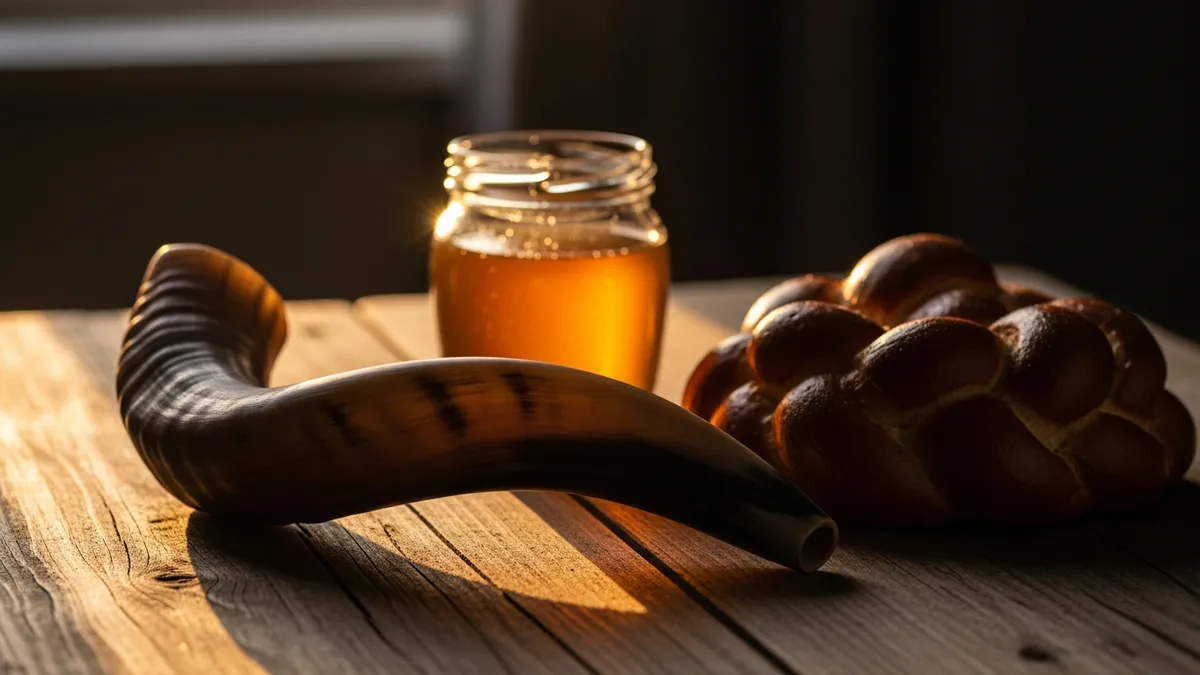
Everything you need to know about Rosh Hashanah — the Jewish New Year, its meaning, customs, prayers, foods, and how Orthodox Jews observe it.
Quick Answer
Rosh Hashanah is the Jewish New Year, celebrated on the first two days of the Hebrew month Tishrei (September/October). It marks the anniversary of the creation of humanity and the beginning of the Ten Days of Repentance. Key customs include blowing the shofar, eating symbolic foods like apples and honey, and extended synagogue prayers.
Rosh Hashanah is nothing like January 1st. There are no fireworks, no champagne toasts, no ball drops. Instead, there is the piercing sound of the shofar, the smell of round challah baking in the oven, and a deep, almost overwhelming awareness that G-d is deciding what the coming year will hold for you and everyone you love.
That is what makes Rosh Hashanah both beautiful and intense. It is a celebration — we do eat festive meals, we do wish each other "Shanah Tovah" (a good year), and there is genuine joy. But underneath the sweetness, there is seriousness. This is the Day of Judgment. Rosh Hashanah opens what we call the High Holidays — the most sacred stretch of the Jewish year.
When Is Rosh Hashanah?
Rosh Hashanah falls on 1-2 Tishrei on the Hebrew calendar, which typically corresponds to September or October. In 2026, Rosh Hashanah begins at sundown on Friday, September 11, and is observed on Shabbat and Sunday, September 12-13. In 2027, it begins at sundown on Friday, October 1. It is observed for two days — even in Israel, where most holidays are one day shorter than in the diaspora. The Talmud considers the two days of Rosh Hashanah to be one long day, called "yoma arichta." Jerusalem fills up for the Yamim Noraim — the davening at the city's great shuls draws visitors from around the world, and families who want to be there for it book a hotel for Rosh Hashana in Jerusalem months in advance.
What Does Rosh Hashanah Commemorate?
Rosh Hashanah marks the anniversary of the creation of Adam and Eve — the sixth day of Creation. It is not the birthday of the world itself (that was five days earlier), but the birthday of humanity. This matters because Rosh Hashanah is fundamentally about the relationship between G-d and human beings.
On this day, according to Jewish tradition, G-d sits in judgment over all of creation. Every person's deeds from the past year are reviewed, and the decree for the coming year is written — who will live, who will die, who will have peace, who will suffer. This decree is sealed ten days later, on Yom Kippur. If a day of judgment sounds harsh, it helps to know what Jews believe about G-d and accountability: every deed matters, and the Judge is also a merciful Father who wants us to succeed.
The Shofar
The shofar — a ram's horn — is the defining sound of Rosh Hashanah. Hearing the shofar blown is actually a Torah commandment, the central mitzvah of the day.
The shofar makes three types of sounds:
- Tekiah — one long, straight blast
- Shevarim — three medium, broken blasts
- Teruah — nine short, staccato blasts
Over the course of the Rosh Hashanah service, 100 shofar blasts are sounded. The sound is meant to be a spiritual alarm clock — a call to wake up, examine your life, and return to G-d. The Rambam (Maimonides) writes that the shofar says: "Wake up, you sleepers, from your sleep!"
I will tell you, no matter how many times I hear the shofar, it still gets to me. There is something primal about that sound. Babies cry. Adults get chills. It cuts through everything.
The Prayers
Rosh Hashanah services are long — significantly longer than a regular Shabbat. The Musaf (additional) service alone can take two hours or more. The prayers focus on three themes:
Malchuyot (Kingship): Declaring G-d as King over the entire world. We accept His sovereignty and His right to judge us.
Zichronot (Remembrance): G-d remembers all of our deeds — the good and the bad. Nothing is forgotten. But this section also emphasizes G-d's mercy and His desire to remember us favorably.
Shofarot (Shofar blasts): Connecting the shofar to its biblical and historical significance — from the giving of the Torah at Sinai (which was accompanied by a shofar blast) to the future shofar that will herald the final redemption.
One of the most powerful prayers is Unesaneh Tokef — "Let us tell of the holiness of this day." It describes G-d opening the Book of Life and reading every person's record. "Who will live and who will die. Who by fire and who by water." It is chilling. The entire synagogue stands in silence.
Rosh Hashanah Foods
The festive meals on Rosh Hashanah are loaded with symbolism. We do not just eat — every food is a prayer for the coming year.
Apples dipped in honey — for a sweet new year. This is probably the most well-known Rosh Hashanah custom. We say a special prayer: "May it be Your will to renew for us a good and sweet year."
Round challah — instead of the braided challah we eat every Shabbat, Rosh Hashanah challah is round, symbolizing the cycle of the year and the crown of G-d's kingship. Many people also dip the challah in honey on Rosh Hashanah — in addition to the usual salt — for a sweet year.
Pomegranate — "May our merits be as plentiful as the seeds of a pomegranate." (Tradition says a pomegranate has 613 seeds, corresponding to the 613 commandments.)
Fish head — "May we be at the head and not the tail." (Not everyone does this one. I will be honest — it sits on the table, someone eats it, and that someone is usually my father-in-law.)
Dates, black-eyed peas, leeks, beets, gourds — each has a Hebrew name that sounds like a word for blessing, increase, or the removal of enemies. Sephardic families often have an elaborate seder of these symbolic foods.
Tashlich
On the first afternoon of Rosh Hashanah (or the second, if the first day falls on Shabbat), there is a beautiful custom called Tashlich. We walk to a body of water — a river, lake, ocean, or even a pond — and recite prayers while symbolically casting our sins into the water. The practice comes from the verse in Micah: "You will cast all their sins into the depths of the sea."
In Brooklyn, you should see the scene — thousands of people walking to the nearest body of water, the sidewalks completely packed. It is one of those moments where you feel the collective weight of a community standing before G-d together.
Greeting and Customs
The standard greeting before Rosh Hashanah is "Shanah Tovah u'Metukah" — a good and sweet year. Many people also say "L'shanah tovah tikateivu v'tichateimu" — may you be written and sealed for a good year.
In the weeks before Rosh Hashanah, Ashkenazi Jews recite Selichot (penitential prayers) — starting from the Saturday night before Rosh Hashanah (or the previous week if Rosh Hashanah falls early in the week). Sephardic Jews begin Selichot an entire month before, from the beginning of Elul.
The month of Elul leading up to Rosh Hashanah is itself a period of spiritual preparation — the season of teshuvah (returning to G-d). The shofar is blown every weekday morning during Elul (except the morning before Rosh Hashanah, to separate the custom from the holiday's mitzvah). People take on extra Torah study, give more charity, and focus on repairing relationships. There is a custom to ask forgiveness from anyone you may have wronged — because Yom Kippur atones for sins between a person and G-d, but sins between people can only be forgiven by the person who was hurt. (Our Yom Kippur guide walks through the day itself.)
The Mood
Rosh Hashanah has a unique emotional texture. It is not somber like Yom Kippur or joyful like Purim. It is both at once. You are standing before the King of Kings, aware that your life literally hangs in the balance — and at the same time, you are eating a beautiful meal with your family, tasting the sweetness of honey, and hoping for the best.
My kids always ask me, "Is Rosh Hashanah a happy holiday or a scary holiday?" And the truest answer I can give is: it is both. And somehow, that combination is what makes it so powerful.
What Does "Rosh Hashanah" Mean?
Rosh Hashanah (ראש השנה) literally means "head of the year" — the Jewish New Year. But the name undersells the day: the Torah calls it Yom Teruah, "the day of the shofar blast," and the liturgy calls it Yom HaDin, "the day of judgment," when tradition holds that every person's coming year is weighed. So the Rosh Hashanah meaning in practice is less "party" and more "annual court date you attend with your family, followed by a festive meal with apples and honey for a sweet verdict."
Common Questions
What do you eat on Rosh Hashanah? Traditional foods include apples dipped in honey (for a sweet new year), pomegranates, round challah (symbolizing the cycle of the year), and fish head (symbolizing being 'the head and not the tail'). The meals are festive and elaborate.
When is Rosh Hashanah 2026? Rosh Hashanah 2026 begins at sundown on Friday, September 11, and continues through nightfall on Sunday, September 13. The two days fall on Shabbat and Sunday. Because the shofar is not blown on Shabbat, in 2026 it is heard on the second day of the holiday.
Can you work on Rosh Hashanah? No. Rosh Hashanah is a full Yom Tov with the same work restrictions as Shabbat. Orthodox Jews do not work, drive, or use electronics for the two days of the holiday.
What is the shofar? The shofar is a ram's horn blown during Rosh Hashanah synagogue services. It produces a haunting, primal sound meant to awaken the soul to repentance. One hundred blasts are sounded on each day the shofar is blown — which is both days of the holiday, unless a day falls on Shabbat, when the shofar rests.
How long is Rosh Hashanah? Two days — from sunset on the first evening through nightfall two days later. The synagogue services are the longest of the year, often lasting 4-5 hours each morning.
I'm an Orthodox Jewish woman from Brooklyn. I can't speak for every Orthodox Jew — when I write outside my experience, I say so.
Jewish Holidays: The Complete Jewish Calendar Guide
Yom Kippur: The Holiest Day of the Year
Shabbat — The Jewish Day of Rest Explained
The Jewish High Holidays: Rosh Hashanah & Yom Kippur
Want to experience a Jewish holiday yourself?
Virtual Seders, Rosh Hashanah dinners, and Chanukah candle-lightings are open to non-Jewish guests.
The Orthodox Insider
A new letter every Thursday, before Shabbos — plus an instant download of “10 Things Everyone Gets Wrong About Orthodox Jews” when you subscribe.
No spam, unsubscribe anytime.