Can Non-Jews Attend a Synagogue Service?
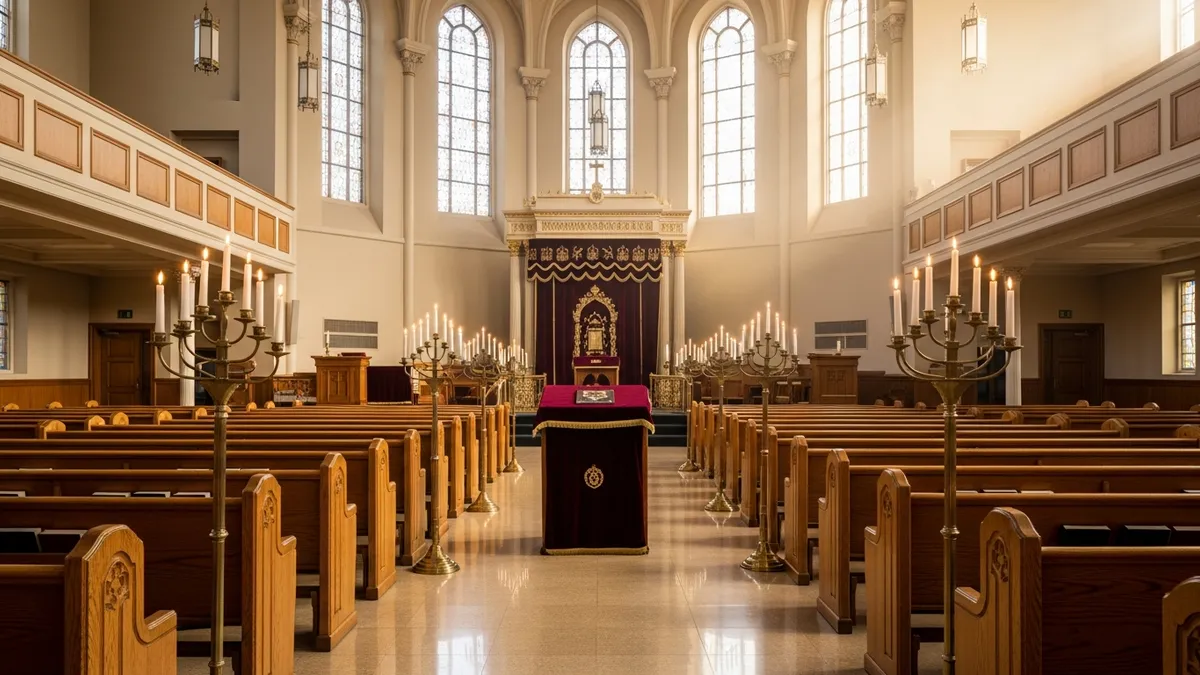
Yes, you can visit an Orthodox synagogue as a non-Jew. Here's what to expect, what to wear, and how to avoid the three most common mistakes visitors make.
Quick Answer
Yes. Orthodox synagogues welcome respectful visitors. Dress modestly (men: long pants and a shirt; women: skirt below the knee, sleeves to the elbow). Men will be given a kippah at the door. The service is mostly in Hebrew. You do not need to pray, sing, or know anything — sit quietly, stand when others stand, and follow along as best you can.
Short answer: yes. Longer answer: yes, and you will probably be invited to lunch afterward.
Orthodox synagogues are not members-only clubs. If you walk in respectfully dressed and behave respectfully, you are welcome. Nobody will check your religion at the door. Nobody will quiz you. You will almost certainly be greeted warmly — Orthodox communities value guests, and a new face is noticed (and appreciated).
Before You Go
Which Synagogue
There are different types of Orthodox synagogues:
- Modern Orthodox — English is common, the rabbi gives a sermon you will understand, the pace is moderate
- Yeshivish/Litvish — faster Hebrew prayers, less English, more intense
- Hasidic — entirely in Hebrew/Yiddish, very fast, communal singing and dancing
- Sephardic/Mizrahi — a wide range of traditions (Syrian, Moroccan, Persian, Iraqi, Spanish-Portuguese, and more), each with its own melodies, pronunciation, and customs
For a first visit, a Modern Orthodox synagogue will be the most accessible. The service includes English explanations, and the rabbi's sermon is designed for a mixed audience.
When to Go
Shabbat morning (Saturday) is the main service and the best time to visit. It typically runs from 9:00 AM to noon. Arrive on time or slightly late — the first 30 minutes are preliminary prayers, and the main service begins after that.
Do not drive into the parking lot on Saturday — walk from a nearby parking spot if possible. It is not required of you, but it is courteous.
What to Wear
Men: Long pants, collared shirt, closed-toe shoes. No shorts, no tank tops. You will be offered a kippah (skullcap) at the entrance — accept it and wear it for the duration of your visit.
Women: Skirt or dress below the knee, sleeves to the elbow, neckline at or above the collarbone. Pants are not worn in most Orthodox synagogues. If you only own pants, come anyway — someone may offer you a wrap skirt.
During the Service
Where to Sit
Men and women sit separately (see mechitza). The usher or someone near the door will point you to the right section. If there is no usher, follow the flow.
What to Do
- Stand when everyone stands, sit when everyone sit. That is the entire instruction.
- You do not need to pray, sing, or read along
- A prayer book (siddur) may be offered to you — the English translation is on the left page, Hebrew on the right
- The Torah will be taken out of the ark and read aloud. Stand when it is carried past you.
The Three Most Common Mistakes
- Using your phone. Put it away before you enter. Do not check it. Do not take photos.
- Extending a handshake to the opposite gender. In Orthodox settings, many men and women do not shake hands with each other. Greet verbally: "Good Shabbos" or "Shabbat Shalom."
- Leaving during the Torah reading. If you need to leave early, slip out between sections — not during the actual reading when everyone is listening.
What You Will Experience
The service alternates between communal prayer (everyone reading together, sometimes at their own pace), the cantor leading responsively, the Torah reading (chanted from a scroll), and the rabbi's sermon. In a Modern Orthodox shul, the sermon is in English and often addresses current events, ethics, or the weekly Torah portion.
There may be singing — especially during Kabbalat Shabbat (Friday night) or at the end of the morning service. The melodies range from contemplative to joyful. You do not need to sing. But if you feel moved to hum along, no one will stop you.
After the Service
The Kiddush
After the service, most synagogues host a kiddush — a light spread of food and drinks in the social hall. Someone makes a blessing over wine, then everyone eats. This is the social hub: people mingle, catch up, introduce visitors.
Go to the kiddush. This is where you will actually meet people. Grab a plate, find someone who looks approachable, and introduce yourself. "Hi, I'm visiting — this is my first time at a synagogue" is all you need to say. You will be welcomed.
The Lunch Invitation
There is a very high probability that someone will invite you for Shabbat lunch. This is not a sales pitch — it is hospitality. If you accept, see our guide to your first Shabbat dinner (the same etiquette applies to lunch).
One More Thing
You may feel like you do not belong. You may feel self-conscious about not knowing the prayers, not understanding the Hebrew, not knowing when to stand. This feeling is normal and it passes quickly. The people around you are not evaluating your performance. They are praying. And they are glad you came.
I'm an Orthodox Jewish woman from Brooklyn. I can't speak for every Orthodox Jew — when I write outside my experience, I say so.
Jewish Prayer: How Jews Pray, Three Times Every Day
What Is a Synagogue? Purpose, Layout & Services
Your First Shabbat Dinner — What to Expect as a Guest
What Is a Mechitza? Separating Men and Women in Synagogue
Want to understand the whole picture?
The guided tour walks you through 8 topics — prayer fits into a larger rhythm of Orthodox life.
The Orthodox Insider
A new letter every Thursday, before Shabbos — plus an instant download of “10 Things Everyone Gets Wrong About Orthodox Jews” when you subscribe.
No spam, unsubscribe anytime.