Do Orthodox Jews Celebrate Christmas?
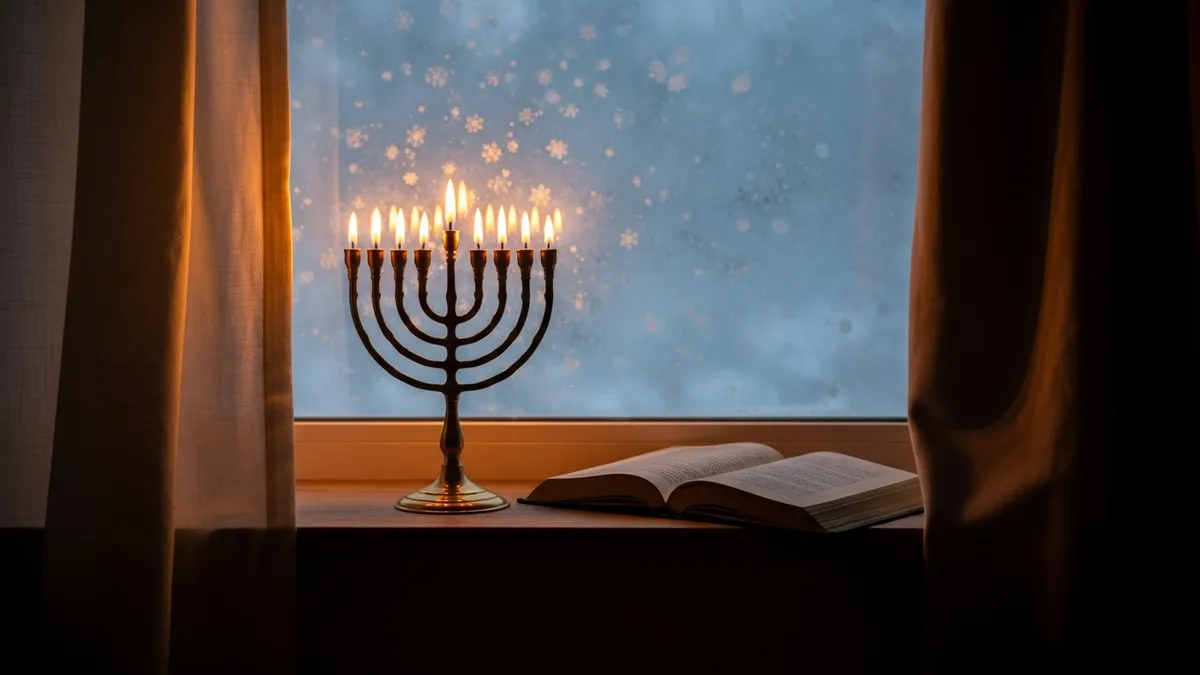
Find out why Orthodox Jews don't celebrate Christmas, what they do during the holiday season, and how Jewish families navigate December in America.
Quick Answer
No, Orthodox Jews do not celebrate Christmas. It's a Christian holiday celebrating the birth of Jesus, who holds no religious significance in Judaism. Jewish families have their own winter holiday — Chanukah — though it's a relatively minor holiday that coincidentally falls near Christmas.
Do Orthodox Jews Celebrate Christmas?
Nope. Orthodox Jews don't celebrate Christmas — not even a secular version of it. No tree, no stockings, no Santa, no gift exchange on December 25th.
The reason is simple: Christmas celebrates the birth of Jesus, who is the central figure of Christianity, not Judaism. Since Jews don't believe Jesus was the Messiah or divine, celebrating his birthday would be religiously inconsistent at best and a violation of Jewish law at worst.
What About "Secular" Christmas?
Some non-Orthodox Jews participate in Christmas as a cultural or secular American tradition — exchanging gifts, having a tree, attending parties. In Orthodox communities, this doesn't happen. Even the "secular" elements of Christmas are seen as rooted in a religious celebration that isn't ours.
This isn't about being unfriendly or anti-Christmas. It's about maintaining clear religious identity. Judaism has its own rich calendar of holidays with their own traditions, foods, songs, and celebrations. We're not lacking for things to celebrate.
What About Chanukah?
Chanukah usually falls around the same time as Christmas (it follows the Hebrew calendar, so the exact dates vary). While it's natural to compare the two, they're very different holidays:
- Chanukah commemorates the rededication of the Holy Temple after the Maccabees defeated the Greek-Syrian empire, and the miracle of oil lasting eight days
- Christmas celebrates the birth of Jesus
In terms of religious significance, Chanukah is actually a relatively minor holiday in Judaism. There are no prohibitions on work, no elaborate synagogue services. The main observances are lighting the menorah, eating foods fried in oil (latkes, sufganiyot/doughnuts), and giving small gifts to children — though the gift-giving has expanded in recent decades, likely influenced by proximity to the Christmas season.
Orthodox families celebrate Chanukah warmly but don't try to make it into a "Jewish Christmas." It's its own thing with its own meaning.
The December Dilemma
Living in America during December can feel a bit like being a vegetarian at a barbecue — the whole culture is oriented around something that isn't for you. Christmas music plays everywhere, decorations fill every store, and well-meaning people wish you "Merry Christmas" regularly.
Most Orthodox Jews handle this graciously. We smile, say "thank you" or "happy holidays," and go about our business. It's not offensive — it's just not our holiday.
For children, December can be trickier. When classmates are buzzing about Santa and presents, Jewish kids sometimes feel left out. Most Orthodox parents address this directly: "We have our own beautiful holidays. Chanukah is special in its own way. Not everyone celebrates the same things, and that's okay."
My kids came home from school once asking why we don't have a Christmas tree. I told them we have a sukkah, a menorah, a Seder table, and a whole calendar full of celebrations. "We're not missing anything," I said. They seemed satisfied. Until the neighbor's inflatable Santa went up, but that's another story.
What Do Orthodox Jews Do on December 25th?
Since Christmas is a legal holiday in the United States and most businesses are closed, December 25th becomes a day off for many Orthodox Jews. Traditional activities include:
- Going to the movies — this has become such a common Jewish tradition that it's practically a cliche
- Chinese food — Chinese restaurants are often among the few open on Christmas, and eating Chinese food on December 25th has become a beloved American Jewish tradition. In Orthodox communities that means a kosher Chinese restaurant, naturally
- Learning Torah — some communities organize special study sessions
- Family time — enjoying a day off without the usual school and work obligations
There's a custom called Nittel Nacht, still kept seriously in many Chassidic communities today — on the night the surrounding culture marks Jesus's birth, the men refrain from learning Torah and instead pass the time with chess, cards, or other diversions. The reasons given range from not wanting to add spiritual merit to that particular night, to the simple historical reality that Jews were often unsafe outdoors then. The date varies by community: most keep the night of December 24th, but families of Russian or Eastern-European origin often observe it in early January, following the Eastern Orthodox Christmas.
Respect Without Participation
Orthodox Jews generally respect Christmas as a meaningful holiday for their Christian neighbors while being clear that it's not a Jewish celebration. This balance — respectful but distinct — characterizes the Orthodox approach to living in a predominantly non-Jewish society.
Good fences make good neighbors, and clear religious boundaries actually facilitate better interfaith relationships. When everyone knows where they stand, interactions are more authentic.
Want to learn more? Read about Jewish holidays or explore what Orthodox Judaism is.
Common Questions
What do Orthodox Jews do on December 25th? For many Orthodox Jews in America, it is a regular day off from work. Some families go to movies, eat at restaurants (kosher Chinese food on Christmas is an American Jewish tradition), or take day trips. It is not observed as a religious occasion.
Can Orthodox Jews have a Christmas tree? No — Christmas is a Christian holiday and Orthodox Jews do not observe it. Having a tree or Christmas decorations would be considered inappropriate in an Orthodox home.
Do Orthodox Jewish kids feel left out during Christmas? Chanukah often overlaps with the Christmas season, so children do receive gifts and celebrate during this time. But the focus is on Chanukah's own meaning — not on competing with Christmas.
Do Jews believe in Christmas? No. Christmas celebrates the birth of Jesus, a belief Judaism does not share, so it is simply not a Jewish holiday — there is nothing in it for Jews to "believe in." Jewish December has Chanukah, which commemorates the rededication of the Temple and is entirely unrelated to Christmas.
I'm an Orthodox Jewish woman from Brooklyn. I can't speak for every Orthodox Jew — when I write outside my experience, I say so.
Want to experience a Jewish holiday yourself?
Virtual Seders, Rosh Hashanah dinners, and Chanukah candle-lightings are open to non-Jewish guests.
The Orthodox Insider
A new letter every Thursday, before Shabbos — plus an instant download of “10 Things Everyone Gets Wrong About Orthodox Jews” when you subscribe.
No spam, unsubscribe anytime.