Do Orthodox Jews Celebrate Thanksgiving?
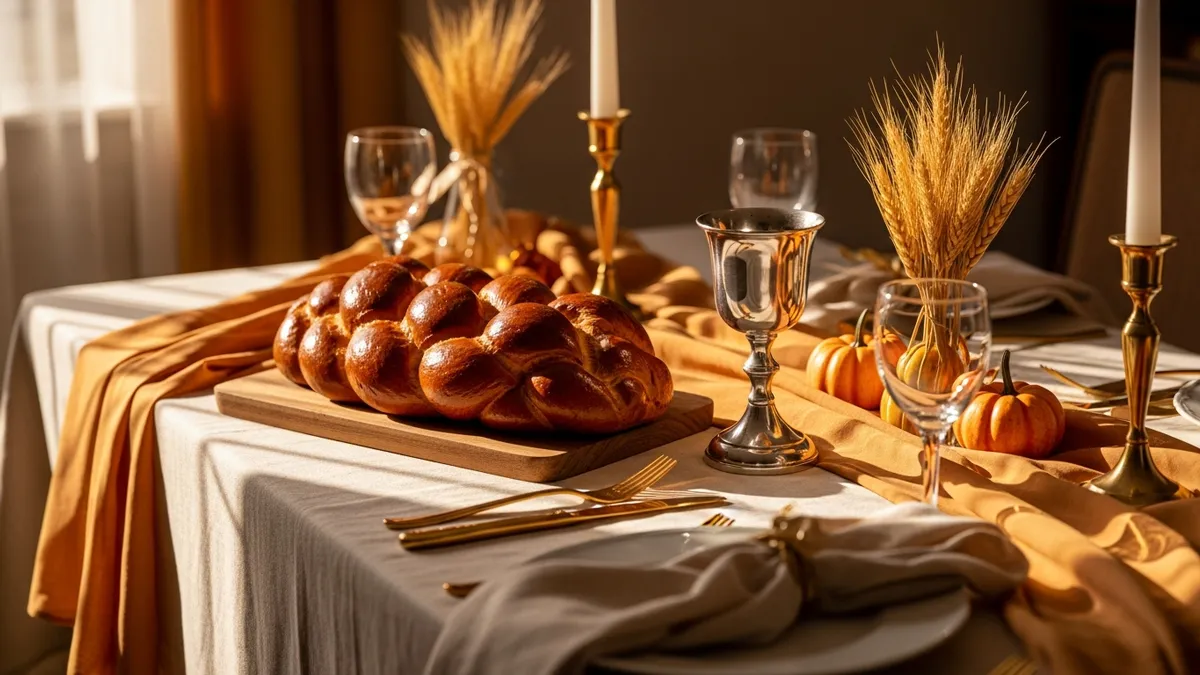
Do Orthodox Jews celebrate Thanksgiving? Most do! Learn about the halachic debate, how observant families celebrate, and why turkey is definitely kosher.
Quick Answer
Most Orthodox Jews celebrate Thanksgiving as a secular American holiday. Since it is not a religious holiday of another faith, most halachic authorities permit it. Some Hasidic groups avoid it, viewing it as a non-Jewish custom. Turkey is kosher, so the traditional meal fits right in with Jewish dietary laws.
Do Orthodox Jews Celebrate Thanksgiving?
The short answer: most of us do, and we do it with enthusiasm.
If you are curious about who Orthodox Jews are and how we navigate American life, Thanksgiving is actually a great case study. It is one of those holidays that fits surprisingly well into Orthodox Jewish life. It is not a religious holiday of another faith (unlike Christmas or Easter), the main tradition involves a big family meal (we are very good at those), and the central food is turkey — which is kosher. It is practically designed for us.
But like everything in the Orthodox world, there is a halachic discussion behind it, and not everyone agrees.
The Halachic Debate
The question of whether Jews should celebrate Thanksgiving touches on a concept in Jewish law called "chukat hagoyim" — the prohibition against adopting non-Jewish customs. The Torah tells us not to follow the practices of other nations, particularly their religious rituals.
So the question becomes: is Thanksgiving a religious holiday or a secular national one?
Most authorities say it is secular and permitted. Rabbi Moshe Feinstein, one of the most influential halachic authorities of the 20th century, ruled that Thanksgiving is a secular holiday of gratitude and there is no prohibition against celebrating it. He noted that it has no religious origin or religious rituals. His one caveat was that a person should not feel obligated to celebrate it every year as if it were a religious requirement — but choosing to have a special meal with family is perfectly fine.
Rabbi Joseph B. Soloveitchik, the leading Modern Orthodox authority of his generation, also celebrated Thanksgiving and saw no halachic problem with it.
Some authorities disagree. Rabbi Yitzchok Hutner and others in the Yeshivish world discouraged celebrating Thanksgiving, arguing that establishing a fixed annual celebration mirrors the concept of a holiday (mo'ed), which should be reserved for Jewish occasions. Some Hasidic communities also avoid it, preferring to keep their calendar exclusively Jewish.
In practice, the majority of Modern Orthodox and many Yeshivish families celebrate Thanksgiving. Most Hasidic families do not, though there are plenty of exceptions.
How Orthodox Families Celebrate
Thanksgiving in an Orthodox home looks a lot like Thanksgiving in any American home, with a few adjustments:
The food is kosher. Turkey is a kosher bird (when properly slaughtered and prepared), so the centerpiece of the meal is no problem. Stuffing, cranberry sauce, sweet potatoes, and pumpkin pie all work beautifully. The only tricky part is that an Orthodox Thanksgiving meal is either meat or dairy — you cannot have turkey and then a creamy dessert. Most families go all-meat and make pareve (neutral) desserts.
The gratitude theme resonates deeply. Judaism places enormous emphasis on gratitude (hakarat hatov). We say blessings before and after eating, we start each morning thanking G-d for returning our souls, and we have an entire holiday (Sukkot) centered on thankfulness. So the idea of a national day of gratitude feels very natural.
Family gathering. Orthodox families tend to be large and close-knit, so Thanksgiving is a wonderful excuse for the extended family to get together. In my family, Thanksgiving is one of the few times all my siblings and their families are in the same room. It is loud, chaotic, and wonderful.
My mother makes her famous turkey with a pomegranate glaze — a recipe she insists she invented, though I have seen something suspiciously similar in three different kosher cookbooks. The kids set up a craft table, the men inevitably end up arguing about something in the parsha, and someone always falls asleep on the couch before dessert. It is basically a regular Shabbat meal with football on in the background.
When Thanksgiving Falls Near Shabbat
Since Thanksgiving is always on a Thursday, it creates an interesting scheduling challenge. Friday is a regular workday and school day, but it is also erev Shabbat (the day before Shabbat). So Orthodox families who celebrate Thanksgiving are often cooking two major meals back to back — Thanksgiving dinner on Thursday and Shabbat dinner on Friday night.
In 2013, Thanksgiving and the first full day of Chanukah lined up, and the internet christened the overlap "Thanksgivukkah." Because the Jewish calendar drifts against the fixed civil date, this particular convergence was a genuine once-in-a-lifetime event — by most calculations the next comparable alignment is thousands of years away. When it happened, it was an occasion for truly epic celebration.
The Bottom Line
Thanksgiving is one of those areas where Orthodox Jews demonstrate that being deeply committed to Jewish tradition does not mean being isolated from American life. Most of us are proud Americans who are grateful to live in a country with religious freedom, and Thanksgiving is a natural expression of that gratitude.
Plus, any holiday built around a big family dinner is one we can get behind.
Common Questions
Do Orthodox Jews eat turkey on Thanksgiving? Many do. Since turkey is kosher (it is a kosher bird by tradition), an Orthodox family can have a full Thanksgiving dinner with kosher turkey and all the trimmings. The meal must follow kosher laws — separate meat and dairy, certified ingredients.
Is there a religious issue with Thanksgiving? Some Orthodox authorities view Thanksgiving as a secular American holiday and participate freely. Others are cautious about observing non-Jewish holidays. Most Orthodox families celebrate it in some form — gratitude is a deeply Jewish value.
I'm an Orthodox Jewish woman from Brooklyn. I can't speak for every Orthodox Jew — when I write outside my experience, I say so.
Do Orthodox Jews Celebrate Christmas?
What is Kosher? The Complete Guide to Jewish Dietary Laws
Jewish Holidays: The Complete Jewish Calendar Guide
Do Orthodox Jews Celebrate Halloween?
Want to experience a Jewish holiday yourself?
Virtual Seders, Rosh Hashanah dinners, and Chanukah candle-lightings are open to non-Jewish guests.
The Orthodox Insider
A new letter every Thursday, before Shabbos — plus an instant download of “10 Things Everyone Gets Wrong About Orthodox Jews” when you subscribe.
No spam, unsubscribe anytime.