How Do Orthodox Jews Pray?
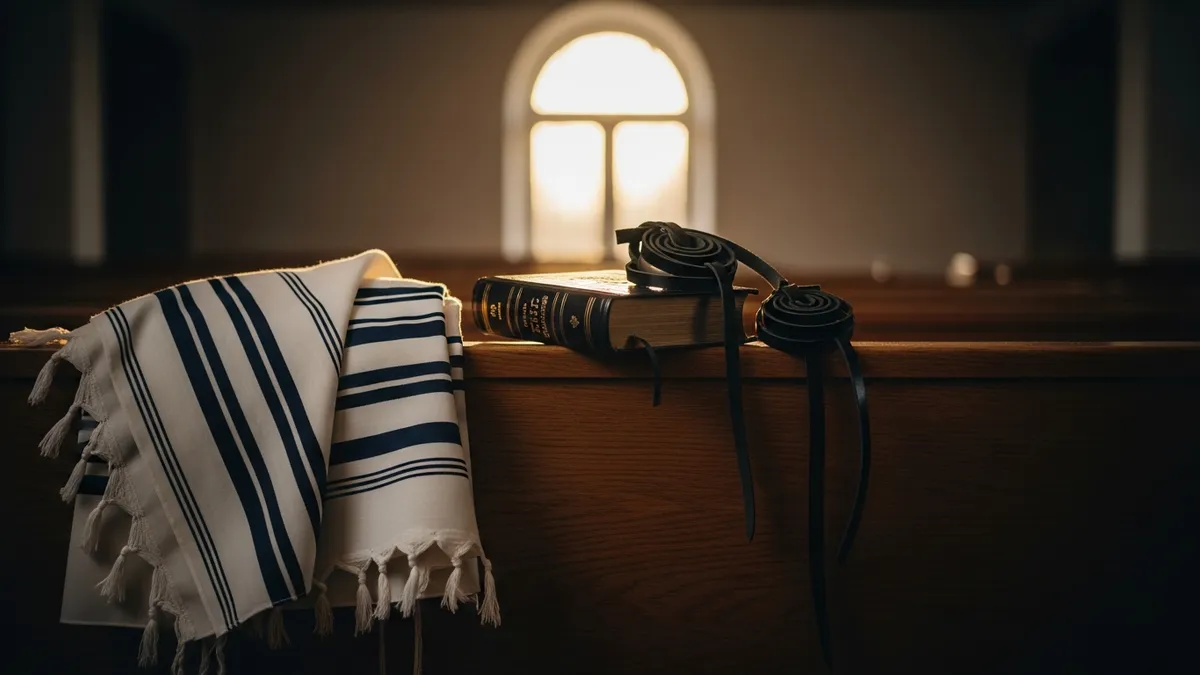
How Orthodox Jews pray — the three daily prayers, what they wear, how services work, and the role of prayer in everyday Jewish life.
Quick Answer
Orthodox Jews pray three times daily — Shacharit (morning), Mincha (afternoon), and Maariv (evening). Men pray with a minyan (quorum of ten men) in synagogue when possible, wearing tefillin and a tallit for morning prayers. Prayers follow a set liturgy from the siddur (prayer book) and are primarily in Hebrew.
Prayer is not something Orthodox Jews do once a week or when they feel inspired. It is built into the structure of every single day — morning, afternoon, and evening. Rain or shine, weekday or weekend, busy or not. You pray.
And I will be honest — some days it feels like a profound spiritual experience, and some days it feels like going through the motions. Both are okay. The commitment is to show up, regardless of how you feel.
This page is about the mechanics — what happens, when, wearing what, and for how long. If what you are really after is what Jewish prayer is — where the three services came from, what the Shema and the Amidah actually say, why Hebrew, why ten men make a minyan — start there and come back here.
The Three Daily Prayers
Shacharit (morning prayer): The longest of the three, Shacharit is recited in the morning, ideally around sunrise. Men wear a tallit (prayer shawl) and tefillin (phylacteries — leather boxes containing Torah parchments, bound to the arm and head). The service includes psalms of praise, the Shema (the declaration of G-d's unity), the Amidah (the standing silent prayer), and a Torah reading on Mondays and Thursdays. Duration: 45 minutes to an hour on a regular weekday.
Mincha (afternoon prayer): The shortest service, typically 15-20 minutes. Recited anytime from midday until sunset. In Orthodox workplaces, you will see men gathering in a conference room or stairwell to daven Mincha. In Jewish neighborhoods, synagogues offer Mincha at various times to accommodate different schedules.
Maariv (evening prayer): Recited after nightfall. About 15-20 minutes. Many people combine Mincha and Maariv back-to-back around sunset to save time.
The Minyan
A minyan — a quorum of ten Jewish men aged 13 and older — is required for certain prayers, including the Kaddish (mourner's prayer), the Torah reading, and the repetition of the Amidah. This is why Orthodox men make a strong effort to pray in synagogue rather than alone. (The reason the number is specifically ten, and what the Talmud derives it from, is explained here.)
The minyan is not just a technicality. There is a teaching that G-d's presence rests with a community in prayer in a way that it does not with an individual. Praying with a minyan transforms private conversation with G-d into communal worship.
The Siddur
In practice, you are not composing anything. You open the siddur (prayer book) to the right page and you say what is on it. The core liturgy is fixed — composed by the Men of the Great Assembly about 2,400 years ago and refined over centuries — and personal, spontaneous prayer gets added into it rather than replacing it.
The prayers are almost entirely in Hebrew, which includes G-d's Hebrew names themselves — the siddur moves between several of them, and each one emphasizes a different aspect of how He relates to us. Someone who does not understand Hebrew is absolutely permitted to pray in English or any language they understand, and plenty of people use a siddur with the English facing the Hebrew for years.
How People Pray
Walk into an Orthodox synagogue during Shacharit and this is what you will see: men standing in rows, wrapped in tallitot, tefillin on their arms and heads, swaying back and forth as they recite the prayers. The swaying (called shuckling) is an old tradition — some say it comes from the verse "All my bones shall say: G-d, who is like You?"
The Amidah — the central prayer — is recited silently, standing, feet together, facing Jerusalem. It is a private audience with G-d. For the Shema, people cover their eyes with a hand — a custom meant to shut out every distraction and concentrate completely on the words. The room is a mix of whispered devotion and communal response.
Women pray too, of course. While women are exempt from the time-bound communal obligations (fixed prayer times and praying with a minyan), the prevailing halachic view is that women are obligated to pray at least once daily — and many recite the full Shacharit. In synagogue, women pray in a separate section (the ezrat nashim), divided from the men by a mechitza (partition).
What We Are Actually Saying
The short version, since you are standing there holding the book: the prayers cover a remarkable range — praise of G-d, gratitude for daily blessings (including a morning blessing thanking G-d for the ability to open your eyes), and requests for health, wisdom, livelihood, peace, and the rebuilding of Jerusalem. The weekday Amidah alone contains 19 blessings covering virtually every aspect of human need, and on Shabbat and festivals it takes a shorter, seven-blessing form.
And there is the Shema — "Hear, O Israel, the L-rd our G-d, the L-rd is One" — the most fundamental declaration of Jewish faith, recited morning and evening. It is the first prayer a Jewish child learns and the last words a Jew is supposed to say before death.
The structure behind what the Shema and the Amidah actually say — the three paragraphs of the Shema, and why the Amidah opens with praise, asks in the middle, and closes with thanks — is on the main Jewish prayer page.
Prayer as Practice
Here is what I tell people who ask me about prayer: it is a practice, like playing an instrument. Some days the music flows and you feel connected to something infinite. Other days, you are just running scales. But the discipline of showing up — three times a day, every day — creates a relationship with G-d that would not exist otherwise.
My husband wakes up at 6 AM every morning to daven Shacharit with a minyan. He has done this for our entire marriage. Is he always inspired? No. But the consistency of that practice has shaped who he is in a way that nothing else could.
I'm an Orthodox Jewish woman from Brooklyn. I can't speak for every Orthodox Jew — when I write outside my experience, I say so.
Jewish Prayer: How Jews Pray, Three Times Every Day
Tefillin, Tallit & Kippah: Sacred Jewish Objects Explained
What is a Mezuzah? The Sign on Every Jewish Doorpost
Can Non-Jews Attend a Synagogue Service?
Want to understand the whole picture?
The guided tour walks you through 8 topics — prayer fits into a larger rhythm of Orthodox life.
The Orthodox Insider
A new letter every Thursday, before Shabbos — plus an instant download of “10 Things Everyone Gets Wrong About Orthodox Jews” when you subscribe.
No spam, unsubscribe anytime.