The Jewish High Holidays: Rosh Hashanah & Yom Kippur
What are the Jewish High Holidays? A warm, inside look at Rosh Hashanah, Yom Kippur, the Ten Days of Repentance, and what Yamim Noraim means.
Quick Answer
The Jewish High Holidays — Rosh Hashanah and Yom Kippur — are the most solemn and spiritually significant days of the Jewish year. Rosh Hashanah (the Jewish New Year) begins in the Hebrew month of Tishrei, usually falling in September or October, and Yom Kippur follows ten days later. Together they form a 25-day season of reflection, repentance, and renewal.
Growing up in Brooklyn, the calendar didn't really start on January 1st. It started in Elul — that last month of the Jewish year when the shofar blew every single morning after davening and the air had a different quality to it. A little heavier. A little sharper. Everyone walked a bit more carefully.
That feeling, stretching from the beginning of Elul all the way through Rosh Hashanah and into Yom Kippur — that whole arc is what Jews call the Yamim Noraim. The Days of Awe. And if you want to understand Orthodox Jews at the deepest level, you need to understand what happens during these weeks.
What "High Holidays" Actually Means
"High Holidays" or "High Holy Days" — you'll hear both — is the English translation of Yamim Noraim, which literally means "Days of Awe" or "Days of Fear." The word "high" doesn't mean elevated in mood (though there is that, too). It means elevated in holiness, in weight, in consequence.
These are the days when, according to Jewish tradition, G-d judges every person and writes their fate for the coming year. The theological stakes couldn't be higher. And yet, in my experience, the season is not primarily about dread — it's about hope. Because the whole point is that you can change. That's the engine of the entire season.
The High Holidays are sometimes called simply "the Yomim Tovim" in communities where you can say that and everyone knows exactly what you mean. When someone in Brooklyn asks "where are you for Yom Tov?" in September, nobody thinks they're talking about Shavuot.
The Jewish Calendar: When Are the High Holidays?
The High Holidays fall in the Hebrew month of Tishrei — the seventh month of the Hebrew calendar. In the Gregorian calendar, Tishrei usually lands in September or October. The exact date shifts every year because the Hebrew calendar is lunisolar (it tracks both the moon and the sun), so the holidays can fall anywhere from early September to mid-October.
Rosh Hashanah is the 1st and 2nd of Tishrei. Yom Kippur is the 10th of Tishrei. Many people are surprised to learn there are ten days between them — and those ten days matter enormously, as I'll explain. In 2026, Rosh Hashanah begins at sundown on September 11, and Yom Kippur falls on September 21 (the fast begins at sundown on September 20).
If you have Orthodox Jewish colleagues or employees, mark these days carefully. People will be absent, unavailable, and — if you ask them why they look slightly hollow-cheeked in October — it is because Yom Kippur just ended and they haven't fully recovered yet.
Elul: The Month Before It All Begins
The season doesn't actually begin on Rosh Hashanah. It begins a full month earlier, in Elul.
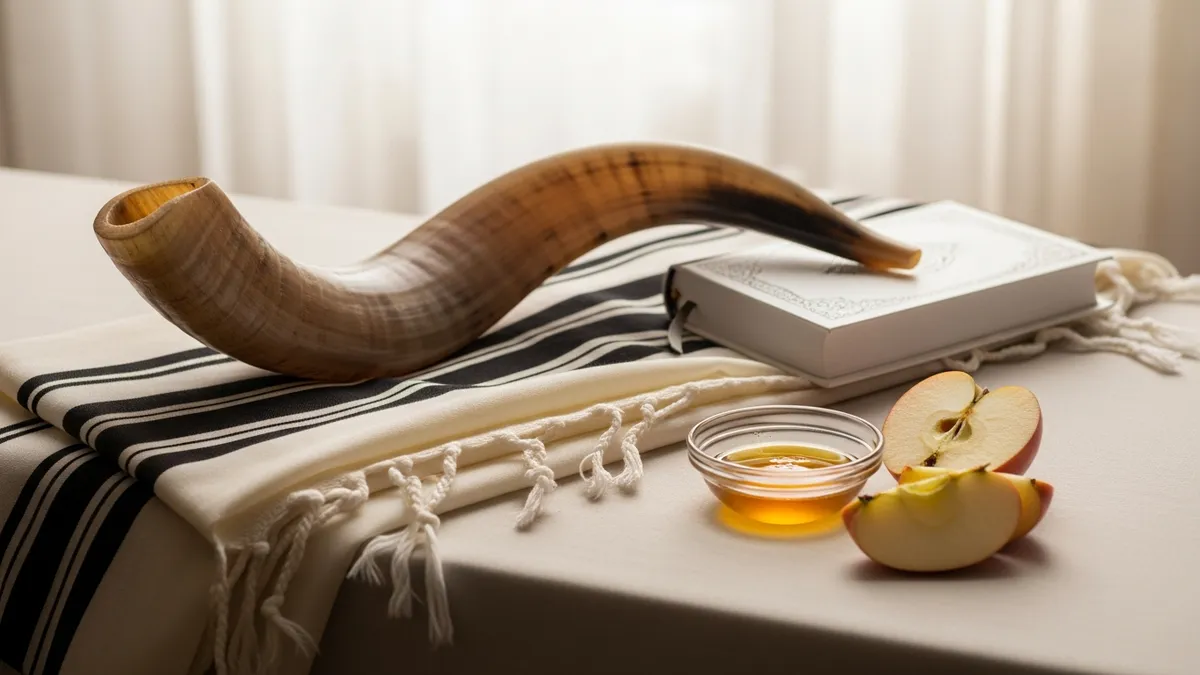
Every morning during Elul (except on Shabbat), the shofar — the ram's horn — is blown in synagogue after morning prayers. The traditional explanation, attributed to the Baal Shem Tov, is that the King has left his palace and is walking in the field among his people, accessible to anyone who approaches. This is the time to approach.
The selichos prayers begin during Elul (the timing varies — Ashkenazim start them in the week before Rosh Hashanah, Sephardim start them at the beginning of Elul, but practices differ by community). Selichos are penitential prayers, heavy with poetry and longing, usually said in the early morning hours before dawn. I remember going with my father as a girl to early-morning selichos, the shul dark and hushed, men wrapped in their tallitot, the chazzan's voice breaking in the silence. There's nothing like it.
People call each other. Apologize. Settle old arguments. The Yamim Noraim season is a forcing function for human repair, which is one of the things I think is most beautiful about it. You can't fully ask G-d for forgiveness if you haven't asked the people you've wronged.
Rosh Hashanah: The New Year and the Day of Judgment
Rosh Hashanah — the Head of the Year — is unlike any New Year you've ever seen. There are no fireworks, no countdowns, no champagne. There are two full days of prayer, three meals, white tablecloths, and a shofar that breaks something open in your chest.
The central theme is malchut — G-d's kingship. On Rosh Hashanah, we coronate G-d as King of the universe. The shofar is not background music. It is a coronation fanfare. It is also, according to the tradition, a cry — the inarticulate sound a person makes when words run out.
The shofar is blown in three different patterns: tekiah (a long blast), shevarim (three broken wails), and teruah (nine staccato cries). There's a beautiful teaching that these three sounds correspond to something in the human soul — the long sound of a soul intact, the broken sounds of a soul shattered by sin, the staccato of sobbing. You are not meant to just hear the shofar. You are meant to feel it.
Rosh Hashanah food has its own theology. Apples dipped in honey — for a sweet new year. Round challah instead of the usual braided loaf, because a circle has no beginning or end: the year is cyclical, continuous. The head of a fish (or a lamb), symbolizing being a head and not a tail, a leader rather than a follower. My mother always made the pomegranate into a whole production — you eat the seeds and ask that your merits be as numerous as pomegranate seeds. My kids fight over who gets to count the seeds. Nobody has ever actually counted them.
The greeting for Rosh Hashanah is "Shanah Tovah" (a good year) or the fuller "L'Shanah Tovah Tikatevu" — may you be inscribed for a good year. On and just after Yom Kippur, use "Gmar Chatimah Tovah" — may you be sealed for good. If you're not sure which is appropriate and the holiday feels recent, "Gmar Tov" is a safe short form.
The Ten Days: Aseres Yemei Teshuvah
Between Rosh Hashanah and Yom Kippur are what the tradition calls the Aseres Yemei Teshuvah — the Ten Days of Repentance. The imagery here is specific and vivid: on Rosh Hashanah, G-d opens the Book of Life and begins writing. On Yom Kippur, the book is sealed. But in between, there is still time to change the decree.
These days have a particular texture to them. The urgency is real but not panicked — it's more like the focused intensity of a student in the final days before a major exam. People daven more carefully. They're gentler with each other. The selichos continue.
Shabbat Shuvah — the Shabbat between Rosh Hashanah and Yom Kippur — is one of the two Shabbatot of the year when the rabbi gives a major derashah (sermon) that everyone is actually expected to attend. The other is Shabbat HaGadol before Passover. I have sat through many of these sermons. Some were forty minutes; one memorable one in my childhood shul went for over an hour. Nobody left. That's how seriously people take this Shabbat.
Yom Kippur: The Day That Stands Alone
Yom Kippur — the Day of Atonement — is simply unlike any other day in the year. I say this as someone who has lived through sixty-something of them (I am not going to tell you exactly how many).
The fast begins before sunset on Erev Yom Kippur and lasts 25 hours — until three stars appear in the sky the following night. It is not just food. Orthodox Jews abstain from five physical pleasures: eating, drinking, bathing, applying creams or lotions, wearing leather shoes, and marital relations. In many communities, men and married women wear white — a kittel, the white linen garment that also serves as a burial shroud. The symbolism is intentional. On Yom Kippur, you are already standing at the gates of judgment.
There are five prayer services over the course of the day. The night before begins with Kol Nidrei — possibly the most recognized melody in all of Jewish music, even among people who know almost nothing else. The Kol Nidrei is a legal declaration annulling certain vows made under duress, sung three times by the chazzan to a melody so ancient and so haunting that even people who haven't been to shul in years show up for it. My shul fills to capacity for Kol Nidrei in a way it doesn't even on Rosh Hashanah. People stand in the aisles. The hush before that first note begins — I cannot describe that hush to you. You have to stand in it.
The final service is Neilah — the Closing — when the metaphorical gates of heaven are closing and it is the last chance to pray before the decree is sealed. The chazzan's voice by this point in a 25-hour fast is often raw and strained, and somehow that rawness makes it more moving, not less. The final blast of the shofar at the end of Neilah, one long tekiah gedolah, is one of the most cathartic sounds I have ever heard. It means: it's over. You did it. A new year begins.
Yom Kippur is a day of sadness and mourning.
It is serious, yes, but the tradition teaches it is actually one of the happiest days of the year — the day when G-d grants total forgiveness to a person who genuinely repents. There's relief in it, and even joy. When the shofar blows at the end, people hug each other and wish each other well.
The Theology in Plain English
The High Holidays rest on three Hebrew words: teshuvah, tefillah, tzedakah. Repentance, prayer, and charity. The tradition teaches that these three things can change a difficult decree.
Teshuvah is the most complex concept of the three. It literally means "return" — returning to your best self, to G-d, to who you were meant to be. It's not just apologizing. It requires four components: recognizing what you did wrong, feeling genuine regret, resolving not to repeat it, and — where possible — making it right. The tradition distinguishes sharply between sins against G-d (which Yom Kippur atones for) and sins against other people (which require first going to the person and making it right). G-d cannot forgive you for how you treated someone else. Only that person can.
The Book of Life metaphor is exactly that — a metaphor, and an extraordinarily powerful one. On Rosh Hashanah, everyone is being written into one of three categories: sealed for life, sealed for death, or left undecided until Yom Kippur. The undecided ones have ten days to tip the scales through repentance, prayer, and charity. It's not meant to be taken as a literal ledger. It's a framework for taking your life seriously.
What It Looks Like From the Inside
For non-Jews trying to understand what their Orthodox neighbors are experiencing during these weeks, here is the texture of it.
The shuls are packed — more packed than Shabbat, more packed than Pesach even. There are chairs in the aisles, children sitting on parents' laps in the hallway, overflow rooms with screens. People who don't come to shul the rest of the year come for Rosh Hashanah and Yom Kippur. This is true across the full spectrum of Jewish practice — not just Orthodox Jews but Reform, Conservative, and otherwise unaffiliated Jews who find themselves pulled back by something in these days. You can argue that this is nostalgia, or cultural identity, or family tradition, and all of that may be true. But I think it's also something else — an acknowledgment, even from people who don't usually acknowledge it, that there is something bigger than us, and that once a year it is worth standing in its presence.
In Orthodox communities specifically, the two weeks of the High Holiday season involve significant synagogue time — multiple hours per day. The machzor, the special holiday prayerbook, is thick. A full Rosh Hashanah service can run four to five hours. Yom Kippur, with all five services, fills essentially the entire day. My husband jokes that Yom Kippur is the only day of the year when fasting is easy because you're too busy davening to think about food. He says this every year. I have stopped arguing with him.
Children dress beautifully — new shoes for Rosh Hashanah is a tradition in many families, the fresh start symbolism being literal. The table is set with the best dishes. The machzor comes out with its velvet cover. And somewhere in the shul, the chazzan is warming up his voice and hoping the congregation doesn't regret giving him the job.
For Those Who Are New to This
If you've never experienced the High Holidays and want to understand what your Jewish friends or colleagues are going through:
The right greeting from Rosh Hashanah through Yom Kippur is "Shanah Tovah" — a good year. On Yom Kippur itself and immediately after, "Gmar Chatimah Tovah" — may you be finally sealed for good — is the appropriate wish. A simple "I hope you have an easy fast" on Yom Kippur is also perfectly kind and always appreciated.
Do not schedule important meetings on these days if you have Orthodox colleagues. In fact, the entire period from the 1st of Tishrei through the 10th is one where Jewish observance is at its most intense, and it extends further — Sukkot follows Yom Kippur by only four days, with its own holidays.
And if a Jewish coworker comes back after Yom Kippur looking slightly gaunt and strangely serene — that is correct. That is exactly what's supposed to happen.
The Bigger Picture
The High Holidays are not separate from the rest of Jewish life — they are the annual reset that makes the rest of it possible. The Jewish holiday cycle is a full-year spiritual curriculum, and Rosh Hashanah and Yom Kippur are the beginning of it. Everything that follows — the joy of Sukkot, the gratitude of Chanukah, the liberation of Pesach — flows from the work done in these days.
I've been through this season as a little girl holding my father's hand in shul, as a young wife figuring out how to cook the seudah hamafseket (the last meal before the Yom Kippur fast), as a mother trying to explain to a four-year-old why Mommy can't eat today. Every year it is the same season and every year it is completely new, because I am a different person than I was last year. That's the whole point.
Shanah Tovah. May it be a good and sweet year.
I'm an Orthodox Jewish woman from Brooklyn. I can't speak for every Orthodox Jew — when I write outside my experience, I say so.
Want to experience a Jewish holiday yourself?
Virtual Seders, Rosh Hashanah dinners, and Chanukah candle-lightings are open to non-Jewish guests.
The Orthodox Insider
A new letter every Thursday, before Shabbos — plus an instant download of “10 Things Everyone Gets Wrong About Orthodox Jews” when you subscribe.
No spam, unsubscribe anytime.