Jewish Fast Days: When and Why Jews Fast
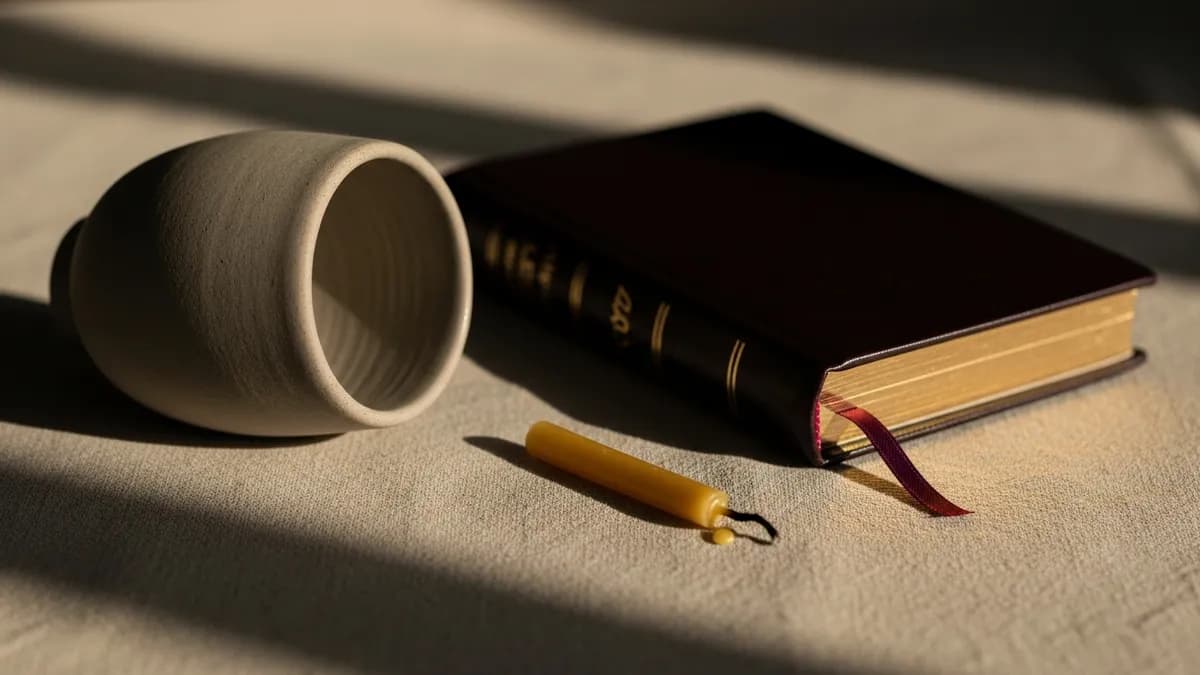
A complete guide to Jewish fasting — the six fast days, the rules, who is exempt, and what fasting means in Jewish spiritual life.
Quick Answer
Yes, Jews fast — six times a year on the standard calendar. The two major fasts are Yom Kippur and Tisha B'Av (25 hours, no food or water). The four minor fasts — Tzom Gedaliah, Asarah B'Teves, Shiva Asar B'Tammuz, and Ta'anis Esther — last from dawn to nightfall. Fasting in Judaism is not about punishment or dieting. It is about stepping back from the physical to focus on the spiritual — reflection, repentance, and connection to G-d.
Every time a non-Jewish coworker sees me not eating on a fast day, the first question is the same: "Wait, Jews fast too?" Yes, we do. Not as often as Ramadan, but more often than most people realize. And the reasons go deeper than most people expect.
The Six Fast Days
Alongside its festivals and holidays, the Jewish calendar includes six established fast days. Two are major fasts. Four are minor. The difference matters.
Major Fasts (25 Hours, No Food or Water)
Yom Kippur — The Day of Atonement
Yom Kippur is the holiest day of the Jewish year. The fast begins before sunset on the ninth of Tishrei and ends after nightfall on the tenth — roughly 25 hours. During this time, there is no eating, no drinking, no bathing for pleasure, no wearing leather shoes, and no marital relations.
The entire day is spent in prayer — the synagogue services on Yom Kippur are the longest of the year, including Kol Nidrei on the eve and Neilah (the closing prayer) as the fast ends. The purpose is teshuvah — repentance and return. The Talmud teaches that Yom Kippur atones for sins between a person and G-d, while sins between people require asking forgiveness directly.
Yom Kippur is the one fast that nearly every observant Jew keeps without question. Even Jews who are otherwise not strictly observant often fast on this day.
Tisha B'Av — The Ninth of Av
Tisha B'Av commemorates the destruction of both the First Temple (586 BCE) and the Second Temple (70 CE), as well as a series of other national tragedies that fell on or near this date — including the sin of the spies in the desert, the fall of Beitar in 135 CE, and the expulsion from Spain in 1492.
The fast runs the same 25 hours as Yom Kippur, with the same five restrictions. The mood is one of mourning. The Book of Eicha (Lamentations) is read by candlelight on the eve of Tisha B'Av. People sit on low chairs (as mourners do during shiva), and the atmosphere in shul is heavy and somber.
Tisha B'Av is not about individual repentance the way Yom Kippur is. It is about collective memory — sitting with the reality of what the Jewish people have lost and what we are still waiting to rebuild.
Minor Fasts (Dawn to Nightfall, No Food or Water)
The four minor fasts are shorter — from alos hashachar (dawn) to tzeis hakochavim (nightfall), roughly 13-14 hours depending on the season. The restrictions are limited to food and drink only — bathing, leather shoes, and marital relations are permitted.
Tzom Gedaliah — The Fast of Gedaliah (3 Tishrei)
Observed the day after Rosh Hashanah, this fast commemorates the assassination of Gedaliah ben Achikam, the Jewish governor appointed by Babylonia after the destruction of the First Temple. His murder led to the end of the remaining Jewish settlement in the Land of Israel and the complete exile of the Jewish community. The Navi (Prophets) records this event, and the rabbis established a fast to mark the tragedy of losing Jewish self-governance.
Asarah B'Teves — The Tenth of Teves
This fast marks the beginning of the Babylonian siege of Jerusalem, which eventually led to the destruction of the First Temple. It is considered the beginning of the chain of events that culminated in the destruction, and fasting on this day connects us to that process of loss. Uniquely, Asarah B'Teves is the only minor fast that is observed even when it falls on a Friday (the eve of Shabbos).
Shiva Asar B'Tammuz — The Seventeenth of Tammuz
This fast commemorates five tragedies, the most significant being the breaching of the walls of Jerusalem by the Romans (and earlier by the Babylonians). It marks the beginning of the "Three Weeks" — a period of mourning that intensifies as it approaches Tisha B'Av. During the Three Weeks, observant Jews avoid celebrations, live music, and haircuts. The nine days before Tisha B'Av add further restrictions, including not eating meat or drinking wine (except on Shabbos).
Ta'anis Esther — The Fast of Esther (13 Adar)
Observed the day before Purim, this fast commemorates the day the Jews of the Persian Empire fasted and prayed before their battle against Haman's forces. Unlike the other minor fasts, which are connected to destruction and loss, Ta'anis Esther is connected to a moment of crisis that ended in victory. It is the lightest of the fasts in mood — by nightfall, you are breaking your fast and heading straight into the joy of Purim.
The Rules of Fasting
Who Must Fast
All healthy Jewish adults (men and women) are obligated to fast on Yom Kippur. The other fasts are also obligatory, though the level of obligation on minor fasts is somewhat less strict. Boys from age 13 and girls from age 12 (bar and bas mitzvah age) are fully obligated.
Who Is Exempt
Jewish law takes health seriously. The following people are generally exempt from fasting:
- Pregnant and nursing women — on minor fasts, they are exempt. On Yom Kippur and Tisha B'Av, the standard practice is to fast if medically safe, but a rabbi should be consulted, and if there is any risk, they are required to eat.
- People who are ill — anyone whose health would be endangered by fasting is not only exempt but forbidden to fast. Pikuach nefesh (the preservation of life) overrides nearly every other commandment.
- Children — children under bar/bas mitzvah age are not required to fast. Some families train older children with partial fasts (starting later or ending earlier).
A common misconception is that Orthodox Jews fast even when it is dangerous. The opposite is true. A rabbi will tell a diabetic, a person with an eating disorder, or someone recovering from surgery to eat — because the Torah's command to preserve life takes precedence.
Practical Tips
I have been fasting since I was twelve years old, so here is what I have learned:
- Hydrate the day before. Drink water steadily throughout the day before the fast. Do not try to chug a huge amount right before — it does not work as well.
- Eat a proper meal. The seudah hamafsekes (pre-fast meal) should include complex carbohydrates, protein, and healthy fats. Avoid very salty or very sweet foods that will make you thirsty.
- Pace yourself. On a 25-hour fast, the first few hours are the hardest. By the middle of the day, the hunger fades. The last hour is hard again. Knowing this helps.
- Stay busy. On Yom Kippur, you are in shul most of the day, which helps. On minor fasts that fall on workdays, staying engaged with your tasks makes the time pass faster.
- Break the fast gently. Start with water and something light. Do not eat a heavy meal immediately — your stomach has been empty and will rebel.
The Spiritual Purpose of Fasting
Fasting in Judaism is not punishment. It is not a diet. And it is not about suffering for suffering's sake.
The Rambam explains that the purpose of fasting is to awaken the heart to teshuvah — to shake us out of routine and make us pay attention. When you are hungry and your body is uncomfortable, the physical world recedes and the spiritual world comes forward. You are reminded that you are not just a body with needs — you are a neshama (soul) with a purpose.
On Yom Kippur, the fasting is part of a broader experience of standing before G-d stripped of physical comfort — no food, no shoes, no distractions. Our tradition teaches that on Yom Kippur, we are like angels — beings who do not eat or drink.
On the fasts connected to the Temple's destruction, the purpose is memory and mourning. We fast because something precious was lost, and we have not yet gotten it back. The hunger is a small physical echo of a much larger spiritual absence.
And on Ta'anis Esther, we fast because our ancestors fasted — and their fasting, combined with their prayers, helped bring about their deliverance.
Common Questions
Do all Jews fast? Fasting on Yom Kippur is observed by a majority of Jews worldwide, including many who are otherwise not observant. The other fasts are observed primarily by Orthodox Jews, though some Conservative Jews also observe them.
Can you drink water on a Jewish fast? On the two major fasts (Yom Kippur and Tisha B'Av), no — water is not permitted. On the four minor fasts, water is also prohibited for a healthy person; the only difference from the major fasts is the length. Someone who is weak or unwell should ask a rabbi, since the minor fasts are treated more leniently in cases of real difficulty.
What happens if a fast day falls on Shabbos? Most fasts are postponed to Sunday if they fall on Shabbos, because Shabbos is a day of joy and fasting would contradict that. The exception is Yom Kippur, which is observed even on Shabbos — it is the only fast that overrides Shabbos.
Is there a fast for the firstborn? Yes — Ta'anis Bechorim (Fast of the Firstborn) is observed on the day before Passover. Firstborn males fast in gratitude for being spared during the tenth plague in Egypt. In practice, most firstborns attend a siyum (completion of a Torah study cycle) that morning, which permits them to break the fast with a celebratory meal.
How long have Jews been fasting? The fasts connected to the Temple were established by the prophets and rabbis over 2,500 years ago. Yom Kippur is a Torah commandment, making it even older. Fasting is one of the most ancient continuous practices in Judaism.
Fasting is never easy. I do not think it is supposed to be. But there is something clarifying about it — a day when you set aside the constant business of feeding yourself and just exist with your thoughts, your prayers, and your community. By the time the fast ends and I take that first sip of water, I always feel like something has shifted inside me. That is the point.
I'm an Orthodox Jewish woman from Brooklyn. I can't speak for every Orthodox Jew — when I write outside my experience, I say so.
Yom Kippur: The Holiest Day of the Year
Tisha B'Av: The Saddest Day in Jewish History
Jewish Holidays: The Complete Jewish Calendar Guide
Tisha B'Av — The Saddest Day in Jewish History
Want to experience a Jewish holiday yourself?
Virtual Seders, Rosh Hashanah dinners, and Chanukah candle-lightings are open to non-Jewish guests.
The Orthodox Insider
A new letter every Thursday, before Shabbos — plus an instant download of “10 Things Everyone Gets Wrong About Orthodox Jews” when you subscribe.
No spam, unsubscribe anytime.