Lag B'Omer: Bonfires and Celebrations
What is Lag B'Omer? The Jewish holiday of bonfires, celebrations, and the legacy of Rabbi Shimon bar Yochai — customs and meaning explained.
Quick Answer
Lag B'Omer is the 33rd day of the Omer count (18 Iyar, usually in May), marking the end of a plague that killed Rabbi Akiva's students and the yahrzeit of the great mystic Rabbi Shimon bar Yochai. Jews celebrate with bonfires, outdoor activities, music, haircuts, and weddings — customs that many communities observe during the Omer period of semi-mourning.
During the Omer count between Passover and Shavuot, there is a period of semi-mourning — no weddings, no live music, no haircuts. Communities keep different stretches of it: in my family, like many Ashkenazim, the mourning runs through the first 33 days and lifts on Lag B'Omer, while others observe a different span of the Omer and treat Lag B'Omer as a one-day break rather than the end. Either way, the 33rd day — one of the most joyful dates on the Jewish holiday calendar — is when everything brightens. Bonfires light up the night sky, music blasts from every direction, and boys who have been growing their hair for weeks finally get their first haircuts. That is Lag B'Omer.
Why Day 33?
The Talmud records that 24,000 students of Rabbi Akiva died in a plague during the Omer period because they did not treat each other with proper respect. The plague ended on the 33rd day of the Omer — Lag B'Omer. ("Lag" is the Hebrew letters lamed-gimel, which have a numerical value of 33.)
Rabbi Shimon Bar Yochai
Lag B'Omer is also the yahrzeit (anniversary of death) of Rabbi Shimon bar Yochai (Rashbi), one of Rabbi Akiva's surviving students and the author of the Zohar, the foundational text of Kabbalah (Jewish mysticism). Before he passed away, Rashbi revealed the deepest secrets of the Torah and instructed that his yahrzeit should be a day of celebration, not mourning.
This is why the biggest Lag B'Omer celebration takes place at Rashbi's tomb in Meron, in northern Israel. Hundreds of thousands of people gather there — lighting a massive bonfire, singing, dancing, and praying. It is one of the largest annual gatherings in Israel.
Bonfires
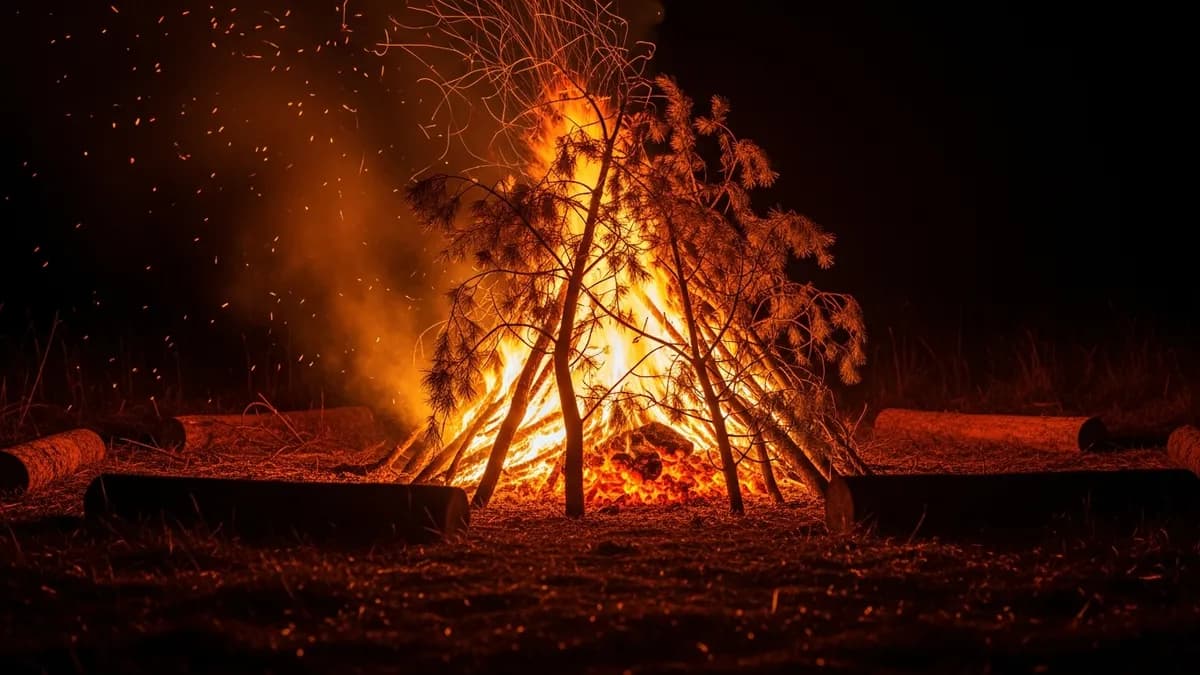
The bonfire tradition is connected to Rashbi and the light of Torah he revealed. Throughout Israel — and in Jewish communities worldwide — children and families build bonfires on Lag B'Omer night. In Israeli cities, you can see fires burning on every empty lot. The smell of smoke hangs in the air for days.
In my neighborhood in Brooklyn, the bonfires are smaller (fire codes, you know), but the spirit is the same. Kids roast marshmallows, families sit around the fire, and there is a feeling of communal celebration.
Upsherin (First Haircuts)
Many families follow the custom of not cutting a boy's hair until age three, and then giving him his first haircut on Lag B'Omer. This is called an upsherin (Yiddish for "shearing off"). It is a major celebration — the boy gets his first pair of tzitzit and begins learning the alef-bet. Meron on Lag B'Omer is full of three-year-old boys getting their first haircuts at Rashbi's kever (gravesite).
Weddings and Music
Since the mourning customs of the Omer are suspended on Lag B'Omer, it is an incredibly popular day for weddings. Wedding halls are booked solid. If you know anyone who got married on Lag B'Omer, they probably booked the venue a year in advance.
Bows and Arrows
Children play with toy bows and arrows on Lag B'Omer. One explanation connects this to the tradition that no rainbow appeared during Rashbi's lifetime — his merit was so great that the world did not need the rainbow (G-d's sign that He would not destroy the world). The Hebrew word for rainbow (keshet) is the same as the word for bow.
The Deeper Message
Lag B'Omer celebrates the power of Torah — not just the legal, revealed Torah, but the hidden, mystical dimension that illuminates the soul. Rabbi Shimon bar Yochai lived in a cave for twelve years, studying Torah in hiding from the Romans, and emerged with spiritual insights that still shape Jewish thought today.
The bonfires are not just parties. They represent the inner light of Torah — a light that can never be extinguished, no matter how dark the world becomes.
Common Questions
What is Lag BaOmer? The 33rd day of the Omer counting period between Passover and Shavuot. It marks the end of a plague that killed Rabbi Akiva's students and the yahrzeit (anniversary of death) of the great mystic Rabbi Shimon bar Yochai.
Why do Jews light bonfires on Lag BaOmer? The bonfires honor Rabbi Shimon bar Yochai, who revealed the secrets of the Zohar (Jewish mysticism). The fire symbolizes the spiritual light he brought to the world. In Israel, massive bonfires burn across the country.
What is an upsherin on Lag BaOmer? Many families hold their son's first haircut ceremony (upsherin) on Lag BaOmer. The boy turns three and receives his first haircut, leaving peyot (sidelocks) to grow.
I'm an Orthodox Jewish woman from Brooklyn. I can't speak for every Orthodox Jew — when I write outside my experience, I say so.
Want to experience a Jewish holiday yourself?
Virtual Seders, Rosh Hashanah dinners, and Chanukah candle-lightings are open to non-Jewish guests.
The Orthodox Insider
A new letter every Thursday, before Shabbos — plus an instant download of “10 Things Everyone Gets Wrong About Orthodox Jews” when you subscribe.
No spam, unsubscribe anytime.