Leaving Orthodox Judaism: Going Off the Derech
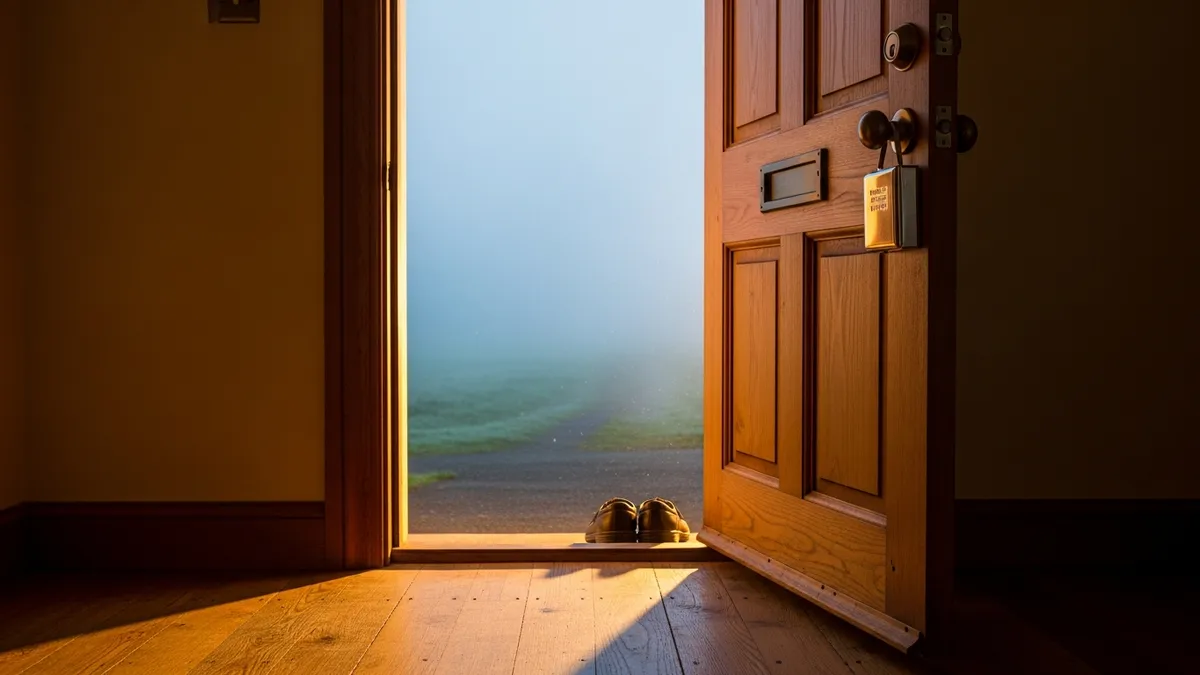
Leaving Orthodox Judaism, or going 'Off the Derech,' is one of the hardest topics in frum life. An honest look at the reasons, costs, and outcomes.
Quick Answer
Going 'Off the Derech' (OTD) — literally 'off the path' — refers to leaving Orthodox Jewish observance and community. People leave for many reasons: intellectual doubts, personal pain, social pressure, or a feeling that the life does not fit them. The transition is often difficult — involving loss of community, family strain, and a steep learning curve for navigating a world they were not raised in. Some eventually return; many do not. It is one of the most painful topics in Orthodox life.
This is one of the hardest articles I have written for this site. I am an Orthodox Jewish woman. I live this life, I love this life, and I believe in it deeply. But I also know people who have left — friends, extended family, neighbors — and I have watched the pain that it causes on every side. If I am going to write honestly about what Orthodox Judaism is, I cannot pretend this topic does not exist.
So here is the truth, from someone who stays, about those who leave.
What Does "Off the Derech" Mean?
"Derech" means path in Hebrew. In Orthodox language, "the derech" refers to the path of Torah observance — keeping Shabbos, keeping kosher, davening, learning Torah, and living within the framework of halacha and community. Someone who is "off the derech" (often shortened to OTD) has stepped away from some or all of these practices.
The term covers a wide spectrum. Some people stop keeping Shabbos but still identify as Jewish and maintain family relationships. Others leave entirely — moving away, changing their appearance, and building a completely new social world. And everything in between. It is worth saying that this sharp in-or-out framing is largely an Ashkenazi one — many Sephardic communities have long made room for a wider range of observance, where a less-observant member is still simply part of the community rather than someone who has "left."
Why People Leave
There is no single reason. Every person's story is their own. But patterns emerge:
Intellectual Doubts
Some people encounter questions — about the age of the universe, about Biblical criticism, about the historicity of the Exodus — that they feel their education did not prepare them to handle. When these questions go unanswered or are dismissed, the person may conclude that the system cannot withstand scrutiny. In communities where secular education is limited, the gap between what they were taught and what they discover can feel unbridgeable.
Personal Pain
This is the category that hurts the most to write about. Some people leave because they were hurt within the community — by abusive teachers, by bullying, by a system that did not protect them when it should have. The community has been forced to reckon with these failures in recent years, and there has been real progress in addressing abuse. But the damage done to individuals is not undone by institutional reform.
Social Pressure and Conformity
Orthodox life has firm expectations — how you dress, who you marry, where your children go to school, how you spend your time. For most people, these expectations feel like structure and security. For some, they feel like a cage. People who do not fit the mold — who think differently, who question openly, who struggle with the social dynamics — sometimes reach a breaking point. For gay and lesbian members of the community, the collision between expectation and identity can be especially sharp — how the Orthodox world grapples with homosexuality is its own difficult conversation — and it plays a role in some departures.
Not Fitting In
Not everyone who leaves has a dramatic reason. Some simply feel that Orthodox life is not for them — that the prayers do not move them, the restrictions feel meaningless, and the community does not feel like home. This is hard for those of us on the inside to hear, because we experience the same practices as deeply meaningful. But meaning is not something you can force on another person.
Experiences with Hypocrisy
Seeing people who publicly observe halacha but privately act in ways that contradict it — dishonesty in business, cruelty in speech, performative piety — can be deeply disillusioning, especially for young people. The gap between ideals and reality exists in every community, but in a community that sets its standards as high as ours does, the gap can feel especially jarring.
The Challenges of Leaving
Leaving the Orthodox community is not like leaving a club. The community is not just a social network — it is an entire ecosystem. When you leave, you lose much of the infrastructure of your life.
Family Relationships
This is the deepest wound. Parents often experience a child's departure as a devastating loss — not just of shared practice but of shared destiny. Some families maintain close relationships across the divide. Others fracture. The range is enormous, and it depends on the family, the community, and how the departure happens. I have seen families where a child who left still comes for Shabbos dinner every week. I have seen families where contact was cut off entirely. Neither extreme is the norm.
Social Isolation
In a tight-knit community where everyone knows everyone, leaving means losing your social world. Friends may not know how to relate to you anymore. Invitations dry up. The community you grew up in becomes a place you visit, not a place you belong. Building a new social network from scratch, in a world you were not raised in, is lonely.
Practical Skills Gap
People raised in insular Orthodox communities may lack some of the practical skills that the broader world takes for granted — navigating college applications, understanding popular culture references, managing finances without community support systems. This gap is real, though it is often overstated. Most people who leave are resilient and resourceful, and they close the gap faster than outsiders expect.
Identity Crisis
Who are you when you leave? You are no longer Orthodox, but you are still Jewish (Jewishness does not depend on observance). You carry the knowledge, the memories, the language, and the reflexes of a world you no longer live in. Many people who leave describe a prolonged period of figuring out who they are — not just what they believe, but how they want to live.
The Community's Perspective
I want to be honest about how the community experiences this, because it matters.
When a child leaves, most Orthodox parents do not feel anger as their primary emotion. They feel grief. They believe — genuinely, deeply — that the Torah is the source of true meaning and that a life without it is diminished. Watching a child walk away from that feels like watching them walk away from something essential. It is not that parents love conditionally. It is that they believe the stakes are infinitely high.
The community is also afraid. In a people still conscious of how much was lost over the past century — to the Holocaust, and then to assimilation — every departure is felt as a communal loss. This fear can lead to responses that are counterproductive — shaming, ostracizing, doubling down on restrictions — which often push people further away rather than drawing them back.
There has been a meaningful shift in recent years. More rabbis and community leaders are speaking openly about the need to maintain relationships with people who leave, to treat them with dignity, and to create space for questions. Organizations within the community now work specifically on this issue. The progress is real, even if it is uneven.
People Who Come Back
Not everyone who leaves stays gone. Some people leave in their teens or twenties, explore the world, and eventually return — sometimes to a different community or a different level of observance than where they started. The return can be gradual: a person starts lighting Shabbos candles again, then keeping kosher, then attending shul. Or it can be a decision point — a moment of clarity that brings them back.
Baalei teshuva communities (communities that welcome returnees to observance) have deep experience with this. The path back is not always smooth — there can be social awkwardness, questions about shidduchim (matchmaking), and the challenge of reintegrating into a community that remembers when you left. But it happens, and when it does, the community generally receives the person with genuine warmth.
Support Systems
For people in the process of leaving, several organizations provide support:
- Footsteps — based in New York, offers educational support, career counseling, social programming, and community for people transitioning out of ultra-Orthodox and Hasidic communities.
- Hillel (campus organizations) — many former Orthodox Jews find a sense of Jewish community on college campuses through Hillel, even if their observance has changed.
- Therapy — an increasing number of therapists specialize in working with people navigating religious transitions, including the specific dynamics of leaving Orthodox communities.
Within the Orthodox community, organizations like Project YES (Youth Enrichment Services) and various rabbinic outreach programs work to support at-risk youth before they leave, addressing the underlying issues — bullying, learning disabilities, family dysfunction — that often precede a departure.
Common Questions
How many people leave Orthodox Judaism? Precise numbers are hard to come by, and the data is genuinely complicated by generational change. The Pew Research Center's surveys found that, among all adults raised Orthodox, only about half remained Orthodox — but that figure is heavily weighted by older Americans who left decades ago, when Orthodoxy in this country was much smaller and less stable. Among people raised in today's Orthodox communities, retention appears far higher. So the honest answer is that a real minority leave observance to some degree, but the share has been shrinking with each generation, not growing. What is clearer is that Orthodox Judaism retains its young people at a higher rate than the other Jewish denominations, and that retention is higher in Haredi communities than in Modern Orthodox ones.
Do families sit shiva (mourn) when a child leaves? This is a common myth. While it may have happened in isolated cases historically, sitting shiva for a living child who has left observance is not a normative practice and is rejected by virtually all mainstream rabbinic authorities. Most families do not do this.
Can someone who left come back? Yes. There is no formal barrier to returning to Orthodox observance. The community generally welcomes people back warmly. Teshuvah (return/repentance) is one of the most fundamental concepts in Judaism — the idea that it is always possible to come back.
Is the OTD phenomenon growing? It is hard to say definitively. The internet has made the phenomenon more visible — people who leave now have online communities and public platforms. Whether the actual numbers have increased significantly is debated. What has changed is the community's awareness and willingness to discuss it.
I do not pretend to have a neat conclusion for this topic. The pain is real — for those who leave and for those who stay. What I can say is that Judaism teaches that every Jewish soul is infinitely precious, regardless of where that person stands in their observance. If we believe that, then our response to people who leave must start with love, not judgment. We do not always get that right. But when we do, the door stays open — and sometimes, people walk back through it.
I'm an Orthodox Jewish woman from Brooklyn. I can't speak for every Orthodox Jew — when I write outside my experience, I say so.
Partway in, or just curious?
If you're in an interfaith relationship, have Jewish ancestry, or are quietly exploring deeper engagement, there's a separate page for you.
The Orthodox Insider
A new letter every Thursday, before Shabbos — plus an instant download of “10 Things Everyone Gets Wrong About Orthodox Jews” when you subscribe.
No spam, unsubscribe anytime.