Tu B'Shvat: The New Year for Trees
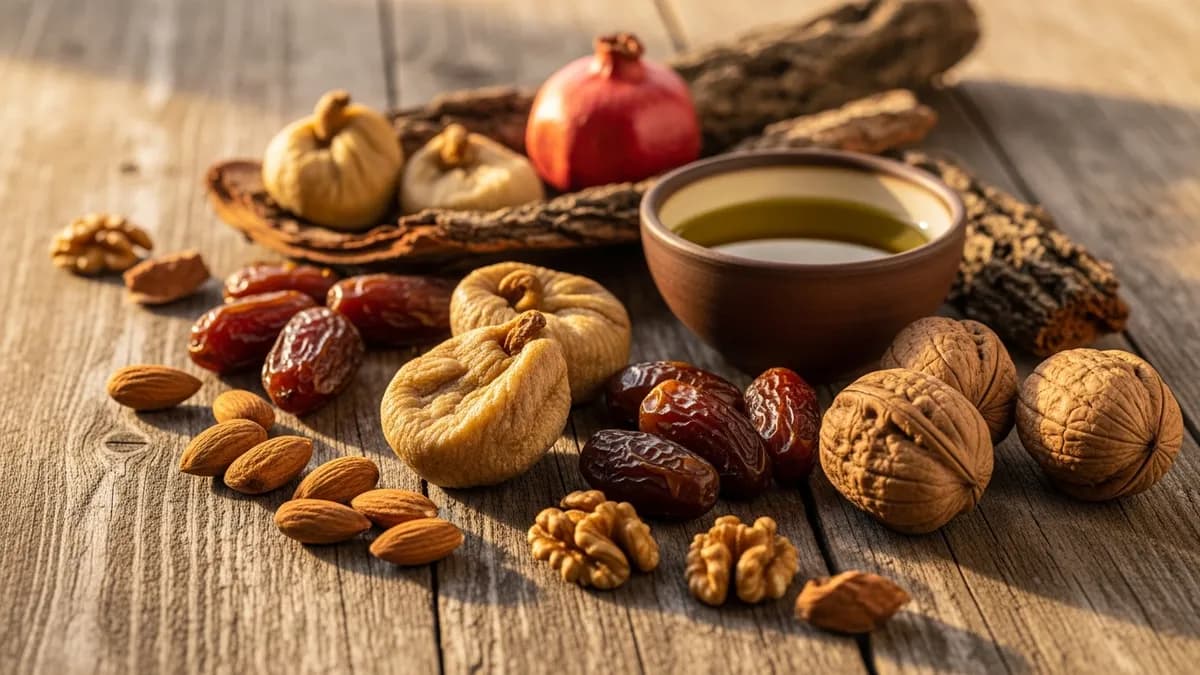
What is Tu B'Shvat? The Jewish 'New Year for Trees' — its meaning, customs, the Tu B'Shvat seder, and how it connects to the Land of Israel.
Quick Answer
Tu B'Shvat (the 15th of Shvat, usually January/February) is the 'New Year for Trees' in the Jewish calendar. It marks the date used for calculating the age of trees for tithing purposes. Jews celebrate by eating fruits — especially the seven species of the Land of Israel — and some hold a special Tu B'Shvat seder with fruits and wine.
A new year for trees. Only in Judaism would trees have their own Rosh Hashanah. But that is exactly what Tu B'Shvat is, and the more you understand it, the more beautiful it becomes.
What Is Tu B'Shvat?
Tu B'Shvat falls on the 15th of the Hebrew month of Shvat (usually January or February). "Tu" is the Hebrew letters tet-vav, which equal 15. In the Mishnah, this date is designated as the Rosh Hashanah (new year) for trees.
What does that mean practically? In the Land of Israel, fruit from trees must be tithed (a portion given to the Kohen, Levite, or the poor). The "birthday" of a tree — its age for tithing purposes — is determined by Tu B'Shvat. Fruit that blossomed before Tu B'Shvat belongs to the previous year; fruit that blossomed after belongs to the new year.
Why Does It Matter Today?
Even though the tithing laws are only fully applicable in Israel and are related to the Temple service, Tu B'Shvat has taken on broader meaning. It is a day to appreciate the natural world, to connect to the Land of Israel, and to celebrate the fruits that G-d provides.
Customs and Traditions
Eating Fruits
The main Tu B'Shvat custom is eating fruit — particularly the fruits associated with the Land of Israel. The Torah describes Israel as a land of "wheat, barley, grapes, figs, pomegranates, olives, and dates" (the Seven Species). Many people make a point of eating as many different types of fruit as possible on Tu B'Shvat, including exotic fruits they might not normally try.
There is a custom to eat a "new fruit" — a fruit you have not eaten yet that season — so you can say the Shehecheyanu blessing (thanking G-d for bringing you to this occasion).
The Tu B'Shvat Seder
The Kabbalists of 16th-century Tzfat (Safed) developed a special Tu B'Shvat seder — a structured meal modeled loosely on the Passover seder. It involves eating fruits in a specific order and drinking four cups of wine that progress from white to red, symbolizing the transition from winter to spring.
The fruits are divided into three categories:
- Fruits with an inedible outer shell (nuts, pomegranates, oranges) — representing the physical world
- Fruits with an inedible inner pit (dates, olives, cherries) — representing the emotional world
- Fruits that are entirely edible (figs, grapes, berries) — representing the spiritual world
Not every community does a Tu B'Shvat seder, but it has become increasingly popular across the Orthodox world.
Planting Trees
In Israel, Tu B'Shvat is often marked by planting trees. School children go on tree-planting outings, and the Jewish National Fund (KKL) has historically connected Tu B'Shvat to its reforestation efforts. While this is more of an Israeli-national custom than a halachic one, it connects beautifully to the day's theme.
The Spiritual Dimension
The Gemara in Taanis 7a teaches: a person is like a tree of the field. Just as a tree needs roots, water, and sunlight, a person needs roots (faith and family), nourishment (Torah and mitzvot), and light (connection to G-d).
Tu B'Shvat falls in the middle of winter, when the trees in Israel are just beginning to show the first signs of new sap rising. On the surface, everything still looks dormant. But beneath the bark, new life is stirring. There is a powerful lesson in that — sometimes the most important growth is the growth you cannot see yet.
In my house, Tu B'Shvat is one of those low-key holidays that everyone secretly loves. The table is covered with bowls of dried fruits, fresh fruits, nuts, and chocolate-covered everything. The kids get excited about trying unusual fruits. And there is something grounding about taking a day to thank G-d for something as simple and essential as a tree.
Common Questions
What is Tu BiShvat? The 'New Year for Trees' — the 15th of the Hebrew month of Shevat. It is the cutoff date used to calculate a fruit tree's age for tithing purposes, and is celebrated by eating fruits, especially those associated with the Land of Israel.
How do Orthodox Jews celebrate Tu BiShvat? By eating fruits — especially the seven species of Israel (wheat, barley, grapes, figs, pomegranates, olives, dates). Some hold a seder-style meal with different categories of fruits. Schools often teach about nature and the land of Israel.
Is Tu BiShvat a major holiday? No — it is a minor observance. There are no work restrictions, no synagogue special services (beyond a minor liturgical change). It is mainly an opportunity for education and celebrating nature.
I'm an Orthodox Jewish woman from Brooklyn. I can't speak for every Orthodox Jew — when I write outside my experience, I say so.
Jewish Holidays: The Complete Jewish Calendar Guide
The History of Israel: A Jewish Perspective
Shabbat — The Jewish Day of Rest Explained
The Jewish High Holidays: Rosh Hashanah & Yom Kippur
Want to experience a Jewish holiday yourself?
Virtual Seders, Rosh Hashanah dinners, and Chanukah candle-lightings are open to non-Jewish guests.
The Orthodox Insider
A new letter every Thursday, before Shabbos — plus an instant download of “10 Things Everyone Gets Wrong About Orthodox Jews” when you subscribe.
No spam, unsubscribe anytime.