What Is a Mikvah? The Jewish Ritual Immersion Pool Explained
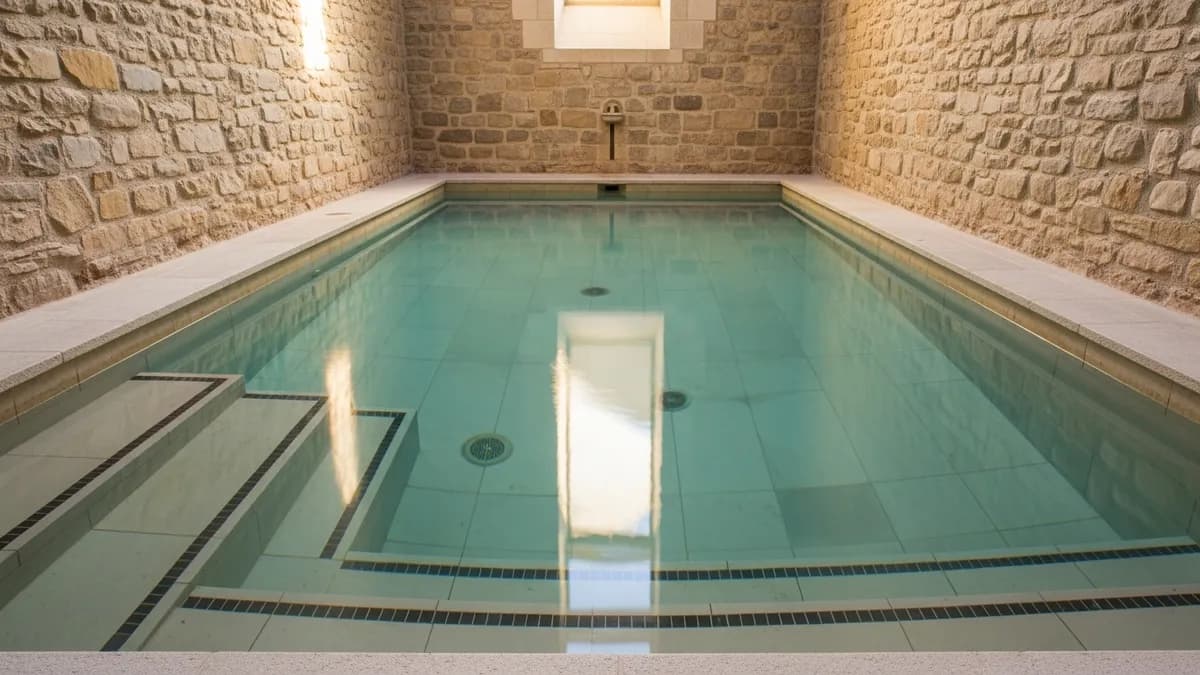
Learn what a mikvah is, how this Jewish ritual bath works, who uses it and when, and why it remains central to Orthodox Jewish life and spiritual practice.
Quick Answer
A mikvah is a Jewish ritual bath filled with natural water (usually rainwater) used for spiritual purification. Married women immerse monthly as part of family purity laws, and men, converts, and new dishes also use the mikvah. It is one of the most important institutions in Jewish communal life.
There is a reason why Jewish law says that when a community is being established, building a mikvah comes before building a synagogue. Before you build a place to pray, you build a mikvah. That tells you everything about how central this institution is to Jewish life.
A mikvah (Hebrew: מקווה, plural: mikvaos) is a pool of water used for ritual immersion. It is not about physical cleanliness — you shower thoroughly before entering the mikvah. It is about spiritual transition, about moving from one state of being to another. The Torah describes water as the source of all life, and immersion in a mikvah is a kind of spiritual rebirth.
How Is a Mikvah Built?
A mikvah is not just any pool. It must meet very specific halachic requirements. The water must include a minimum amount of natural, undrawn water — typically rainwater that has been collected and channeled into the pool without being carried in a vessel. This natural water is then connected to the main immersion pool through a system that allows the pools to touch.
Modern mikvaos look nothing like what most people imagine. They are beautifully designed facilities with private preparation rooms, showers, hair dryers, and the immersion pool itself, which is warm and clean and maintained to the highest standards. The mikvah in my neighborhood looks like a spa. Marble floors, soft lighting, fresh towels. It is a far cry from the cold, dark mikvaos of the old country.
Who Uses the Mikvah?
Married women are the primary users. As part of the laws of family purity (taharat hamishpachah), a married woman immerses in the mikvah after her monthly cycle and a count of seven clean days. This immersion marks her transition from a state of niddah (separation) back to a state in which physical intimacy with her husband is permitted. This is one of the most private and sacred mitzvos in Judaism, and women take it very seriously.
Converts immerse in the mikvah as part of the conversion process. The immersion represents their spiritual rebirth as a member of the Jewish people. It is one of the most moving moments in a conversion — the person enters the water as a non-Jew and emerges as a Jew.
Men in many communities immerse before Shabbat, before holidays, and especially before Yom Kippur. In Chassidic communities, daily mikvah immersion for men is common. That daily rhythm doesn't pause for a trip, which is why frum travelers often check which Jerusalem hotels have a mikveh on-site before they book.
New dishes and utensils made by non-Jews must be immersed in a mikvah (or a natural body of water) before use. This is called tevilas keilim. Metal and glass items require immersion with a bracha. I have stood at the keilim mikvah dunking pots and pans more times than I can count.
The Experience
I am not going to share the intimate details of mikvah night, because that is deeply personal and private. But I will tell you this: there is something powerful about the experience. You prepare carefully — bathing, removing any barriers between your body and the water, making sure every strand of hair is free. Then you descend into the warm water, submerge completely, and say a bracha.
For that moment, you are completely surrounded by water. It is quiet. It is still. And something shifts inside you. Women describe it differently — some feel renewed, some feel connected to generations of Jewish women who have done this same thing for thousands of years, some just feel clean in a way that goes beyond the physical.
The mikvah attendant — the balanit — watches to ensure the immersion is complete, that every part of the body and every hair was submerged. She calls out "kosher!" when the immersion is valid. It is a small word, but it carries weight.
Why It Matters
The mikvah is not talked about much publicly because the laws surrounding it are private. But make no mistake — it is the foundation of Jewish family life. The rhythm of separation and reunion that the mikvah creates in a marriage is something I have come to deeply appreciate. It brings intentionality to a relationship. It creates anticipation. It makes the ordinary extraordinary.
A community without a mikvah is a community that cannot fully function according to Jewish law. That is why it is built first. Everything else — the shul, the school, the eruv — comes after. The mikvah comes first.
Common Questions
What happens during mikvah immersion? The woman prepares thoroughly (bathing, removing jewelry, nail polish, etc.), then immerses completely in the mikvah water. A female attendant verifies the immersion is complete. A blessing is recited. The entire visit takes 30-60 minutes.
Is mikvah private? Extremely. Mikvah visits are completely private — individual rooms, one woman at a time. Most women do not even tell friends when they go. The attendant sees only that the immersion is valid, then leaves.
How often do women go to the mikvah? Once per menstrual cycle — approximately monthly. The timing is specific: after the menstrual period ends and seven 'clean days' have passed. The schedule varies by individual.
I'm an Orthodox Jewish woman from Brooklyn. I can't speak for every Orthodox Jew — when I write outside my experience, I say so.
What is a Mikvah? The Jewish Ritual Bath Explained
Family Purity Laws (Taharat Hamishpacha)
What Is a Hasidic Jew? An Insider's Guide to Hasidic Judaism
What Is a Mikveh? The Jewish Ritual Bath Explained
Partway in, or just curious?
If you're in an interfaith relationship, have Jewish ancestry, or are quietly exploring deeper engagement, there's a separate page for you.
The Orthodox Insider
A new letter every Thursday, before Shabbos — plus an instant download of “10 Things Everyone Gets Wrong About Orthodox Jews” when you subscribe.
No spam, unsubscribe anytime.