What Is a Shabbat Elevator?
Learn how Shabbat elevators work, why Orthodox Jews use them, and the halachic reasoning behind this creative solution to Sabbath observance in tall buildings.
Quick Answer
A Shabbat elevator is an elevator programmed to stop automatically on every floor without anyone pressing buttons. Since pressing an elevator button involves completing an electrical circuit, which is forbidden on Shabbat, these elevators let observant Jews travel between floors without violating Sabbath laws.
The first time a non-Jewish friend visited my aunt's apartment building in Jerusalem, she stood in front of the elevator completely confused. "Why is it stopping on every single floor?" she asked. "Nobody is getting on!" Welcome to the world of the Shabbat elevator.
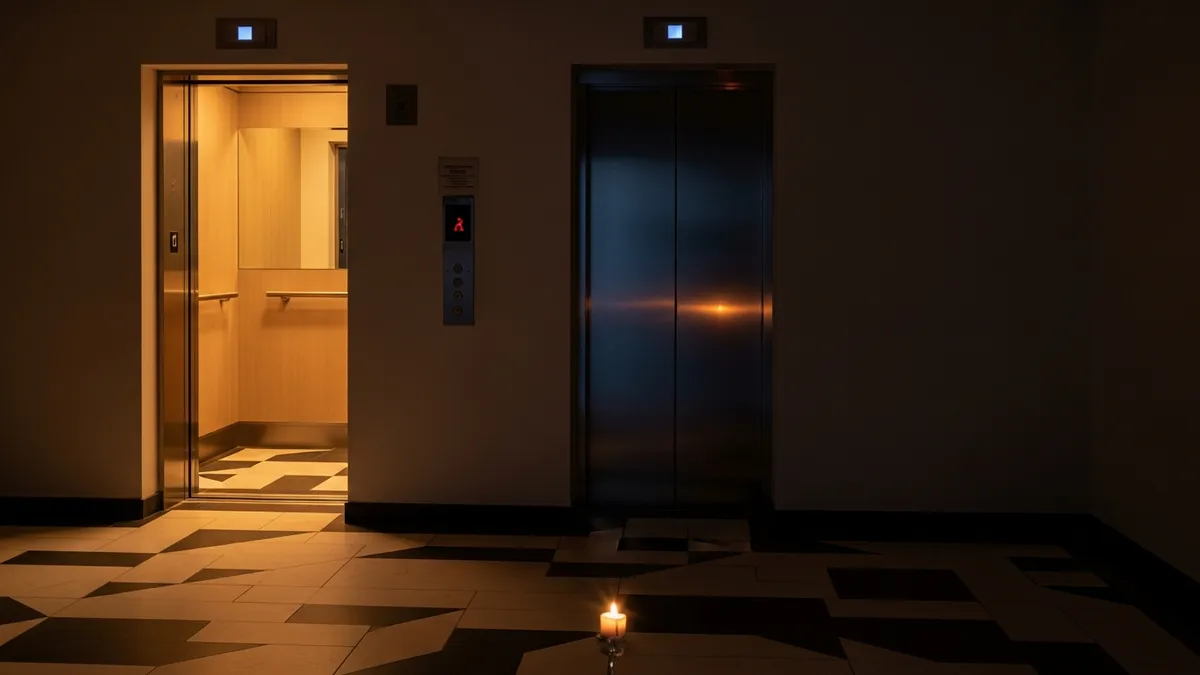
A Shabbat elevator (Hebrew: מעלית שבת) is an elevator that runs on a pre-programmed cycle during Shabbat and Jewish holidays. It stops automatically on every floor — or sometimes every other floor — going up and down continuously without anyone needing to press a button. The doors open and close on their own, and if your floor comes up, you just walk in or walk out.
Why Do We Need Shabbat Elevators?
On Shabbat, observant Jews do not operate electrical devices. Pressing an elevator button completes an electrical circuit, which falls under the categories of prohibited Shabbat work — I unpack exactly why pressing that button is forbidden in its own article. So if you live on the 15th floor of an apartment building in Bnei Brak or Brooklyn, you have a real problem every Friday night and Saturday. You either walk up 15 flights of stairs — with your kids, in your Shabbat clothes, possibly carrying a baby — or you find another solution.
The Shabbat elevator is that solution. It was developed specifically for buildings in Israel and other areas with large observant populations, and it has become standard in most Israeli hospitals, hotels, and many residential buildings.
How Does It Work?
Before Shabbat begins, the elevator is switched to "Shabbat mode." In this mode, it operates on a continuous loop. It goes up, stopping at every floor. Then it comes back down, stopping at every floor. The doors open for a set amount of time — usually around 15 to 20 seconds — then close automatically.
Nobody touches anything. You just wait for the elevator to arrive at your floor, step in, and ride it to where you need to go. Yes, it is slow. Very slow. A trip that normally takes 30 seconds might take ten minutes. But you will hear very few complaints — it beats climbing 20 flights of stairs.
Some newer Shabbat elevators are more sophisticated. They use weight sensors to detect which floors have passengers waiting, though the halachic status of these "smart" systems is debated among rabbinical authorities.
Is It Really Allowed?
This is actually a matter of halachic discussion. The major question is whether riding in a Shabbat elevator is truly passive — meaning you are not causing any electrical activity — or whether your weight in the elevator changes the electrical load on the motor, which could be considered a form of work.
Rav Shlomo Zalman Auerbach (in Minchas Shlomo and as cited in Shemiras Shabbos Kehilchasah) was generally lenient for properly-programmed Shabbat elevators, especially for ascent. But this is a genuine machlokes. In 2009, Rav Yosef Shalom Elyashiv joined Rav Shmuel Vosner, Rav Chaim Kanievsky, and Rav Nissim Karelitz in a public ruling restricting Shabbat-elevator use, citing concerns about modern weight-sensor systems that respond to passenger weight, as well as electricity generated by the motor during descent. Following that ruling, a large part of the Litvish and Chassidic world treats Shabbat elevators as something to avoid except b'sha'as had'chak — for the elderly, the ill, or very high floors — while others, following Rav Shlomo Zalman, continue to permit a properly-programmed elevator, especially going up. Practice genuinely varies by community, so a person should follow their own rabbi's guidance.
In hospitals, there is almost universal agreement that Shabbat elevators are permitted, since there are health and safety concerns involved. An elderly person or someone recovering from surgery cannot be expected to take the stairs.
Where Will You Find Them?
Shabbat elevators are everywhere in Israel — hotels, hospitals, apartment buildings, office towers, and even shopping centers. In the diaspora, they are common in buildings with large Orthodox populations, particularly in neighborhoods like Borough Park and Williamsburg in Brooklyn, Golders Green in London, and parts of Antwerp.
Many Israeli hotels actually post signs near the elevator indicating which one is the Shabbat elevator for that week. It's common enough that frum families planning a trip will check in advance which Jerusalem hotels run a Shabbos elevator — and on which floors — before they book. It is a totally normal part of life. My kids do not even think twice about it — they know that on Shabbat, you just wait for the elevator and do not touch the buttons. My three-year-old once scolded a hotel guest for pressing the button on Shabbat. I had to explain that not everyone keeps Shabbat. She was very concerned for him.
A Beautiful Example of Problem-Solving
I think the Shabbat elevator is actually a beautiful example of how Jewish law and modern life work together. We do not abandon the halacha because technology changes. We find ways to live with both. The rabbis who worked out the technical and halachic details of how to make an elevator Shabbat-compatible — that is the same creative legal thinking that has kept Torah observance alive for thousands of years. Different generation, same commitment.
I'm an Orthodox Jewish woman from Brooklyn. I can't speak for every Orthodox Jew — when I write outside my experience, I say so.
Shabbat — The Jewish Day of Rest Explained
The 39 Melachot: What Can't You Do on Shabbat?
Jewish Holidays: The Complete Jewish Calendar Guide
Why Can't You Press the Elevator Button on Saturday?
Want to experience a Jewish holiday yourself?
Virtual Seders, Rosh Hashanah dinners, and Chanukah candle-lightings are open to non-Jewish guests.
The Orthodox Insider
A new letter every Thursday, before Shabbos — plus an instant download of “10 Things Everyone Gets Wrong About Orthodox Jews” when you subscribe.
No spam, unsubscribe anytime.