What Does Shabbat Shalom Mean? The Weekly Jewish Greeting
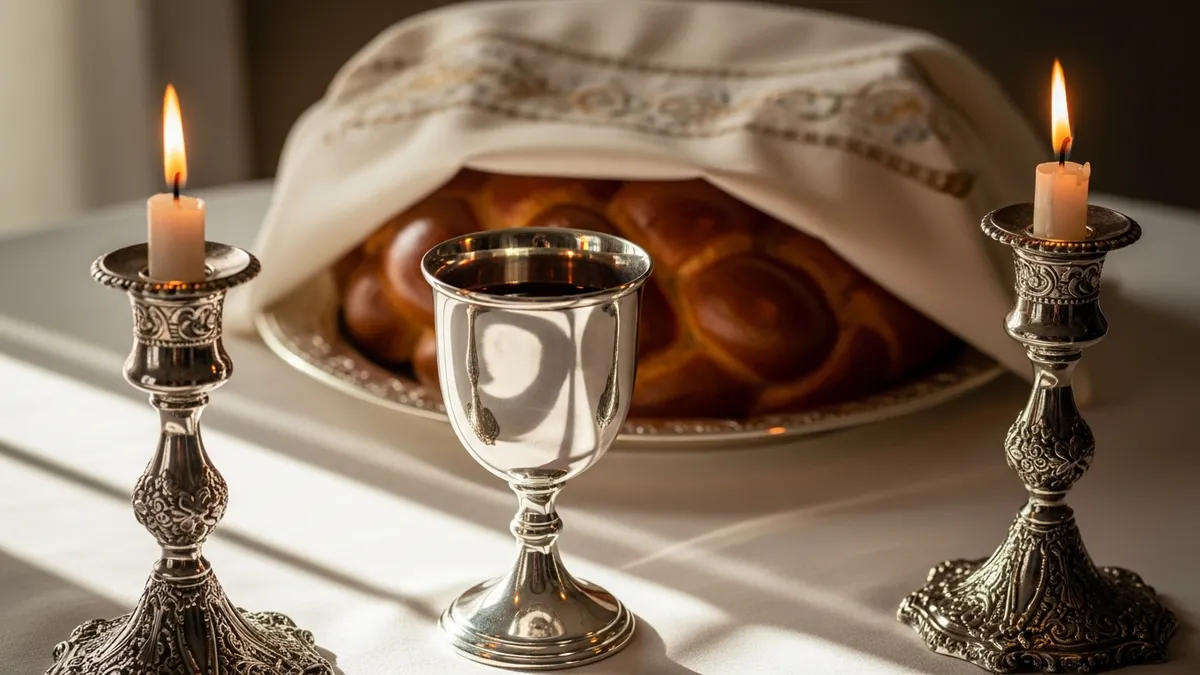
Learn what Shabbat Shalom means, when to say it, how to respond, and the Yiddish alternative Gut Shabbos. A quick guide to this common Jewish greeting.
Quick Answer
Shabbat Shalom is a Hebrew greeting meaning 'peaceful Sabbath.' Jews say it to wish each other a peaceful and restful Shabbat (Sabbath). It is used from Friday afternoon through Saturday night. The Yiddish equivalent is 'Gut Shabbos,' meaning 'Good Sabbath.'
What Does Shabbat Shalom Mean?
"Shabbat Shalom" (שבת שלום) is one of the most common greetings in Jewish life. It literally translates to "peaceful Sabbath" or "Sabbath of peace."
Shabbat means Sabbath — the Jewish day of rest, observed from Friday evening through Saturday night. Shalom means peace, but it carries a deeper meaning than just the absence of conflict. Shalom implies wholeness, completeness, and well-being.
So when someone says "Shabbat Shalom," they are wishing you a Shabbat filled with peace, rest, and spiritual completeness. It is a warm and beautiful greeting, and hearing it always makes me smile — it is like a little reminder that the busy week is behind us and something special is about to begin.
When Do You Say It?
You can start saying Shabbat Shalom on Friday, typically from the afternoon onward. Some people start saying it as early as Friday morning, especially if they do not expect to see someone again before Shabbat begins.
The greeting is used throughout Shabbat itself — Friday night, Shabbat morning, Shabbat afternoon — and generally until Shabbat ends on Saturday night after dark.
In my community, by Friday afternoon the whole atmosphere shifts. You start hearing "Shabbat Shalom" everywhere — at school pickup, in the grocery store, walking down the street. It is one of those things that makes the neighborhood feel like a real community.
How Do You Respond?
If someone says "Shabbat Shalom" to you, the simplest response is to say "Shabbat Shalom" right back. That is it. No special formula needed.
Some people add a little extra warmth: "Shabbat Shalom u'mevorach" (a peaceful and blessed Shabbat), but that is optional.
Gut Shabbos: The Yiddish Version
In Ashkenazi communities — particularly Hasidic and Yeshivish ones — you will often hear "Gut Shabbos" (גוט שבת) instead. This is the Yiddish equivalent, meaning "Good Sabbath."
Which greeting you hear often tells you something about the community. In my experience, Modern Orthodox communities tend to use "Shabbat Shalom" (Hebrew), while more traditional Ashkenazi communities lean toward "Gut Shabbos" (Yiddish). Sephardic communities almost always use "Shabbat Shalom."
Many people use both interchangeably, and nobody will look at you strangely for using either one. I grew up saying Gut Shabbos and switched to Shabbat Shalom at some point without really thinking about it. My parents still say Gut Shabbos. My kids say both.
Can Non-Jews Say It?
Absolutely. If you have Jewish friends, colleagues, or neighbors and you know it is Friday afternoon or Saturday, saying "Shabbat Shalom" is a lovely gesture. It shows awareness and respect, and most people will be genuinely touched that you thought of it.
There is no religious restriction on who can say these words. It is a greeting, not a prayer.
Other Shabbat Greetings
A few other phrases you might hear around Shabbat:
- "Shavua Tov" (שבוע טוב) — "Good week," said after Shabbat ends on Saturday night, wishing someone a good upcoming week
- "Gut Voch" — the Yiddish version of "Shavua Tov"
- "Good Shabbos" — an English-Yiddish hybrid you will hear in American Orthodox communities
Shabbat Shalom is more than just words. It is a weekly reminder that no matter how hectic life gets, there is a day of peace built right into the calendar. Every single week, without fail. And honestly, we could all use a little more shalom.
I'm an Orthodox Jewish woman from Brooklyn. I can't speak for every Orthodox Jew — when I write outside my experience, I say so.
Shabbat — The Jewish Day of Rest Explained
What Language Do Orthodox Jews Speak?
Jewish Holidays: The Complete Jewish Calendar Guide
The Jewish High Holidays: Rosh Hashanah & Yom Kippur
Want to experience a Jewish holiday yourself?
Virtual Seders, Rosh Hashanah dinners, and Chanukah candle-lightings are open to non-Jewish guests.
The Orthodox Insider
A new letter every Thursday, before Shabbos — plus an instant download of “10 Things Everyone Gets Wrong About Orthodox Jews” when you subscribe.
No spam, unsubscribe anytime.