Why Do Orthodox Jews Eat So Much? Food in Jewish Life
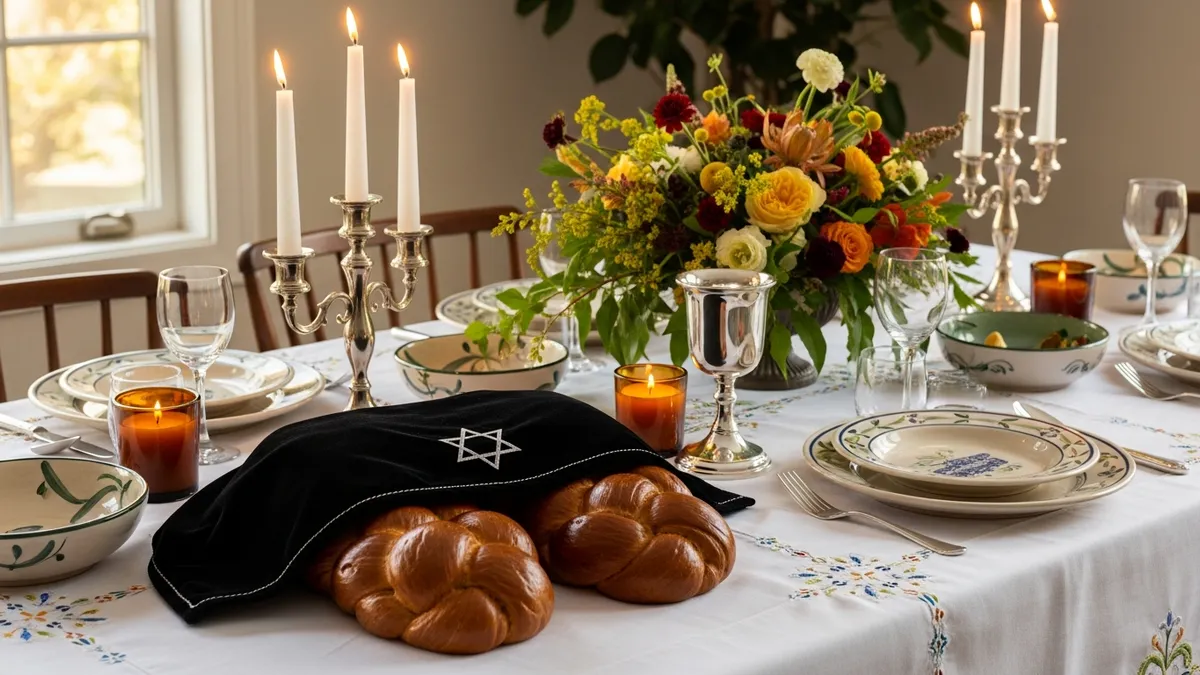
Food in Orthodox Judaism is about obligation, not appetite. From Shabbat feasts to holiday meals, eating sanctifies time and builds community.
Quick Answer
Few religions build as many mandatory festive meals into the calendar as Orthodox Judaism does. Shabbat requires three festive meals. Every holiday has specific foods. Celebrations (weddings, bar mitzvahs, bris ceremonies) center on communal eating. The meals are not optional — they are religious obligations. Food is the vehicle for blessing, community, and gratitude.
If you have Orthodox Jewish neighbors, you have noticed the grocery runs. The Friday afternoon delivery trucks. The two refrigerators. The chest freezer in the basement. The sheer volume of food that moves through an Orthodox household is visible from the outside.
It is not gluttony. It is obligation.
The Mandatory Meals
Shabbat (Every Week)
Jewish law requires three festive meals on Shabbat:
- Friday night dinner — the main event. Candles, kiddush over wine, challah, multiple courses. Typically 2-3 hours with guests.
- Saturday lunch — after synagogue. The famous cholent (a slow-cooked stew that has been on the fire since Friday). More guests. More courses.
- Seudah shlishit (third meal) — late Saturday afternoon. Usually lighter — bread, salads, fish.
That is three multi-course meals in 25 hours. Every single week. For a family of six hosting two guests, that is 24 portions of food across three meals — plus snacks, plus cake for kiddush at synagogue.
Holidays (Multiple Times Per Year)
Every Jewish holiday has its own meal obligations:
- Rosh Hashanah: festive meal with symbolic foods (apple and honey, pomegranate, fish head)
- Sukkot: meals eaten inside the sukkah for seven days
- Chanukah: foods fried in oil (latkes, sufganiyot/donuts)
- Purim: a festive afternoon meal with wine, plus dozens of mishloach manot food packages exchanged
- Passover: the Seder meal (highly structured, can last 3-4 hours) plus festive meals for eight days
- Shavuot: a festive meal, with the widespread custom of eating dairy foods (cheesecake, blintzes)
Lifecycle Events
- Bris milah (circumcision): festive meal after the ceremony
- Bar/Bat Mitzvah: major celebration with dinner for 100-500 guests
- Wedding: elaborate multi-course dinner with hundreds of guests
- Shiva (mourning): community brings food to the mourning family for seven days
- Shalom zachar (Friday night after a baby boy is born): open house with food and drinks
Why Food Is Sacred
In Judaism, eating is not just physical sustenance — it is an act of service:
Every meal begins with a blessing. Before eating anything, a Jew recites a specific blessing acknowledging G-d as the source of the food. Different foods have different blessings (bread, fruit, vegetables, wine, and everything else each have their own).
Every meal ends with grace. After a meal with bread, a long prayer of thanks is recited (birkat hamazon). This is not a casual "thanks for the food" — it is a structured multi-paragraph prayer.
Eating elevates the physical. The mystical tradition teaches that food contains divine sparks. When you eat with intention — saying blessings, sharing with others, eating kosher food — you release those sparks. Eating becomes a spiritual act.
The Hosting Culture
Orthodox families do not just feed themselves. They feed everyone:
- Shabbat guests are expected and common. My table regularly has 8-14 people on Friday night.
- Newcomers, singles, visitors, and strangers are invited routinely. Turning someone away from a Shabbat meal is considered a serious failure of hospitality.
- After a death, the community organizes a food schedule so the mourning family does not cook for a week.
- After a birth, friends and neighbors bring meals for days.
This is why the grocery bill is what it is. You are not feeding a family — you are feeding a community.
For Non-Jewish Observers
If the amount of food in Orthodox life seems excessive, consider the math: three mandatory Shabbat meals per week, 52 weeks per year, plus 8-12 holiday meal events, plus lifecycle celebrations, plus hosting guests. A family that hosts two guests per Shabbat serves more than 300 extra portions per year just on Shabbat alone — and a family that regularly hosts four pushes past 600.
The food is not about consumption. It is about connection. Every meal is a table where people sit together, bless together, and share together. The abundance is the point — it says: there is enough. You are welcome. Sit down.
I'm an Orthodox Jewish woman from Brooklyn. I can't speak for every Orthodox Jew — when I write outside my experience, I say so.
Want to keep reading about kosher?
The full site covers kosher laws, symbols, and specific foods. Or if you're a professional working with Orthodox Jewish clients on food — there's a specific guide for that.
The Orthodox Insider
A new letter every Thursday, before Shabbos — plus an instant download of “10 Things Everyone Gets Wrong About Orthodox Jews” when you subscribe.
No spam, unsubscribe anytime.