Simchat Torah: Dancing with the Torah
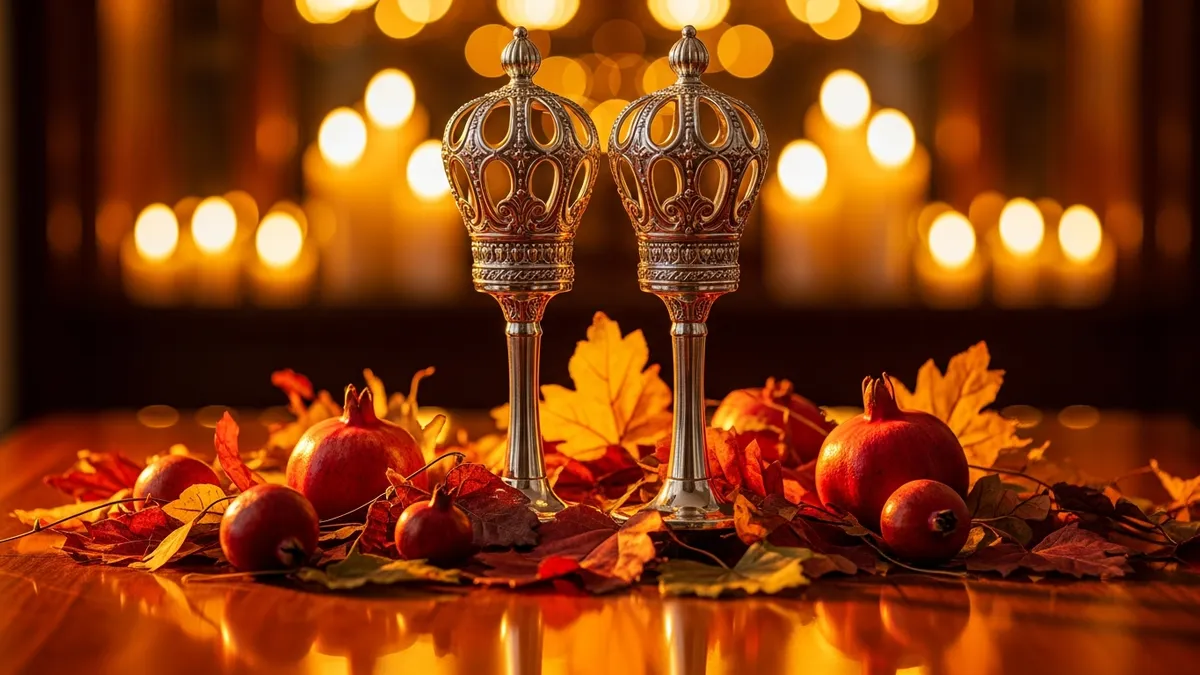
What is Simchat Torah? The joyful holiday of dancing with Torah scrolls, completing the annual Torah reading cycle, and starting again from the beginning.
Quick Answer
Simchat Torah celebrates the completion of the annual Torah reading cycle. Jews dance exuberantly with Torah scrolls in seven rounds of hakafot, read the final portion of Deuteronomy, and immediately begin again with Genesis. In the Diaspora it falls on 23 Tishrei, the day after Shemini Atzeret; in Israel it is combined with Shemini Atzeret on 22 Tishrei.
If you want to see Orthodox Jews at their most uninhibited, come to a synagogue on Simchat Torah. Grown men who are normally reserved and dignified are dancing in circles for hours, singing at the top of their lungs, waving flags, and passing Torah scrolls from person to person like the most precious thing in the world — because it is.
What We Are Celebrating
Every Shabbat throughout the year, a portion (parsha) of the Torah is read in synagogue. The cycle begins with Bereishit (Genesis) right after Sukkot and works through the entire Five Books of Moses over the course of the year. On Simchat Torah, we read the very last portion — V'Zot HaBracha — and then immediately roll the Torah scroll back to the beginning and start reading Bereishit again.
The message is clear: the Torah never ends. The moment you finish, you start again. There is always more to learn, more to discover, more depth to uncover — and the Torah itself is only the first shelf of the whole Jewish bookshelf we spend our lives studying.
The Hakafot
The highlight of Simchat Torah is the hakafot — seven rounds of dancing with the Torah scrolls. Every Torah scroll is taken out of the ark, and men take turns carrying them and dancing in circles around the bimah (the central reading platform). Each round is preceded by a prayer and accompanied by intense singing.
The dancing can go on for hours. In some communities, the hakafot on Simchat Torah night last until midnight or later. Children sit on their fathers' shoulders. Candy is thrown. The energy is electric.
In Israel, where Simchat Torah and Shemini Atzeret are combined into one day, the hakafot are done both at night and during the day. In some neighborhoods, the dancing spills out of the synagogue and into the streets.
Chatan Torah and Chatan Bereishit
Two men are honored on Simchat Torah with special aliyot (being called to the Torah). The Chatan Torah ("bridegroom of the Torah") is called up for the final reading of Deuteronomy. The Chatan Bereishit ("bridegroom of Genesis") is called up for the first reading of Genesis. These are considered great honors, and the men are often celebrated with singing and even a tallit held over their heads like a chuppah (wedding canopy).
A Day for Everyone
One of the beautiful things about Simchat Torah is that every man present gets called up to the Torah — the portion is repeated as many times as needed — and the children get their own collective aliyah. In most Ashkenazi communities there is a special "Kol HaNe'arim" (all the children) aliyah where all the kids come up together under a large tallit. My children look forward to this all year. It is their moment to stand at the Torah and feel like they are part of something bigger than themselves.
Simchat Torah is proof that Judaism is not only about solemnity and obligation. It is about joy. Deep, real, dancing-until-your-feet-hurt joy. The Torah is not a burden we carry — it is a gift we celebrate.
What It Looks Like From Inside
I want to paint you a picture, because words barely do it justice. Imagine a synagogue — the same place where people sit quietly praying on a regular Shabbat — transformed into something closer to a concert. The Torah scrolls are taken out of the ark and held by men who begin to dance in circles. The singing gets louder. More people join. Children climb on shoulders. Someone starts a niggun (wordless melody) that the entire room picks up. The circles get wider, faster, more joyful.
In Hasidic communities, the energy is extraordinary. I have seen Simchat Torah celebrations where the dancing went past midnight, where grown men were doing cartwheels and jumping in the air, where the joy was so intense that strangers were hugging each other. The women's section has its own celebration — we sing, we dance, we throw candy to the children waving their flags below.
And here is the thing that always moves me: the Torah scrolls being danced with are the same scrolls that contain the laws, the history, the stories of suffering and redemption. On this one night, we do not study them — we dance with them. We hold them close like a beloved friend. That is what Torah means to us. Not just a text. A living relationship.
After Simchat Torah
The next day — or the same day, in Israel — the regular Torah reading cycle begins again from the very first verse: "In the beginning, G-d created the heavens and the earth." And so it goes, year after year, generation after generation. The Torah never ends. We never finish learning. Simchat Torah celebrates both the completion and the eternal renewal.
Common Questions
What happens on Simchat Torah? The last portion of the Torah is read, immediately followed by the first portion — showing that Torah study never ends. The synagogue erupts in joyful dancing with Torah scrolls for hours.
Why is there so much dancing? Simchat Torah celebrates the completion of the annual Torah reading cycle. The joy is about the Torah itself — everyone dances, even those who cannot read a word of Hebrew. Children wave flags and receive candy.
How long does the dancing last? Hours — sometimes 3-4 hours or more, especially in Hasidic communities. Seven rounds (hakafot) of dancing circle the synagogue, each more energetic than the last.
I'm an Orthodox Jewish woman from Brooklyn. I can't speak for every Orthodox Jew — when I write outside my experience, I say so.
Want to experience a Jewish holiday yourself?
Virtual Seders, Rosh Hashanah dinners, and Chanukah candle-lightings are open to non-Jewish guests.
The Orthodox Insider
A new letter every Thursday, before Shabbos — plus an instant download of “10 Things Everyone Gets Wrong About Orthodox Jews” when you subscribe.
No spam, unsubscribe anytime.